Best Diecast Car Brands of 2026
The best diecast car brand depends completely on which scale you collect and what you value most when you pick a model up. In pocket-sized 1:64 scale, Mini GT and Tomica Limited Vintage (TLV) dominate the sweet spot between razor-sharp realism and collectibility, while Hot Wheels remains unmatched for nostalgia, availability, and pop-culture editions. Move up to centerpiece 1:18 scale, and Solido and Norev deliver the strongest midrange value, Autoart and Almost Real lead precision engineering, and Spark and Minichamps own Formula 1 and motorsport history.
Most new collectors get burned in one of two ways: either assuming every 1:18 car has opening doors and a detailed engine (many expensive resin models are completely sealed), or assuming every 1:64 car rolls across a desk like a $1.25 toy (high-detail collector 1:64s have delicate mirrors and low-clearance wheels meant for display). Learning the four core scales and three construction types lets you build a cohesive collection without overpaying for features you don't care about.
Diecast construction explained: opening diecast vs. composite vs. sealed resin
Not every "diecast" model car is actually made of metal, and not every expensive model opens up. Knowing the three construction types explains why a $250 model might weigh less than a $45 warehouse-club car:
- Opening diecast (Zamak zinc alloy): Cast in molten metal with hinged doors, hoods, trunks, and detailed engine bays. Collectors prize opening diecast for its satisfying heft in the hand and mechanical theater. The downside is physics: metal casting requires thicker panel edges, which can leave slightly wider door shut-lines if tooling isn't top-tier.
- Composite diecast (ABS body over metal chassis): Pioneered at the high end by Autoart. Instead of heavy zinc alloy for the outer body panels, the outer shell is precision-molded ABS composite bolted onto an internal diecast metal skeleton. Composite allows razor-thin shut-lines, crisp crease lines, and ultra-gloss paint while keeping fully opening doors and hoods—at the cost of feeling noticeably lighter than traditional all-metal models.
- Sealed resin (polyurethane cast): Cast in silicone molds rather than expensive steel dies, with no opening parts and usually non-steering wheels. Why do collectors happily pay $100 to $400+ for sealed resin from brands like Spark or BBR? Because silicone molds cost a fraction of metal tooling, allowing brands to produce obscure race liveries, hypercars, and specific Le Mans or Formula 1 chassis in small runs—with glass-smooth paint, wafer-thin spoilers, and microscopic panel seams that metal casting rarely matches. (Sealed diecast also exists—budget metal bodies with fixed doors, common on Solido race cars and lower-cost Norev models.)
Choosing your scale: 1:64, 1:43, 1:24, or 1:18
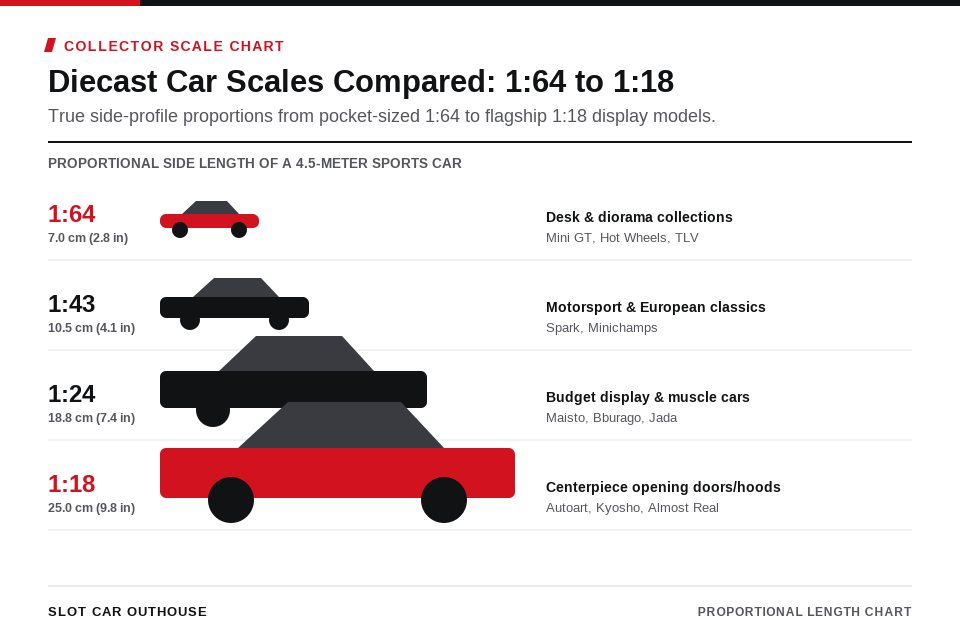
- 1:64 (~2.7–3 inches long): The booming heart of modern collecting. Affordable, easy to store by the dozen, and capable of stunning detail from modern specialist brands. Watch out for "3-inch fit-the-box" toys (like basic Hot Wheels and standard Tomica) versus true-1:64 scale models where a Miata is genuinely smaller than a Ford F-150.
- 1:43 (~4 inches long): Europe's and motorsport's classic collector standard. Big enough for readable sponsor decals and sharp cockpit detail, small enough to line up an entire Formula 1 grid on a single bookshelf.
- 1:24 (~7–8 inches long): A classic budget retail scale—widely sold at big-box stores, popular for American muscle cars and movie replicas, though less heavily supported by ultra-high-end collector brands.
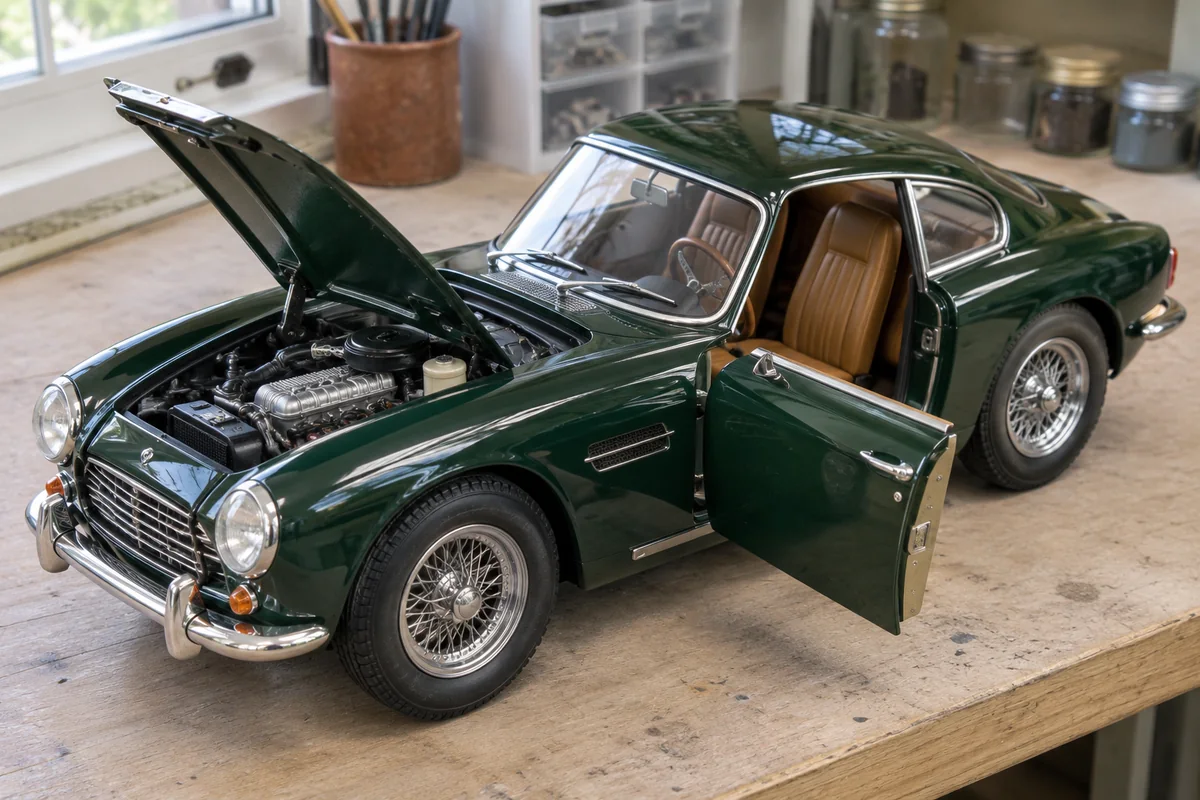
- 1:18 (~9–11 inches long): The flagship display scale. Engine wiring, carpeted interiors, brake calipers behind spoked rims, and working suspension truly shine here—just remember that ten 1:18 cars eat up an entire bookcase.
Best diecast car brands compared
| Brand | Primary Scales | Construction Style | Opening Parts? | Typical Price | Sweet Spot / Signature Niche |
|---|---|---|---|---|---|
| Hot Wheels | 1:64 | Diecast (Mainline, Premium, RLC) | Select RLC / Elite64 | $1.25–$35+ | Accessible collecting, pop culture & RLC exclusives |
| Tomica / TLV | ~1:64 (TLV is true 1:64) | Diecast | Often on regular Tomica; rare on TLV | $5–$10 (Std) / $25–$60 (TLV) | Everyday Japanese icons & museum-grade JDM heritage |
| Mini GT | True 1:64 | Diecast + rubber tires | Sealed (rolling wheels) | $12–$18 | Best overall detail-to-price ratio in true 1:64 |
| Inno64 / Tarmac Works | True 1:64 | Diecast + acrylic display case | Sealed (display-oriented) | $20–$30 | JDM tuners, DTM/GT3 race cars & crisp liveries |
| GreenLight / M2 Machines | 1:64, 1:24, 1:18 | Diecast (metal/metal) | Frequent opening hoods | $7–$20 (1:64) | American classics, trucks, police & movie cars |
| Maisto / Bburago | 1:18, 1:24, 1:43 | Budget diecast | Usually opening (1:18) | $18–$55 | Entry 1:18 shelf fillers & licensed Ferrari/F1 models |
| Solido / Norev | 1:18, 1:43 | Midrange diecast | Solido: doors; Norev: full or sealed | $50–$130 | Best midrange 1:18 value & European road cars |
| Autoart | 1:18 | Composite + diecast frame | Mostly full opening | $180–$320+ | Precision supercars, JDM legends & crisp shut-lines |
| Kyosho / Almost Real / LCD | 1:18, 1:64 | Heavy opening diecast | Full opening + fine interiors | $180–$400+ | Traditional all-metal 1:18 collector grails |
| Minichamps / Spark | 1:43, 1:18 | Diecast (Minichamps) / Resin (Spark) | Mostly sealed | $75–$250+ | Formula 1, Le Mans & historic motorsport accuracy |
Deep dive into the top diecast car brands
1:64 scale: where modern collecting exploded
Hot Wheels (Mainline, Premium, and RLC)
Mattel's Hot Wheels isn't one tier—it is four distinct collecting worlds:
- Mainline ($1.25): Plastic tires, approximate scale designed to fit orange race track, endless fun, and Treasure Hunt chases.
- Hot Wheels Premium ($6–$8 — Car Culture, Boulevard, Pop Culture): Full metal body and metal base, detailed headlights/taillights, and Real Riders rubber tires. Huge nostalgia value, though proportions remain slightly stylized.
- Red Line Club (RLC) & Elite64 ($20–$35+): Collector-club releases with dazzling Spectraflame chrome paint, opening hoods/doors (RLC), or multi-piece true-1:64 realism (Elite64).
Tomica & Tomica Limited Vintage (TLV)
In Japan, Takara Tomy's regular red-and-white-box Tomica cars are beloved durable toys with working spring suspension and boxy "fit-the-box" sizing. Its adult collector sibling, Tomica Limited Vintage (TLV / TLV-Neo), is another universe entirely: strict true 1:64 scale, authentic period-correct hubcaps, separate clear lens headlights, and laser-crisp paint covering everything from 1960s Nissan Skylines to Japanese municipal buses and Ferraris. TLV models hold collector value remarkably well.
Mini GT, Inno64, and Tarmac Works (the true-1:64 sweet spot)
Over the last few years, Hong Kong-based brands transformed 1:64 collecting. Mini GT (by TSM-Model) is the standout starting point: for $12–$16, you get true 1:64 proportions, flexible rubber side mirrors that don't snap off immediately, crisp brake discs behind detailed wheels, and smooth-rolling rubber tires across Porsches, Lamborghinis, GT3 racers, and Kaido House custom builds.
Inno64 and Tarmac Works push even further into fine race graphics, photo-etched spoilers, and acrylic display cases ($20–$30). They look extraordinary under display lighting—just treat them as miniature sculptures rather than desk rollers, because their tight fender tolerances often prioritize stance over smooth rolling.
GreenLight and M2 Machines
If your garage leans American—1960s muscle cars, classic pickup trucks, vintage campers, state troopers, and Hollywood vehicles (from Smokey and the Bandit to Bullitt)—GreenLight and M2 Machines own the aisle. Both pack real metal bases, rubber tires, and frequent opening hoods. Quality control can occasionally vary (check for crooked bumpers or misaligned wheels in the blister pack when buying in person), but their licensed Americana catalog is unmatched.
1:18 & 1:43 scale: desk centerpieces and motorsport icons
Maisto and Bburago: the honest entry tier
Maisto and Bburago (sister brands under May Cheong Group) make large-scale collecting approachable. Their $20–$45 1:18 models—frequently found at warehouse clubs and hobby shops—offer opening doors, hoods, steering wheels, and decent shelf presence from three feet away. Up close, expect thicker door hinges, simpler black-plastic interiors, and slightly higher ride heights. Bburago also holds the accessible Ferrari and Formula 1 licenses, making it the easiest way to park an F1 grid on a desk without spending $200 per car.
Solido and Norev: the smart midrange value kings
When you want noticeably sharper proportions, cleaner paint, and better wheel fitment than a $30 toy without crossing $200, Solido and Norev (both French heritage brands) rule the midrange.
- Solido ($50–$70): Crisp exterior shapes, authentic racing liveries, and opening front doors (hoods and trunks are typically sealed to keep prices low). Terrific bang for your buck.
- Norev ($80–$130): Especially prized for Mercedes-Benz, Porsche, and classic European road cars—often commissioned directly as official dealership promo models. Many Norev releases feature full opening doors, hoods, and trunks plus carpeted cabins at half the cost of boutique brands.
Autoart: precision engineering in composite
For decades, Autoart was the aspirational standard in 1:18 collecting. Today, most Autoart models use its Composite construction (ABS outer shell + internal metal chassis). While purists occasionally miss the heavy cold-metal feel of older diecast Autoarts, modern composite releases deliver razor-tight door shut-lines, intricate multi-piece engine bays, crisp carbon-fiber weave printing, and rock-solid quality control across modern supercars, McLarens, Porsches, and JDM icons like the Nissan GT-R and Toyota Supra.
Kyosho, Almost Real, and LCD Models: heavy opening-diecast grails
If you insist on heavy all-metal diecast with museum-grade opening features, three names stand out:
- Kyosho: Long-running Japanese icon known for classic Ferraris, BMWs, Lamborghinis, and Rolls-Royces with rich metal heft and satisfying hinge work.
- Almost Real & LCD Models: Modern high-end contenders building heavyweight 1:18 masterpieces (Land Rover Defenders, Pagani Huayras, McLaren F1s, Bentley Mulsannes) with functioning suspension, real perforated metal grilles, photo-etched badges, and engine bays that look indistinguishable from real cars in macro photos.
Minichamps and Spark: the Formula 1 and Le Mans specialists
Motorsport fans gravitate naturally to Minichamps (Germany) and Spark (founded by Hugo Ripert). Both cover modern and historic Formula 1, endurance racing, rally, and GT championships in 1:43 and 1:18. Minichamps leans heavily toward sealed diecast metal (with select opening road cars), while Spark specializes in ultra-crisp sealed resin with wafer-thin aero winglets, finely sculpted driver helmets, and an astonishing ability to produce specific Grand Prix race-winner editions—complete with accurate wet-weather tires or race-specific wing configurations.
Practical collector rules to protect your money (and shelf space)
- Pick a theme before buying your tenth car: Random impulse buys quickly turn into clutter. Focusing on a clear lane—like "true-1:64 JDM legends," "1:43 Le Mans winners," or "1:18 Porsche 911 evolution"—makes even a ten-car shelf look curated like a gallery.
- Respect display care early: Direct sunlight yellows white paint, fades neon racing decals, and dries out rubber tires; household dust embeds permanently into tiny cockpit vents. Invest in clear acrylic cases or sealed cabinets from our display cases and storage guide before leaving expensive models exposed on an open shelf.
- Inspect resin models carefully on arrival: Because resin models use delicate photo-etched wipers, thin mirrors, and glued clear-film windows, unbox them over a soft towel and inspect window edges for "window lift" (thin acetate separating from the frame in dry or hot climates).
- Don't buy diecast expecting investment returns: Buy cars you genuinely love looking at. While certain RLC, TLV, and discontinued Autoart editions appreciate nicely, most mass-produced diecast behaves like any hobby collectible—the real return is enjoying it on your shelf.
Browse our diecast cars hub for curated picks by scale, motorsport class, and price tier.
Sources
Frequently Asked Questions
Mini GT is the best starting point for most collectors—combining accurate true-1:64 proportions, rubber tires, crisp paint, and durable side mirrors around $12–$16. If you want even sharper vintage Japanese precision and acrylic-case display pieces, step up to Tomica Limited Vintage (TLV), Inno64, or Tarmac Works.
Many high-end $150–$400 models (from brands like Spark, BBR, and GT Spirit) are cast in sealed resin rather than hinged metal. Resin allows manufacturers to produce small-batch race cars and exotic variants with ultra-thin spoilers, flawless paint, and microscopic panel gaps that metal hinges struggle to replicate. Always check whether a listing specifies "opening" or "sealed" before buying.
Not worse—just different. Autoart's ABS-composite outer body bolted to an internal diecast frame delivers tighter, more realistic door shut-lines and sharper body creases than thick cast zinc alloy, and it avoids "zinc pest" (rare metal fatigue/crumbling in old alloys). The only real trade-off is weight: composite cars feel noticeably lighter when you lift them.
Maisto and Bburago are the best entry-level 1:18 brands under $50, offering opening doors and solid shelf presence at low prices. If you can stretch to $55–$90, Solido and Norev deliver a huge jump in exterior realism, wheel fitment, and paint finish.
Never wipe a dusty model with a dry paper towel or cloth—grit scratches clearcoat immediately and catches tiny mirrors and wipers. Instead, blow away loose dust with a camera lens air blower, then gently sweep crevices with a clean, ultra-soft makeup brush or fine camel-hair detailing brush. For smudges on smooth paint, breathe lightly on the surface and dab gently with a damp, ultra-plush microfiber cloth.