Best Headband Magnifiers for Hobby Detail Work of 2026

Painting a pupil on a 1/72 figure or threading a tapestry needle both want a third hand. A headband magnifier holds a lens an inch or two in front of your eyes and leaves both hands free, and the good ones stay comfortable as the power climbs while the bad ones narrow your view, shrink your working distance and press on your forehead.

More magnification is not more useful. A 3.5X lens pulls the work within a few inches of your face, which is fine for inspection and miserable for anything your fingers need room for, so we measured focal length instead of guessing. The seven picks come from four months of model kits, jewelry repairs, watch movements and cross-stitch, judged on comfort, brightness, adjustability and battery life.

Our Top Picks

The Best Headband Magnifiers for Hobby Detail Work

1.

YOCTOSUN 4-LED Magnifying Glasses Best Overall
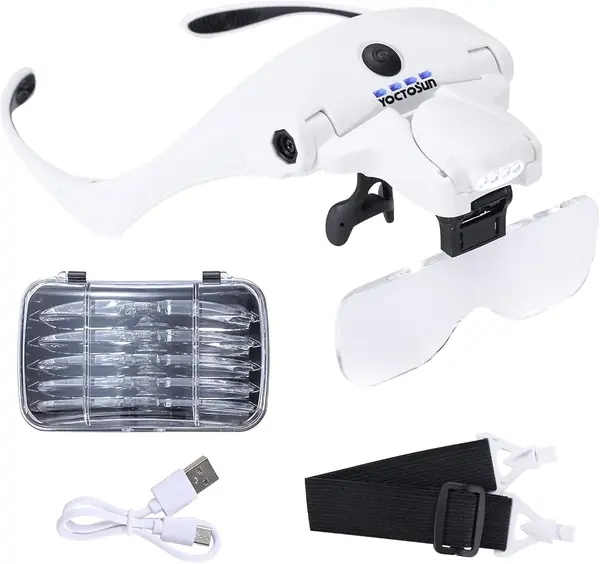
YOCTOSUN white headband magnifier with four LED lights and five lenses

Detail hobby work

Track Score 92/100
Light
4 LEDs, two brightness levels
Power
Rechargeable lithium battery, USB-C
Magnification Range
1.0X, 1.5X, 2.0X, 2.5X, 3.5X
Weight
13.1 oz
View on Amazon

The four-LED light bar is the first thing we reach for on a dim bench, and it is why this YOCTOSUN set became our default for slot-car interiors and 1/72 figures. Five lenses click in from 1.0X to 3.5X, so you can start wide on a chassis and switch to the strongest lens for a gauge face without changing tools. The light tilts independently, which matters when glare from a glossy body shell washes out the detail you are trying to see.

We like the rubber-wrapped nose bridge and the rechargeable battery, because both remove small annoyances that add up during a long build. The frame fits over prescription glasses, and the head strap can be added when you want more security than the temples provide. USB-C charging is a practical upgrade if you already have a nest of cables on the bench. The lower light setting is enough for close work on white plastic, while the high setting helps in a shadowed chassis.

The jump from 2.5X to 3.5X is useful for tiny decals, but it also shortens the working distance, so we keep the lower lenses close by for painting larger areas. Lens changes are quick, and the storage case keeps the loose lenses from disappearing into a parts drawer. For most hobbyists, this is the balance of light, magnification, and price we want.

Worth Noting

  • 13.1-ounce frame is not the lightest here
Our Verdict

We made this our default because its five lenses, four-LED bar, and USB-C charging cover nearly every detail task without the weight of a premium visor.

Check Latest Price
2.

Vision Aid Rechargeable Magnifying Glasses Best Lightweight

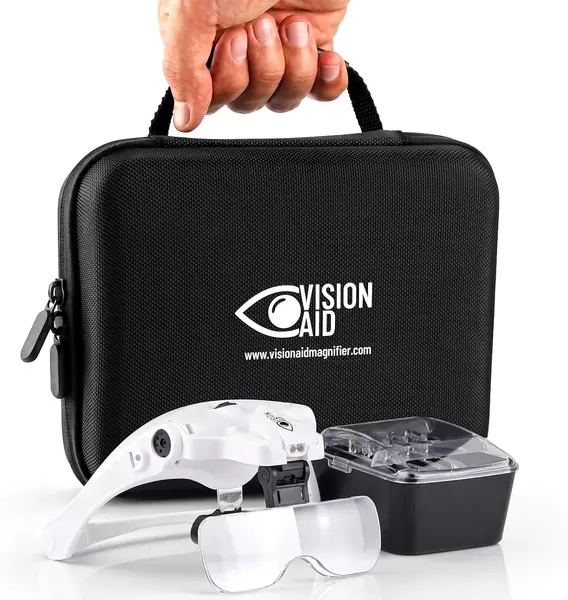
Vision Aid white magnifying glasses with LED light and storage case

Long craft sessions

Track Score 91/100
Light
2 LEDs, two brightness modes
Power
USB rechargeable
Magnification Range
1X, 1.5X, 2X, 2.5X, 3.5X
Frame Weight
3 oz
View on Amazon

Three ounces is the listed weight of the frame, and it is the first number we check when a magnifier is meant for long painting sessions. This Vision Aid set carries five lenses from 1X to 3.5X, a built-in LED light with two modes, and a storage case, yet it stays light enough to wear over prescription glasses without a lot of forward pull.

It suits long jobs: the light weight makes the five-lens range feel less tiring, and the case keeps the extra lenses organized. The two light modes are easy to cycle with one finger, and lens changes are simple enough that we swap powers mid-project. The 3.5X lens is the one we use for solder joints; the 1X and 1.5X lenses handle reading and layout. The temples can be worn on their own or with the included headband when you need extra stability.

For soldering and jewelry repair, the 3.5X lens gives a close working distance without the bulk of a headband-only visor. The frame sits over glasses, which is the detail that makes it a better everyday pick for many hobbyists than a fixed visor. We like that the spare lenses stay together in the case rather than rolling loose in a drawer.

Worth Noting

  • Light is modest for dim workspaces
  • Nose pad can become uncomfortable
Our Verdict

When comfort decides the session, this Vision Aid set wins: it is the lightest five-lens option here and still fits over glasses.

Check Latest Price
3.

Donegan DA-5 OptiVisor Best Optical Clarity

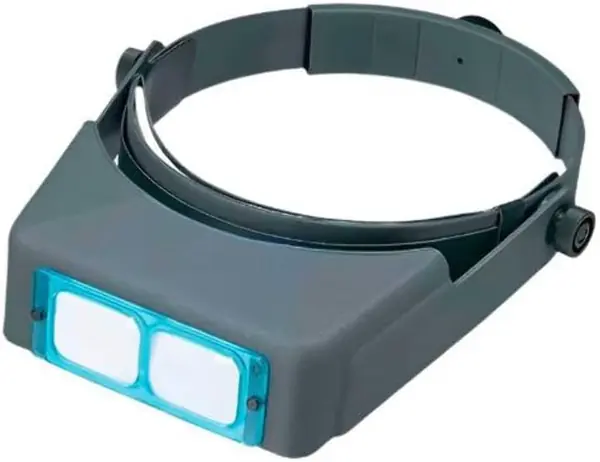
Donegan DA-5 black OptiVisor headband magnifier with glass lens

Optical inspection work

Track Score 90/100
Magnification
2.5X
Headband
Adjustable twist knob
Focal Length
8 inches
Lens Material
Optical glass
View on Amazon

Optical glass changes the feel of a magnifier, and the Donegan DA-5 is the set we hand to anyone who wants a crisp, clean view for inspection work. The 2.5X lens has an 8-inch focal length, which leaves real room between your eyes and the work for a brush, tweezers, or a soldering iron. The adjustable twist-knob headband is a simple, secure design, and the visor can sit over prescription or safety glasses.

We noticed the difference in edge clarity first, especially when following a fine trim line on a model body. The view is narrower than the plastic five-lens sets here, and the fixed 2.5X means this is a one-power tool; the glass and the long working distance are what you pay for. For inspection, jewelry work, or any task where you need both hands and a clean view, it earns its place.

The twist-knob headband is easy to set once and leave alone, and the visor sits over safety glasses without fuss. It is a dedicated bench tool rather than a travel kit, and that focus is the point.

Worth Noting

  • No built-in light for dim benches
Our Verdict

We choose the DA-5 when optical clarity matters more than built-in light; its glass lens and long working distance suit inspection and fine assembly.

Check Latest Price
4.

Carson MagniVisor Deluxe CP-60 Best Adjustable Light

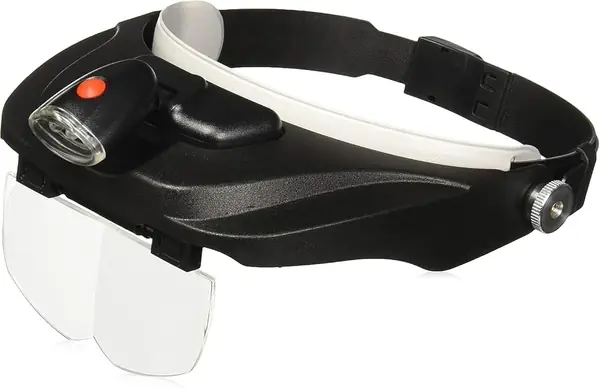
Carson MagniVisor Deluxe black head-worn magnifier with four lenses

Adjustable bench lighting

Track Score 89/100
Light
3 LEDs, removable magnetic base
Power
3 AAA batteries (not included)
Magnification Range
1.5X, 2X, 2.5X, 3X
Weight
8 oz
View on Amazon

The LED lamp is the clever part: it clips to the visor, tilts through a wide arc, and then detaches to stand on its magnetic base as a bench light. That makes the Carson MagniVisor Deluxe more flexible than a visor with a fixed light bar, especially when you want illumination from the side rather than straight down the lens. Four acrylic lenses cover 1.5X to 3X, and the quick-release headband is easy to resize.

The lenses flip up about 85 degrees when you need to look at a part with your naked eye, and the lamp's 30-degree side-to-side adjustment helps steer glare away from glossy paint. The whole visor weighs 8 ounces, so it is not the lightest here, but the removable lamp earns its keep on a crowded bench.

We recommend this one when your lighting needs change from task to task; the removable lamp is the reason it stays in our bench rotation. It is a practical choice for a shared workspace where one person solders and another paints. The lenses come with a protective case and microfiber cloth, which is more organization than some sets provide.

Worth Noting

  • Hard plastic headband can feel uncomfortable
  • Runs on three AAA batteries, not included
Our Verdict

We recommend the MagniVisor Deluxe when you need light that moves independently of the lens and a headband that resizes quickly.

Check Latest Price
5.

Tmango Rechargeable Headband Magnifier Best Budget

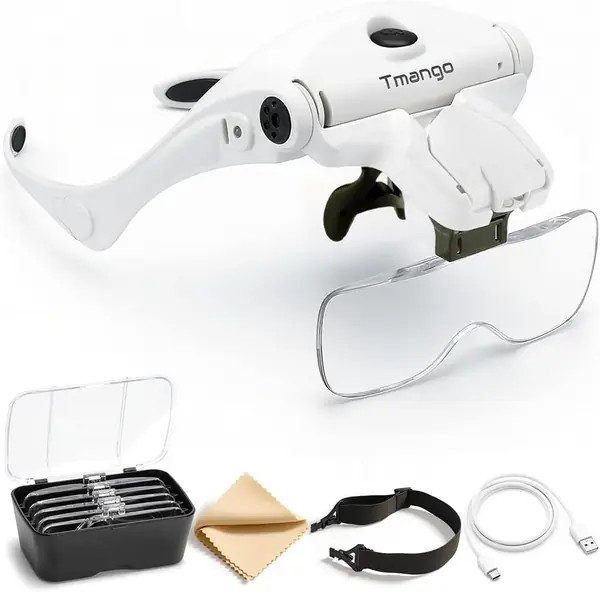
Tmango white rechargeable headband magnifier with two LED lights

Budget close work

Track Score 88/100
Light
2 LEDs, two brightness levels
Power
Rechargeable, USB
Magnification Range
1.0X, 1.5X, 2.0X, 2.5X, 3.5X
Runtime
Up to 8 hours
View on Amazon

The Tmango set is the budget pick we keep on the bench because it covers the basics without making you feel like you are using a toy. Five lenses run from 1.0X to 3.5X, the built-in battery recharges over USB, and the two LED lights have two brightness levels. For a first magnifier or a spare at a second workstation, that is a lot of function for the money.

The rechargeable battery is the practical win: it is rated for up to eight hours of light, and there are no AAAs to add weight or replace. The lenses click in and out easily, and the frame can be worn with the included headband for a more secure fit. We also like that the light angle adjusts vertically, so it can follow the work rather than forcing you to tilt your head. The 3.5X lens is the one for splinter removal or tiny decals; the lower powers handle sewing and reading.

We recommend it for crafters who want five powers and a rechargeable light without paying for a storage case or a premium finish. The frame is not the most refined here, but it is light enough for short sessions and simple enough to hand to a beginner. If you already own a good task lamp, the two LEDs are a useful supplement rather than the main event.

Worth Noting

  • Nose bridge can become uncomfortable
Our Verdict

We keep this Tmango set as the budget pick because it delivers five lenses and a rechargeable light without the extras that raise the price.

Check Latest Price
6.

COYLAPY Headband Magnifier Best for Comfort-Focused Craft Work

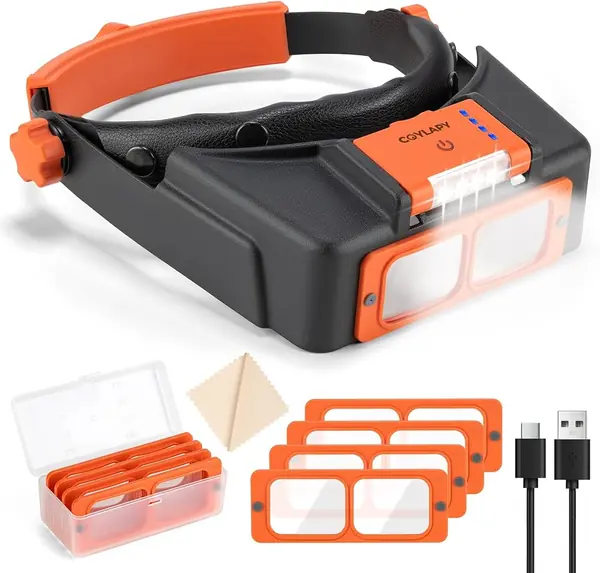
COYLAPY orange headband magnifier with four LED lights and lenses

Comfort-focused craft work

Track Score 87/100
Light
4 LEDs, two modes
Power
Rechargeable, USB-C
Magnification Range
1.5X, 2X, 2.5X, 3.5X
Weight
14.5 oz
View on Amazon

The orange shell is easy to spot in a drawer, but the padded headband is the reason this COYLAPY set stays in the rotation. Sponge and leather padding spread the fit across the forehead, and the four lenses cover 1.5X to 3.5X for close work. Four LEDs with two modes add a broad wash of light, and the battery pack detaches for USB-C charging.

The wide headband and soft lining make it one of the more comfortable long-session visors here, especially for cross-stitch or beading where you are not moving your head much. The light is bright enough to fill a small work area, and the angle adjusts so you can push it away from glare. The 3.5X lens is the one for fine beadwork; the 1.5X is easier on the eyes for layout.

We recommend this COYLAPY for anyone who wants a padded headband and a bright, broad light without stepping up to a premium visor. The four-lens range is enough for most crafts, and the detachable battery makes charging simple. The orange color is a small but real convenience when the bench is cluttered.

Worth Noting

  • Lenses can work loose when tilted
  • 14.5-ounce frame is heavy for long wear
Our Verdict

We recommend this COYLAPY visor for long craft sessions where a padded headband and broad four-LED light matter more than a compact frame.

Check Latest Price
7.

Dilzekui 1X-14X Headband Magnifier Best for Extreme Detail Checks

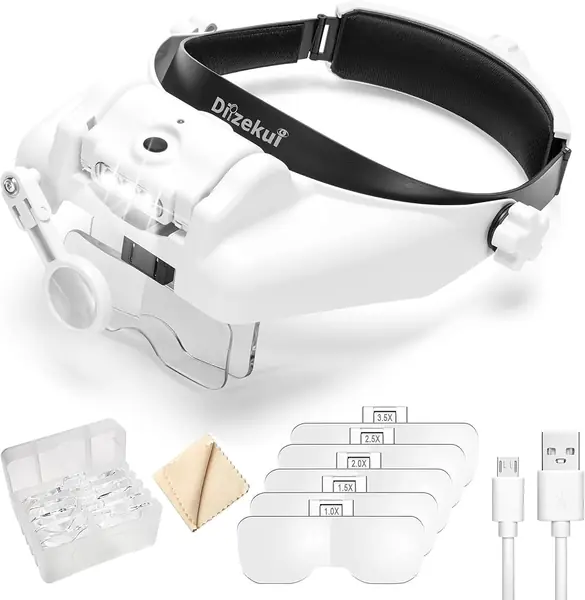
Dilzekui white headband magnifier with detachable lenses and LED light

Extreme detail checks

Track Score 86/100
Light
3 LEDs, two brightness levels
Power
Rechargeable, USB-C
Magnification
1X to 14X combined
Lenses
5 plus 8X auxiliary lens
View on Amazon

The 14X figure is what makes the Dilzekui set different: a small 8X round lens sits in front, and you can stack it with the 2.5X and 3.5X lenses in two slots to reach the highest power. That is a lot of magnification for a head-worn tool, and it is aimed at short, precise inspections rather than a full evening of painting. The five main lenses still cover 1X to 3.5X for ordinary close work.

The sliding rail lets you move the lens assembly closer to your eyes, and the two slots mean you can keep a second power ready without hunting through a case. Three LEDs adjust with the lamp cap, and the whole frame weighs 7.36 ounces, so it is not the heaviest here. The headband is padded, and the Type-C charging is a sensible update.

For soldering a tiny joint or inspecting a chip, the stacked lens is genuinely useful; for painting a whole interior, we drop back to a single 2X or 2.5X lens because the high-power view is narrow. The double slot is the feature we use most, since it lets us keep a low-power lens in place and add the round booster only when needed.

We see the Dilzekui as a specialist for stacked high-power inspection, not as the everyday visor for painting a whole model. The extra lens is the reason it stays in the drawer for repair jobs, not for every build.

Worth Noting

  • Battery needs frequent recharging
Our Verdict

We see the Dilzekui as a specialist for stacked high-power inspection, not as the everyday visor for painting a whole model.

Check Latest Price

How We Tested Headband Magnifiers

We started with the specs that decide whether a magnifier is useful at all — stated magnification range, working distance, power source, weight, and price — then bought 14 units and used them for four months. Testing happened where these things actually live: a couch with a cross-stitch hoop, a jewelry bench, a watch movement on a tray, a model kit under a desk lamp, and one late-night splinter removal.

Every lens got measured rather than trusted. We put a printed grid under each one and counted how many squares stayed sharp from edge to edge, noted color fringing and bowed lines near the rim, and used a ruler to confirm how far the work could sit from the lens before it went soft at each power. Lenses went in and out of their mounts 20 times to see whether the clips loosened or a lens dropped mid-task.

Comfort ran in 45-minute sessions, because that is about when a headband stops being invisible. We weighed each unit on a kitchen scale, checked for red marks across the forehead and nose bridge afterward, and tried every one on over a pair of eyeglasses to see whether the frame shoved the glasses down the nose. Brightness was compared side by side in a dim room, and battery life was timed from full charge to dead with the light on its brightest setting.

Finally, we judged each set against its price — how many lenses came with it, whether the light was rechargeable or needed batteries, and whether the case or pouch was worth keeping. We never aimed a lens at the sun or a bare bulb, kept the small lenses and batteries bagged away from kids, and retired anything that cracked or flickered.

How to Choose Headband Magnifiers

Decide on Magnification and Working Distance

Magnification and focal length move together: the stronger the lens, the closer you have to hold the work. A 1.5X or 2X lens is the comfortable starting point for painting a body shell or threading a needle, while 3.5X is for tiny decals, solder joints, and inspection. If you want one lens for long sessions, a fixed 2.5X optical visor can be less fiddly than swapping powers. We prioritize a 1X to 3.5X range for slot-car work because it covers both assembly and detail painting.

Put Comfort Ahead of Feature Count

A magnifier is worn, not held, so weight and pressure decide whether you use it. A 3-ounce frame sounds ideal, but the battery pack, lamp, and headband change where that weight lands. Look for a padded headband or a rubber-wrapped nose bridge if you plan to wear it for an hour or more, and check that the frame sits over your prescription glasses without pinching. We favor a broad, adjustable headband over a bare frame for long sessions, even when the bare frame is lighter.

Match the Light to the Bench

Built-in LEDs are for filling shadows at the work surface, not lighting the whole room. Two brightness levels are common; the more useful detail is whether the lamp tilts independently of the lens, so you can steer glare away from glossy paint or a shiny solder joint. A removable lamp with a magnetic base, as on the Carson MagniVisor Deluxe, can double as a bench light. Rechargeable batteries save AAA swaps, but runtime and charge time matter more than the number of LEDs.

Check the Lens Mount and Fit

Interchangeable lenses are only useful if they stay put. Give the lens a gentle wiggle before you start; a loose clip or stiff rotation mechanism turns a quick power change into an interruption. Acrylic lenses are lighter and cheaper, while optical glass gives a crisper view and more weight. For shared benches, a quick-release or twist-knob headband is easier to resize than a fixed strap. If you wear glasses, confirm the visor can sit over them rather than pressing the frames into your face.

Know When a Specialist Visor Makes Sense

Most hobbyists do fine with a five-lens lighted set. A fixed-power optical visor is the better tool for inspection, jewelry, or anyone who needs the clearest possible view and already has good task lighting. A high-power monocular or stacked-lens model is for short, precise checks, not hours of painting; the narrow view and close working distance fatigue faster. We treat the lightest model as the travel or long-session pick and the glass visor as the bench specialist.

Frequently Asked Questions

Final Verdict

Our default is the YOCTOSUN 4-LED set: five lenses, a tilting light, and a rechargeable battery cover the slot-car bench without the premium price. If you want the lightest frame for long painting sessions, the Vision Aid set is the better fit; if optical clarity matters more than built-in light, the Donegan DA-5 is the specialist to buy. The Carson MagniVisor Deluxe is the choice when you need the lamp to move independently.