Best HO Train Tracks of 2026

A model railroad lives or dies on the last inch of track the locomotive crossed. Rail material decides how often you scrub dark oxide off the railhead, curve radius decides whether your longest car makes the corner or dives onto the rug, and the way sections join decides whether the loop holds when someone leans on the table.

First-time buyers underestimate rail material. Nickel silver costs a little more than steel alloy and earns it back in cleaning time, because steel goes dark and gritty much sooner. We laid out 14 packs, sectional, snap-together roadbed and flex, on a plywood layout and a living-room rug, pulled them apart and built them again. The five picks all fit standard Code 100 HO track and cover permanent runs, a floor loop that comes apart every January, a curve pack to close a circle and flex for custom stretches.

Our Top Picks

The Best HO Train Tracks

1.

Walthers Life-Like Code 100 Flex Track Best Overall
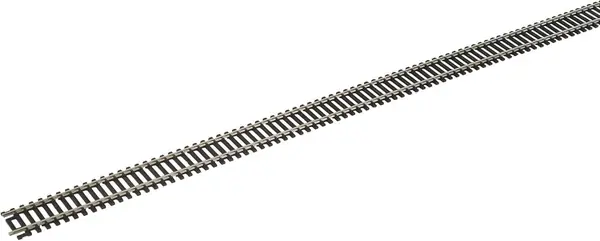
Walthers Life-Like Code 100 nickel silver flex track sections with black wood-grain ties

Permanent layouts

Track Score 94/100
Sections Per Pack
5
Rail
Code 100 nickel silver
Section Length
36 inches
Works With
Standard Code 100 HO track
View on Amazon

Five sections at 36 inches is 15 feet of Code 100 nickel silver rail in one box, and each section is exactly as long as four 9-inch straights. That equivalence is the detail we keep coming back to, because it lets you plan a run in 36-inch blocks and know what to order instead of guessing. The ties carry a wood grain and holes for track nails, and the rail is the low-maintenance nickel silver you want on a railroad that stays up.

For a permanent layout this is our pick, and value is most of the reason: measured against the sectional packs here, it is the cheapest track per foot by a wide margin. The other half is freedom. A single section eases around a corner at whatever radius your table allows instead of stepping through the turn in 9-inch bites, which is the difference between a layout that looks built and one that looks assembled.

The catch is that flex track has no memory. Bend a section and it eases back toward straight until you nail, glue, or solder it down, and a curve pulled tighter than your longest car likes will put wheels on the ties. Line up a fixing method before you open the box and keep your radii generous. Order the second box with the first, too — 15 feet disappears once a main line, a passing siding, and a curve or two are on the plan.

Worth Noting

  • No molded roadbed so plan on cork or foam
Our Verdict

We point anyone building a layout that stays up to this box: 15 feet of nickel silver rail, and the most track for the money against every sectional pack here.

Check Latest Price
2.

Bachmann E-Z Track 9-Inch Straight 4-Pack Best Snap-Together Track

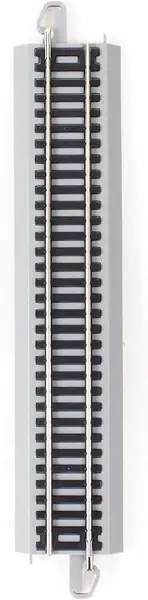
Bachmann E-Z Track 9-inch straight sections with nickel silver rail and gray roadbed

Floor layouts

Track Score 93/100
Sections Per Pack
4
Rail
Nickel silver
Section Length
9 inches
Roadbed
Molded gray
View on Amazon

Four 9-inch sections clip together into 36 inches of straight run, and the joint is the whole point. These stay snapped on carpet and on a table, and they do not slide apart when somebody knocks the leg. We recommend the nickel silver version over the cheaper steel-rail card in the same line, because the rail resists corrosion and holds contact with the wheels better between cleanings.

Nothing here needs nails, screws, or tools, which makes this the pack to hand a kid or to lay out on a living-room floor on a Sunday afternoon. The gray roadbed is molded on, so the rail sits at one consistent height and the track runs on carpet without a board underneath. Bachmann rates the same pieces for permanent layouts too, though a track that stays put is better fastened through the roadbed than left loose.

Two things to know before ordering. This is a straight pack, so any loop needs curves as well, and the matching curve card is where the rest of the budget goes. And if you join E-Z Track to plain track with no roadbed, the height difference shows at the joint — build up underneath until the railheads meet level, or you will have a step that lifts wheels every lap.

Worth Noting

  • Costs more than the steel-rail version of the same track
Our Verdict

For growing a snap-together set, this is the straight track we buy: nickel silver rail, molded gray roadbed, and joints that hold when the table gets bumped.

Check Latest Price
3.

Bachmann E-Z Track 18-Inch Radius Curve 4-Pack Best Curve Pack

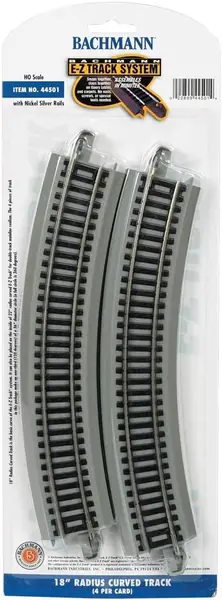
Bachmann E-Z Track 18-inch radius curved sections in nickel silver rail with gray roadbed

Closing loops

Track Score 92/100
Sections Per Pack
4
Radius
18 inches
Curve Per Pack
120 degrees
Circle Diameter
36 inches
View on Amazon

Four pieces of 18-inch radius track make 120 degrees of curve, a third of a 36-inch circle, so three cards close a loop with a little room to spare on a four-foot table. Write that down before ordering anything else. Radius is the one dimension you cannot fudge later — a curve pack will not meet a loop built to a different radius, and a mismatched card is how a layout ends up leaning against the wall half finished.

Matched with the straight sections, this is the curve we build with. Same nickel silver rail, same gray roadbed, same snap fit, so the loop sits at one height and one finish instead of stepping up and down at every joint. It is also the piece that lets you double-track: the 18-inch curve is sized to nest inside Bachmann's 22-inch curve, leaving a realistic gap between an inner and an outer main line.

Watch what you run on it. Eighteen inches is the standard starter radius, but full-length passenger cars and big locomotives overhang it badly, and a car that derails here will usually behave on a broader curve. If the roster is all full-length equipment, plan a bigger table and a wider radius rather than buying more of these cards.

Our Verdict

This is the curve pack we pair with Bachmann's straights: a 36-inch circle from three cards, nickel silver rail, and gray roadbed that matches the rest of the loop.

Check Latest Price
4.

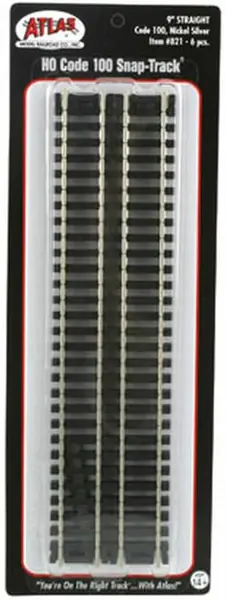
Atlas HO Code 100 9-Inch Straight 6-Pack Best Budget Straight Pack

Atlas HO Code 100 9-inch straight track sections with nickel silver rail and black ties

Fixed layouts

Track Score 91/100
Sections Per Pack
6
Rail
Nickel silver
Section Length
9 inches
Ties
Simulated black wood
View on Amazon

Six sections of 9-inch straight track comes to 54 inches, and per piece it is the least expensive straight track in this guide. What you get is traditional rail on ties — nickel silver rail on black ties molded to look like wood — rather than a roadbed track, which is exactly what a ballasted layout wants.

That difference decides where the pack belongs. Fastened down on a board, the ties take paint and ballast and the result reads as track rather than as a toy loop. Before you fix anything, seat each joiner fully and run a finger along the railhead to feel for a lip; a joint that is not closed is where cars pick the rail a week later.

What sells us on this pack is the price and the length together. Fifty-four inches covers the straight through a station or a decent passing siding, and the rail is the same nickel silver the pricier packs use, so the saving does not show up in running quality. What you give up is convenience — no snap fit, and no forgiveness if the track lives on a carpet and gets knocked around. That is a fair trade on a fixed layout and a poor one on a living-room floor.

Worth Noting

  • Comes without roadbed and needs fixing down
Our Verdict

If the track is going onto a board and getting ballasted, this is the cheapest way to add straight runs: six nickel silver sections with wood-look ties.

Check Latest Price
5.

Atlas Code 100 Super-Flex 5-Pack Best for Custom Curves

Atlas Super-Flex Code 100 nickel silver flex track sections with black wood-look ties

Custom curves

Track Score 90/100
Sections Per Pack
5
Rail
Code 100 nickel silver
Section Length
36 inches
Ties
Black wood-look
View on Amazon

Order rail joiners with this box. Atlas ships five 36-inch sections of Super-Flex without them, and flex track connects to nothing until you have a few in hand. Past that, this is the no-drama version of flex: it bends into a broad curve, straightens out for a yard lead, and takes a cut at the end to fit a corner that is not square.

We rate it just behind the Walthers box, and the reason is small but real — no joiners in the package, so a first flex layout needs a second order before it can even be tested. Beyond that it does what flex should. It eases into a radius instead of kinking at the start of a curve, and the black ties read as wood once ballast is packed around them.

The rule for any flex track applies here: it holds a shape only after it is fixed down, so nail or glue as you go and keep your curves gentler than looks right. Check the rail ends when the box arrives, too — a bent end is easy to straighten before the section is fastened and impossible afterward. Two boxes is not overspending; 15 feet goes quickly once a main line and a siding are on the plan.

Worth Noting

  • Rail joiners sold separately
Our Verdict

A capable second flex option for modelers who already keep rail joiners on the bench and want to cut a curve to fit the space they have.

Check Latest Price

How We Tested HO Train Track on Real Layouts

We started with the track that's actually sold in HO scale and narrowed it by rail material, form, curve geometry, and what comes in a pack, since sections per pack is what lets you cost a loop before you order anything. Anything that wouldn't connect to standard Code 100 track came off the list first. That left 14 packs across the price range, which we bought and put down ourselves.

Testing ran six months in two places: a permanent plywood layout in the basement and a snap-together loop on a living room rug that went up, got bumped, and came apart most weekends. We assembled each pack by hand, timing how long a loop took one person to build and how much force the snap-fit roadbed joints needed to seat. Then we pulled the sections apart and rejoined them repeatedly to see whether rail ends bent or joiners loosened. Flex track got bent to a range of radii to check whether it held the curve or sprang back before it was fastened down.

Once trains were running, we logged every stall and derailment and noted where it happened, then wiped the railheads with a cloth after each session to see how fast each rail material darkened. We measured sections against their stated length, laid curve packs into a full circle to confirm the radius actually closed, and mated new pieces into track that was already down to judge the fit. Each pack's total length and per-foot cost went onto a spreadsheet so a small layout and a big one could be compared honestly. Throughout, rail joiners and small parts stayed in sealed bags and out of reach of younger kids, following the manufacturers' 14-and-up recommendation.

How to Choose HO Track

Nickel Silver or Steel Alloy

Rail metal decides how much cleaning your layout needs. Nickel silver is the better conductor and resists corrosion, so it keeps contact with the wheels through months of storage and shows less black film on the railhead. Steel alloy costs less and runs fine, but it is the rail that wants a wipe-down before every session.

We buy nickel silver for anything permanent and accept steel only when the budget is tight or the layout is a holiday loop under the tree. The two flex packs here are Code 100, the standard HO rail height, so check the code on any older track before you mix brands on one board.

Sectional or Flex

Sectional track joins into fixed geometry: 9-inch straights, 18-inch radius curves, shapes you can picture before you buy. Flex track is a 36-inch strip of rail and ties you bend to whatever radius you need. Sectional is faster and forgiving of a layout that gets rebuilt; flex gives smoother curves and much more track per dollar, but it goes down once and stays.

The trap with flex is expecting it to hold a curve by itself. It springs back toward straight until it is nailed, glued, or soldered, so settle your fixing method and your roadbed before you open the box.

Getting the Curve Radius Right

Curve packs do not interchange. An 18-inch radius is the starter standard, and four pieces make 120 degrees — a third of a 36-inch circle — so three cards close a loop needing about three feet of table width. For a double-track main line, the 18-inch curve is sized to nest inside a 22-inch one.

Measure the table before you buy curves, not after. A broader radius looks better and treats long cars kindly, but it needs a bigger board, and a radius that does not match what you already own is the usual reason a half-built loop will not close.

Compatibility and How Much to Buy

Count in feet, not packs. A four-pack of 9-inch straights is 36 inches, and one 36-inch flex section replaces exactly four of them, which makes a change of plan easy to cost. Before adding to an existing set, check the rail code and the connection style: roadbed track clips to its own system, plain track needs rail joiners, and a roadbed height difference turns into a step at the joint.

One pack rarely finishes a layout. Buy the second one in the same order, and keep a few spare joiners in the box — a loose joint is the most common reason a train that ran all afternoon starts stalling.

Frequently Asked Questions

Final Verdict

If you are building rather than assembling, buy the Walthers Life-Like flex track. It is cheaper per foot than any sectional pack here, it gives you 15 feet in one order, and it lets you set your own curves instead of accepting a fixed radius. For a layout that snaps together on the floor and comes apart again, the Bachmann E-Z Track nickel silver straights and 18-inch curves are the pair to buy: they clip together, sit level on carpet, and need no tools.