Best Model Train Tunnels of 2026

A model train tunnel hides the hole in the scenery and frames the half-second when a train slips out of sight. The arch is the problem. A portal that looks generous on the workbench can clip a smokestack, or sit on a curve so tight that long passenger cars stringline through it.

Clearance came first: calipers on every opening, then the tallest locomotives and cars we own through both portals of 11 tunnels in HO and N. First-time buyers also underestimate that a tunnel is two products, the shell you see and the interior you have to reach into for track cleaning and rerailing. Some of the five picks arrive finished and ready to bed into foam; others are bare kits that want paint, plaster and a weekend.

Our Top Picks

The Best Model Train Tunnels

1.

Woodland Scenics C1311 Curved Tunnel Best Overall
Woodland Scenics HO curved tunnel with green scenery and stone portal

Curved HO layouts

Track Score 83/100
Scale
HO
Dimensions
15.5"L x 25.75"W x 15.5"H
Weight
9.44 oz
Style
Curved
View on Amazon

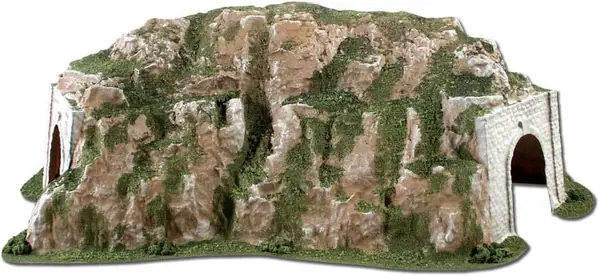
A curved tunnel earns its keep by hiding the awkward part of a layout: the bend where a train turns out of sight. Woodland Scenics builds that scene for you as a ready landform, with a stone portal and green foliage already in place. The listed footprint is 15.5"L x 25.75"W x 15.5"H, so it wants a generous corner rather than a narrow shelf.

What earns it the top spot is how little work it takes to look settled. It is HO scale, and the curve lets a train disappear naturally instead of running through a short straight tube. We also appreciate that the portal and foliage read as scenery, not as a kit waiting for paint. At 9.44 ounces it is light enough to lift for track cleaning, though the size makes it a two-hand job. Set it into a hillside and it looks like it has been there.

We recommend it first for an HO layout with room for a curve and a permanent scene. If your track runs straight, the Noch 2200 is a cleaner fit; if you are still moving track around, a modular Capistrano section is easier to change. This Woodland piece is for the bend you are ready to finish.

Worth Noting

  • Thin shell needs careful handling
Our Verdict

For an HO curve that needs to disappear into a hillside, this ready-finished tunnel comes first.

Check Latest Price
2.

Noch 2200 Straight HO Tunnel Best Straight HO Tunnel

Noch HO single-track straight tunnel kit for model railway scenery

Straight HO track

Track Score 82/100
Scale
1:87
Dimensions
13.39 x 10.63 x 6.3 inches
Weight
4.59 oz
Track
Single track
View on Amazon

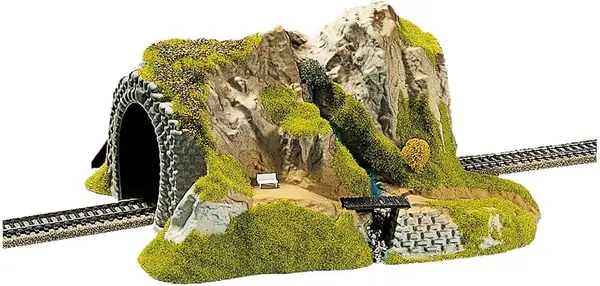
A straight tunnel has a simple job: make a train vanish and reappear without looking like it ran into a box. The Noch 2200 is a single-track HO tunnel at 1:87 scale, with a body listed at 13.39 x 10.63 x 6.3 inches. We like it for a backstraight or a long wall where a curved landform takes too much room.

At 4.59 ounces it is light, and the single-track opening keeps the portal in proportion with HO rolling stock. Noch sells it as a model kit that may require assembly, so it rewards a little bench time rather than a quick drop-on. That is not a drawback for a hobbyist, but it does mean you should plan the portal finish before you bury it in scenery. The 14-and-up age rating is worth noting if younger children share the layout.

We prefer the Noch for a straight run with a formal stone face. If your track bends, the Woodland curved tunnel is the more natural scene. The Noch suits track that is already straight and a hillside that needs to look deliberate. Its 13.39-inch length gives a useful run of cover without the broad footprint of the Woodland curve.

Our Verdict

If your HO track runs straight into a hillside, this single-track tunnel gives you a clean portal without a curve to match.

Check Latest Price
3.

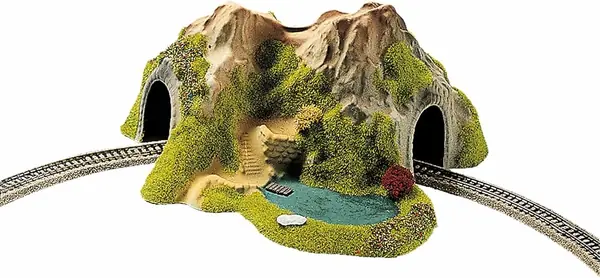
Noch 34660 Curved N Tunnel with Lake Best N Scale Scenic Tunnel

Noch N scale curved tunnel model kit with single track and lake

N scale curves

Track Score 81/100
Scale
1:160
Dimensions
9.84 x 9.84 x 4.72 inches
Weight
2.47 oz
Style
Curved with lake
View on Amazon

A tunnel with water beside it does more than hide track; it gives the eye somewhere to go before the train reappears. Noch's 34660 is a curved single-track N-scale tunnel with a lake built into the scene. At 9.84 x 9.84 x 4.72 inches and 2.47 ounces, it is compact enough for a shelf-size N layout and leaves room for a little foreground scenery.

The curve and the lake work together as a single scene. A plain portal hides the train; this one gives the eye a reason to linger. The 1:160 scale is right for N gauge, and the single-track opening keeps the scene from feeling crowded. It is a model kit, so expect assembly and finishing before it looks like the picture on the box. That kit work is the main trade-off: you are buying a project, not a ready-made landform.

We recommend the 34660 for an N-scale layout with one scenic focal point. It gives a small layout a strong scene without a big footprint. If you need a straight tunnel, the Noch 2200 is the HO counterpart; if you want N scale without the lake, the NWFashion is the simpler shell. This is for the bend you want people to notice.

Our Verdict

For an N-scale curve that deserves a focal point, the lake beside this single-track tunnel makes it the scenic pick.

Check Latest Price
4.

Capistrano Creations HO 9-Inch Straight Tunnel Best Modular Option

Capistrano Creations white PLA 3D-printed HO scale straight tunnel

Modular HO layouts

Track Score 80/100
Scale
HO
Dimensions
9 x 3.4 x 3.8 inches
Length
9 inches
Material
White PLA plastic
View on Amazon

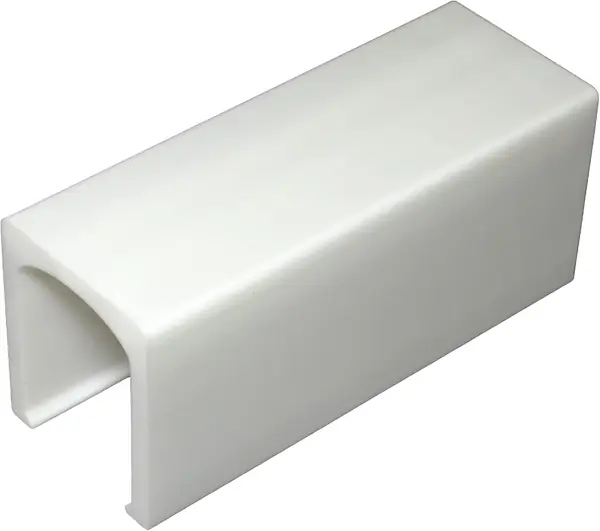
The most useful thing about this tunnel is not the single piece in the box; it is the system behind it. Capistrano sells the HO tunnel in 19 style options, with straight lengths and curved sections defined by radius and degrees. The 9-inch straight section here is 9 x 3.4 x 3.8 inches, so it covers a short run without committing you to a fixed scene. That matters because a tunnel that only works in one spot can become a problem when the track plan changes.

We like that modularity for a layout that is still changing. You can start with a straight piece, add a curve later, and paint the whole run to match. The white PLA shell is a blank canvas; it will look like a 3D print until you add primer, paint, and weathering. That is the work you trade for the lower cost and the flexibility. The included piece is one tunnel, so a longer run takes several sections.

For a first HO tunnel on a tight budget, this is the one we point to. It is also the better choice if you enjoy finishing scenery yourself. If you want a ready-made hillside, the Woodland Scenics curve is the faster route; the Capistrano is for the builder who wants to change the plan.

Our Verdict

This is the modular pick for HO layouts built in stages: a plain 3D-printed tunnel you can paint and add to as the track plan grows.

Check Latest Price
5.

NWFashion N Scale Rockery Tunnel Best for Small N Scenes

NWFashion N scale plastic rockery tunnel with molded scenic finish

Small N scenes

Track Score 79/100
Scale
1:160
Dimensions
12 x 15.5 x 9 cm
Weight
2.65 oz
Opening
7.5 x 7 cm
View on Amazon

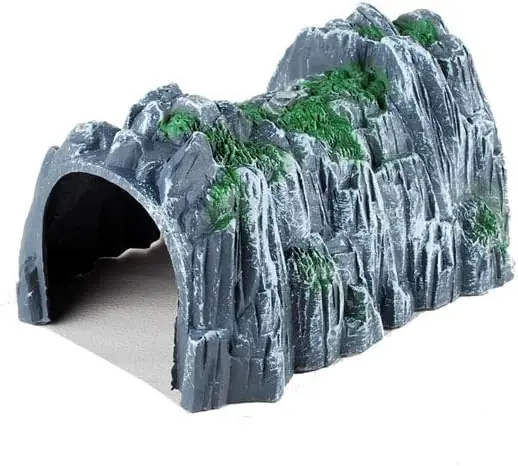
The first number we check on the NWFashion tunnel is the opening: 7.5 by 7 centimeters. For a quick N-scale scene, we like what that opening allows: enough room for a train to pass without turning the tunnel into a display arch. The outside is 12 x 15.5 x 9 centimeters, so it fits a shelf scene or a tight corner.

The molded rockery finish gives you a hillside without assembly, and the 75-gram plastic is easy to position and move. It is a simple shell, so it will not carry the detail of a Noch kit; what it buys you is speed and a small footprint. The single-piece construction also means there is no assembly to put off. It is light enough to lift off for a quick track check, too.

For an N-scale layout where the tunnel is a background element, this is a sensible quick choice. If the tunnel is the focal point, the Noch 34660 with the lake is the better scene. The NWFashion is for the corner where you want a train to disappear without starting a project. Check the opening against your tallest car before you set it in place; a tight fit is easier to fix on the bench than under scenery.

Worth Noting

  • Compact shell limits it to small scenes
Our Verdict

We see this compact N-scale rockery tunnel as a quick scene-builder for a tight shelf, not a centerpiece.

Check Latest Price

How We Tested Model Train Tunnels

We built the shortlist the way a modeler shops: scale and gauge first, then stated portal dimensions, then whether the piece is a straight run or a curve with a real radius behind it. Anything that couldn't clear a tall locomotive or fit a typical layout depth got dropped, which left 11 tunnels in HO and N, from finished shells to bare kits. Several carry a 14-and-up rating, so we handled them as collector scenery, not toys.

Testing ran nine months on two layouts: an HO setup in a basement and an N-scale layout on a spare-room table. We measured every portal opening with calipers, then ran our tallest locomotives and rolling stock through each one under power at switching speed, watching for clipping at the arch and sidewalls. Curved pieces went onto the radius they were cut for, with long passenger cars run through to see whether the ends dragged the rockwork.

Access got its own round. We pushed a cleaning car through each tunnel, then wiped the rails inside by hand with a pad on a stick and counted how many spots we could actually reach. We also staged derailments by lifting a car off the rails just past each portal, timing how long it took to get fingers in and the wheels back on the rail.

Kits were built to the instructions with the paint and plaster they called for, and we logged the evenings each one took. We weighed and handled every tunnel repeatedly while installing and pulling it off the layout, noting which thin shells flexed or dented. Last, we stepped back and judged appearance at normal viewing distance under ordinary room light — casting seams, rock color, how the foliage read — and weighed price against the amount of layout each piece covers.

How to Choose a Model Train Tunnel

Start With Gauge and Clearance

A tunnel's scale label is only the first check; the opening has to clear your tallest locomotive and car. HO, N, and O use different portal sizes, and an O portal is much larger than an N portal. We check the opening before the footprint, because a tunnel that clips a stack car is useless no matter how good it looks. Measure the height and width of your tallest piece, then compare it with the tunnel opening rather than the outside shell.

The trap is buying from exterior dimensions. A big rockery shell can hide a small hole, so ask for the portal opening or test-fit a car before you scenic it in. If the opening is close, leave a little side-to-side room for curves; a car that clears on straight track can lean into the portal on a bend.

Match the Track Geometry

Straight tunnels are sized by length; curved tunnels are sized by radius and degrees. Those numbers are not interchangeable. A curved tunnel meant for a 15-inch radius will not sit cleanly over an 18-inch curve, and a modular section that covers 30 degrees takes three pieces to make a 90-degree turn. Compare the tunnel's geometry with the track centerline before you order.

We prefer to leave a short straight at each portal if the layout allows it. That gives the tunnel a clean transition and makes the shell easier to lift. The Woodland Scenics curve is a one-piece scenic answer; the Capistrano sections are the flexible answer when the track plan is still moving.

Plan for Access

A tunnel is the one piece of scenery that can swallow a derailment. Before you bury it, decide how you will reach the track inside. A lift-off shell, an open back, or a tunnel that sits over a removable track section all make cleaning and recovery easier. We keep the tunnel loose until the track has run clean for a few sessions.

The trap is fixing scenery around a difficult track section because it looks good in the moment. Do not bury a turnout or a short transition where a car is likely to derail. If the tunnel must be permanent, leave an access panel at the back or side.

Decide How Much Finishing You Want

Ready-made landforms cost more but let you run trains sooner. Kits and 3D-printed shells cost less and give you control over paint and weathering, but they ask for bench time. We recommend a ready-finished tunnel for a first layout or a scene you want done this season; choose a kit or a white print when the tunnel is part of the hobby you enjoy.

The trap is treating a 3D print as a finished model. White PLA shows layer lines and reads as plastic until you prime, paint, and blend it into the ground. Budget for those supplies and a test piece before you commit a long run.

Check Size Weight and Handling

A tunnel that fits the train can still be too big for the layout. Tape the footprint on the baseboard before you order, especially for a curved piece with a long wing. The Woodland curve is a large landform; the Noch N tunnel is a compact 9.84-inch square. Light shells are easier to lift, but thin scenery can crack if it is handled roughly.

We like a tunnel that can come off the layout without a fight. Keep pets and heavy tools away from thin shells, and support the base when you move a large landform. If the tunnel sits on a shelf, check that the shell does not overhang the edge.

Frequently Asked Questions

Final Verdict

We recommend the Woodland Scenics C1311 first for an HO layout with room for a curve. It is the most complete answer here: a ready-finished landform that hides the bend and looks settled without extra work. If your track runs straight, the Noch 2200 is the cleaner fit; for N scale, choose the Noch 34660 when you want the lake as a focal point. The Capistrano sections make sense for a layout you plan to paint and change.