Best Clear Coats for Models of 2026

Twenty hours of painting, decaling and weathering can come down to one pass of a spray can. A bad clear coat frosts the finish, crinkles decal film or turns a careful matte figure into something that looks like a gas-station toy. A good one seals the work, gives the sheen you were after and holds up to fingerprints and sunlight.

The word "flat" on a label tells you surprisingly little. Some flats read like dust on armor; others leave a faint sheen that looks wrong on a car body and right on a canvas tarp. Chemistry matters as much, because a hot solvent over water-based acrylic can lift paint you spent a weekend on. The seven picks, from cans sprayed on low-humidity mornings to bottles brushed at the bench, cover a whole prop in two passes or a dab of gloss on an eye.

Our Top Picks

The Best Clear Coats for Models

1.

Tamiya TS-80 Clear Flat Spray Best Overall
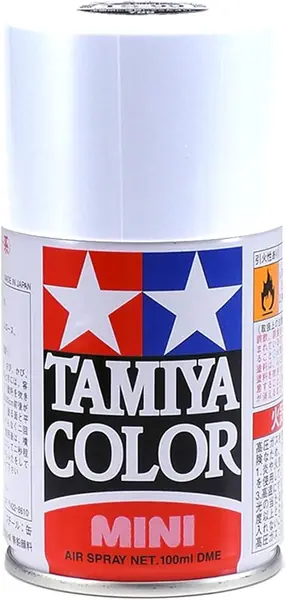
Tamiya TS-80 clear flat spray can of matte lacquer topcoat for plastic models

Figures and armor

Track Score 98/100
Size
3.38 fl oz
Finish
Flat (matte)
Dry Time
30 minutes
Safe Surfaces
ABS, styrene, and metal parts
View on Amazon

A decal tells you everything about a clear coat. Spray a flat coat too hot or too heavy and the carrier film turns milky, silvering across a shoulder or a wing like a stain that will not wash off. What we look for instead is film that sinks into the paint until the marking reads as though it was airbrushed on, and TS-80 gives us that more consistently than anything else in this group. That is why it is our top pick for plastic models.

The finish itself is where flat coats usually cheat. Plenty of them dry to a faint eggshell sheen that only shows up under a lamp, which is exactly when you notice it. This one goes down genuinely flat with no sheen at all, and it stays thin enough that panel lines, rivets, and face detail survive intact. It is also unusually forgiving for a lacquer: a slightly heavy pass dries out instead of pooling, and the can does not spit.

The label gives half an hour to dry, and it behaves that way at the bench. You can seal a figure and move on to basing or assembly the same afternoon. It is built for ABS and styrene but also works on metal parts, so a mixed-media build does not need a second product.

What it will not do is give you a shine. The flat finish dulls bare plastic and metallic paints along with the paint you wanted flattened, and if a build depends on chrome or a candy gloss, this is the wrong can. For figures, armor, and anything that should look painted rather than polished, it is the can we reach for first.

Worth Noting

  • Flat finish dulls bare plastic and metallic paints
Our Verdict

Our default matte spray for plastic models: it flattens shine without burying detail, treats decals kindly, and forgives a nervous first coat.

Check Latest Price
2.

Mr. Super Clear UV Cut Flat Best UV Protection

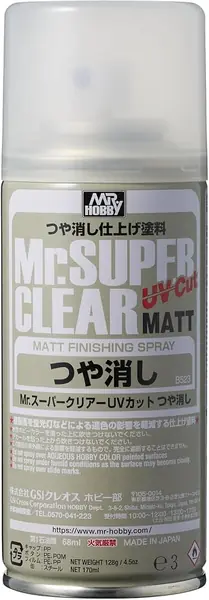
GSI Creos Mr. Super Clear UV Cut flat matte spray can for models and dolls

Display figures

Track Score 97/100
Size
5.74 fl oz
Finish
Flat (matte)
Works Over
Mr. Color and hobby lacquers
UV Protection
UV-cut coating
View on Amazon

Flat is a promise a lot of cans break at the last second, flashing back to a faint sheen when a pass goes on heavy. This one holds. Over-spray it and it stays matte, with no ghost shine and no chalky bloom across the surface, which makes it forgiving in exactly the spot where you are most likely to spoil a finished figure. That reliability is why it never leaves our spray box.

What separates it from the Tamiya flat is the UV-cut chemistry. The point of the series is to slow the yellowing that light causes on pale plastics and light-colored paint, and for a display piece sitting near a window that is worth paying for. It also works mid-process rather than only at the end: a thin pass locks in a layer of work before you move on to the next stage.

The chemistry is the catch. The maker's instructions are blunt that it cannot go over water-based hobby colors, that it will damage slide decals applied underneath, and that hot, humid days above 86°F and 70 percent humidity can make it blush. Decal-heavy aircraft and cars should take the Tamiya flat instead. For a figure painted in lacquer, or in acrylics that have fully cured, thin mist passes on a dry day give you the flat finish without the drama.

Worth Noting

  • Solvent coat can damage decals and water-based paint
  • Premium price for a 5.74-ounce can
Our Verdict

The matte coat we trust for pieces that live on a shelf: it blocks UV yellowing and flattens shine completely, though the solvent load demands a light hand.

Check Latest Price
3.

Tamiya TS-13 Clear Best Gloss Spray

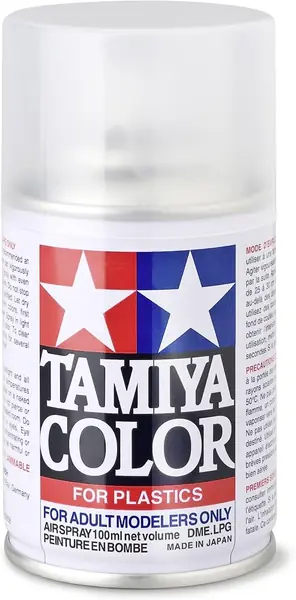
Tamiya TS-13 clear gloss spray lacquer can for plastic model car bodies

Gloss car bodies

Track Score 96/100
Size
3.38 fl oz
Finish
Gloss
Dry Time
1 hour
Safe Surfaces
Plastic
View on Amazon

A clear gloss has one job: make the color underneath look a foot deep. TS-13 does it. It sprays on wet, the flake in a metallic base wakes up, and the surface levels out instead of drying with the pebbled texture cheaper cans leave behind. On a body shell or a mecha's shoulder armor, that is the difference between a model that looks painted and one that looks dipped.

It earns its keep mid-build too. A light pass over a figure before panel lining gives a wash a sealed surface to flow across, so the lines fill instead of staining the paint around them, and decals get a protective layer that survives handling. Smooth is the word for how it goes down: it self-levels in a way that reads more like an airbrush pass than a rattle can.

Where it stops short of the label's promise is mirror gloss. The shine is deep rather than glassy, so a show-car build still wants a polish afterward or a two-part clear on top. What we keep the can for is everything else: sealing a decal sheet, protecting a painted figure from fingers, and giving a prop a clean, even sheen.

Worth Noting

  • An hour to dry before the next step
Our Verdict

For car and bike builds, this is the gloss: it sprays on wet-looking and smooth, then protects the paint and decals underneath.

Check Latest Price
4.

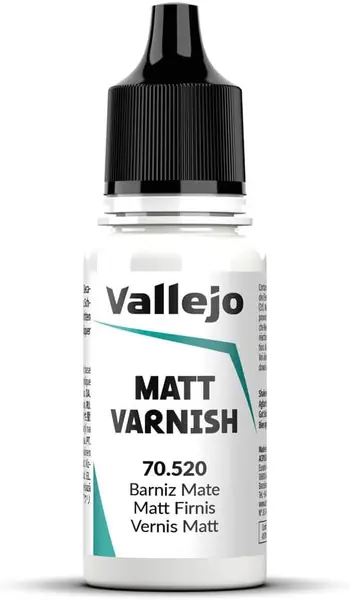
Vallejo Matte Acrylic Varnish Best Brush-On Matte

Vallejo matte acrylic varnish in a small dropper bottle for brush-on model sealing

Indoor brush work

Track Score 95/100
Size
0.6 fl oz
Finish
Matte
Base
Water-based acrylic
Application
Brush-on
View on Amazon

Not everyone has a garage, a balcony, or weather that cooperates with a rattle can. If your painting happens at a kitchen table, a brush-on varnish is the whole answer, and this small bottle is the one we keep within arm's reach. A thin coat over a finished figure pulls the shine down, settles into the recesses, and dries smooth and even rather than leaving brush texture behind.

What we appreciate most is what it does not do. It does not blur the paint job or darken the colors underneath, and it pulls gloss paint back to flat without turning it gray. On hard model plastic it dries truly matte; on softer vinyl it lands closer to satin, which is worth knowing before you coat a whole squad of large-scale figures.

Water is the rest of the appeal. It thins with a drop from the tap, it will not lift the acrylics underneath the way a solvent coat can, and cleanup is a rinse. You are building protection in thin layers rather than laying down one solid film, which is slower going but keeps detail crisp on small figures.

Worth Noting

  • Small 0.6-ounce bottle empties fast on a full unit
Our Verdict

For anyone who cannot spray where they paint, this is the matte sealer we point to: brushable, water-based, and it dulls gloss without darkening your colors.

Check Latest Price
5.

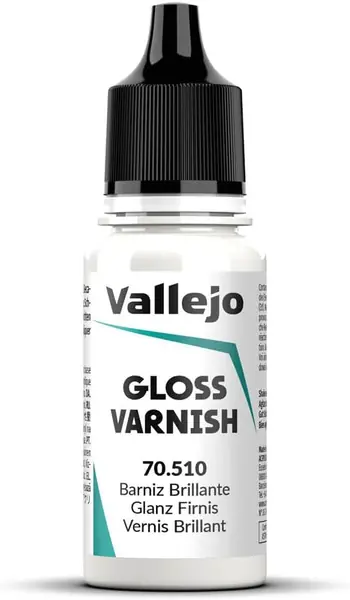
Vallejo Gloss Acrylic Varnish Best for Gloss Detail Work

Vallejo gloss acrylic varnish bottle for brush-on detail shine on miniatures

Eyes and lenses

Track Score 94/100
Size
0.6 fl oz
Finish
Gloss
Base
Water-based acrylic
Application
Brush-on
View on Amazon

An eye is about two millimeters across, and it decides whether a face reads as alive. A dot of this over the iris gives it a hard, glassy catchlight; the same trick makes a gem, a lens, a tongue, or a puddle of slime look wet. For work at that scale, brushing beats spraying outright, because you decide exactly where the shine lands and how much of it there is.

It is the same acrylic family as the matte bottle, so it thins with water and rinses out of a brush without solvent. The gloss is genuinely high, and metal paints keep their sheen underneath instead of going dull. On a detail it takes one thin coat rather than a build-up, which is why a bottle this size lasts through a whole army's eyes and lenses.

Our one caution is the cure. A thick drop can stay faintly tacky for days, so gloss details go on last and the figure goes back on the shelf rather than into a foam tray the same night. Kept thin, it dries clear and hard and holds that wet look through handling. For putting shine exactly where you want it, nothing else in this group does the job as cleanly.

Our Verdict

We use this one by the drop, not the coat: eyes, lenses, and wet effects get a glassy highlight that survives handling after the rest of the figure goes matte.

Check Latest Price
6.

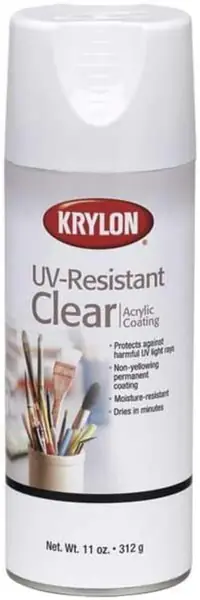
Krylon UV-Resistant Clear Gloss Best for Large Models and Props

Krylon UV-resistant clear gloss aerosol can for large models and props

Props and terrain

Track Score 93/100
Size
11 oz
Finish
Gloss
Coverage
15 sq ft per can
Cure Time
5 hours
View on Amazon

Fifteen square feet per can is a lot of clear coat, and it is the number that makes this Krylon worth keeping on the shelf. A sixth-scale figure, a helmet, a foam-built prop, a table's worth of scenery — all of it fits inside one can's working life. That is not true of the three-ounce hobby aerosols here, which a big prop can drink dry in an afternoon.

The protective spec is the other draw. It is sold as UV-resistant and non-yellowing, moisture-resistant and smudge-proof, which matters for anything that sits near a window or gets handled by people who are not modelers. Plastic, metal, wood, glass, and ceramic are all listed, so a mixed-material build does not need a second product.

Spraying it is not a kitchen-table activity. The fumes are strong, so we take anything larger than a shoe box outside or to a garage door and leave it there to flash off. Light overlapping passes give the even coat; flooding a clear this thin is how you end up chasing runs with a brush.

It is a big-surface tool rather than a fine-scale one. Nobody reaches for this can to seal a 28 mm miniature, because the spray pattern and the film are both too broad for that. But when a prop, a vehicle, or a whole table of scenery needs a protective coat before the weekend, it is the one that finishes the job in a single sitting.

Worth Noting

  • Gloss lands closer to satin than wet
  • Five hours to a full cure
Our Verdict

When the model is bigger than your hand, this is the can we grab: broad, forgiving coverage with UV protection at a price that makes scenery painless.

Check Latest Price
7.

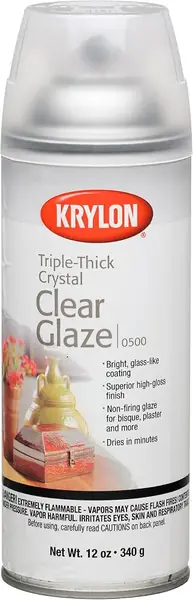
Krylon Triple Thick Clear Glaze Best for Thick Gloss Builds

Krylon Triple Thick clear glaze aerosol can for high-gloss craft and prop finishes

Thick gloss builds

Track Score 92/100
Size
12 oz
Finish
High-gloss
Dry Time
15 minutes
Coverage
56 sq ft
View on Amazon

One coat equals three coats of most clear coatings — that is the claim on the can, and spraying it makes the arithmetic easy to believe. The glaze goes on thick and dries glassy, so a bare craft piece or a big prop picks up a deep, wet-looking surface in a single pass instead of four.

The numbers around it are friendly. A can covers up to 56 square feet, it is dry to the touch in about 15 minutes, and it stays clear rather than hazing as it sets. On a smooth surface the result comes close to poured resin, a look that takes real patience to build with a thin hobby lacquer.

We treat it as a scenery and prop product rather than a figure product: a flat panel or a prop shell gets a deep shine out of it in one pass, while small-scale work rewards the finer control of a hobby clear. Buy it for the big, glossy stuff and keep a thin matte for the models.

Worth Noting

  • Thick film can fill fine engraving
Our Verdict

One pass builds the depth of three, which makes this the fastest route to a thick, wet-looking shine on props and scenery.

Check Latest Price

How We Tested Clear Coats for Models

We started with tech sheets and label warnings rather than marketing copy, then narrowed the field by chemistry — solvent lacquer versus water-based acrylic — along with sheen, container size, and stated coverage per can. Over five months we put 16 clear coats through the same routine, using painted plastic spoons, spare armor plates, decal-covered panels, and a couple of finished figures that had already been through the whole paint process.

Spray sessions happened outdoors on a back porch, on mornings when we'd checked the forecast first; anything above 86°F or 70 percent humidity waited for another day, and cans stayed well clear of the grill and the water heater. We laid down thin passes and watched for blushing, then checked whether the coat crinkled decal film, lifted the acrylic underneath, or frosted a gloss finish that had looked fine minutes earlier. Sheen was judged side by side under the same lamp against an uncoated control — whether a flat genuinely killed the shine on a figure or a gloss read deep instead of syrupy.

Once cured, parts went into a box to knock around together; we rubbed edges with a thumb, scratched at them with a fingernail, and taped and peeled masking tape off cured panels. A few pieces sat on a sunny windowsill for weeks to see whether they yellowed. We timed how long each coat took to stop leaving fingerprints, weighed cans before and after covering identical panels to work out the real cost per model, and brushed the bottles onto eyes, lenses, and small details to see whether they leveled out or left brush marks.

How to Choose a Clear Coat for Models

Match the Chemistry to What's Underneath

Almost every clear coat failure traces back to the layers below. Solvent lacquers — most hobby aerosols — bite into the surface to bond, which is why they hold so well on styrene and lacquer paint and why they can wrinkle water-based acrylics or lift a waterslide decal if you flood them. Water-based acrylic varnishes are the gentler option: they sit on top, thin with water, and will not attack the paint, though protection builds more slowly.

Spray or brush a test patch on a scrap piece coated the same way as the model. It costs five minutes and can save a finished figure.

Pick Spray or Brush by Where You Work

An aerosol lays an even, thin film over a whole model in one pass and reaches recesses a brush cannot, but it needs moving air — a garage, a balcony, a window with a fan — and it is a poor fit for a kitchen table. A brush-on varnish needs no ventilation and puts the coat exactly where you want it, which is why a small gloss bottle earns a place even if you spray everything else.

Coverage differs sharply too: an 11-ounce can is rated around 15 square feet, while a hobby can holds a third of that, so a large prop can drink a small can dry.

Choose a Sheen for the Model, Not the Shelf

Matte flattens a figure and makes it read as painted rather than toy-like, which is what most military, fantasy, and gaming models want. The cost is that it dulls metallic paints and bare plastic along with everything else, so metallics sometimes get a gloss pass first. Gloss deepens color, protects decals, and gives car bodies and mecha their shine, but it shows dust and sanding scratches. Satin splits the difference and hides more than either.

If you cannot decide, buy the matte and keep a small gloss bottle for detail. That pair covers nearly everything on a normal bench.

The Gloss-Then-Flat Method

Worth knowing before you buy: gloss first, flat last. A gloss coat gives decals and panel-line washes a smooth, sealed surface, so the wash flows into the lines instead of staining the paint around them, and the decal film stops catching the light. Once the decals and weathering are done, a flat coat takes the shine back down and ties the finish together.

That is why owning one of each beats choosing sides. The two cans together do more than either one alone.

Frequently Asked Questions

Final Verdict

For most plastic models, Tamiya's TS-80 flat is the clear coat we hand people first: it kills shine without filling detail, and it treats decals better than anything else in this group. If the piece lives where sunlight reaches it, the UV-cut Mr. Super Clear is worth the extra money, as long as what is underneath can take a solvent coat.

And if you cannot spray indoors at all, a bottle of Vallejo's matte acrylic varnish and a soft brush will get you a long way.