Best Airbrush Primers for Models and Minis of 2026

Primer decides how the next few hours at the bench go. A bad coat beads off bare plastic, fills the panel lines you spent an evening rescribing, or dries grainy enough to show through every layer on top. A good one lets color go on smoother, cover in fewer passes and survive handling.

Start with the color going underneath, then the formula. New buyers tend to underestimate the gap between primers that spray straight from the dropper and ones that need thinning before they stop clogging a fine nozzle. All seven here leave fine detail alone on plastic kits, resin miniatures, metal figures and a polycarbonate slot car body, which we primed over four months.

Our Top Picks

The Best Airbrush Primers for Models and Minis

1.

Vallejo Surface Primer Black Best Overall
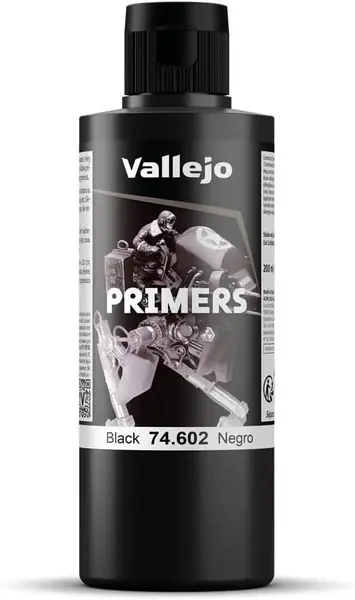
Vallejo Surface Primer Black bottle of matte black acrylic primer

General model priming

Track Score 96/100
Bottle Size
6.76 fl oz (200 ml)
Finish
Matte
Base Color
Black
Recommended Pressure
15-20 PSI
View on Amazon

A primer coat is the step that decides whether the rest of a paint job feels easy or fights you. The Vallejo Surface Primer Black is the bottle we reached for first: 200 ml, water-based, and thin enough to spray neat at the 15 to 20 PSI Vallejo recommends. It laid down a flat black base without burying detail, which is exactly what we want before color goes on, especially on miniatures with fine edges.

Coverage is why it earns the top spot. A little goes a long way, and one thin pass gives an even base rather than a wet coat that pools in recesses. We also appreciate the matte finish: it gives the next acrylic something to bite and makes it easy to see whether a second pass is needed.

The listed dry time is half an hour, and it is touchable soon enough to keep a batch moving without rushing. That flat finish also photographs well under work lights, so we can spot a missed corner before the color coat locks it in. The 6.76 fl oz bottle is the long-term size, and the line comes in smaller bottles if you want to try it first.

Adhesion is the one place we slow down. On clean, degreased plastic and resin it held well in our tests, but it can rub at sharp edges if you handle a primed piece before it fully cures. Wash the parts first, spray thin coats, and give them more time than the touch-dry figure before painting or sanding. The black also works as a shadow base under gray or white, which makes the big bottle more useful than a single-purpose undercoat.

Our Verdict

We recommend the Vallejo Surface Primer Black as the default for most modelers: it sprays cleanly, covers in thin coats, and leaves a flat base without hiding detail.

Check Latest Price
2.

Badger Stynylrez 3-Tone Primer Best Multi-Tone Set

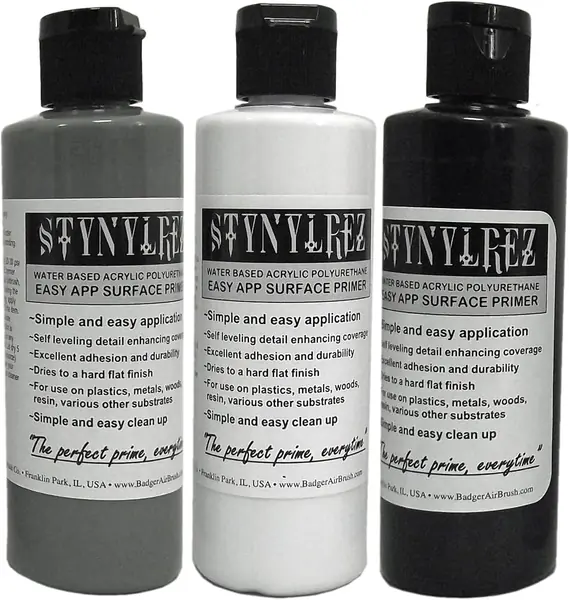
Badger Stynylrez three bottles of white gray and black primer

Multi-tone priming

Track Score 92/100
Bottle Size
4 fl oz each
Finish
Hard flat matte
Compatible Surfaces
Plastic, metal, wood, resin
Set Contents
White, gray, black
View on Amazon

Three 4-ounce bottles of white, gray, and black make Stynylrez the set we reach for when a batch has different base needs. The acrylic-polyurethane formula is ready to spray, self-leveling, and intended for plastic, metal, wood, and resin; it is meant to lay down a hard, flat film that can take light sanding.

The separate tones are the practical advantage. Gray gives a neutral base, black deepens shadows, and white brightens color without a muddy underlayer; because each bottle is 4 ounces, you get enough to learn the primer's quirks before committing to a large bottle. Coverage is even, and the flat finish shows defects while there is still time to fix them.

Application asks for attention. The primer is thicker than the Vallejo, and at low pressure it can clog a fine needle; keep the air up around 20 PSI and thin only if your brush demands it. We prefer to strain it and spray thin passes rather than adding a lot of water, which can dull the film.

Worth Noting

  • Freezing during shipping can ruin the bottle
Our Verdict

The Stynylrez set fits a project that needs white, gray, and black bases, and its hard, sandable film makes it a strong step up from a single bottle.

Check Latest Price
3.

Army Painter Warpaints Air Primer Best Budget

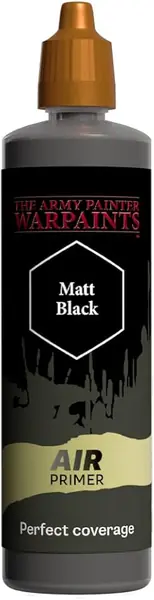
Army Painter Warpaints Air Matt Black Primer dropper bottle

Dark color schemes

Track Score 91/100
Bottle Size
100 ml (3.3 fl oz)
Color
Matt black
Application
Ready to spray
Formula
Water-based acrylic
View on Amazon

The Warpaints Air Matt Black is the budget pick, but it does not feel like a compromise in the hand: the 100 ml dropper bottle is easy to load, the black is dead flat, and the formula is billed as ready to spray without thinning. We like that for dark armor, vehicles, and the shadow pass of a zenithal prime.

Coverage is the appeal. A black primer has to do two jobs at once: give the next layer tooth and leave shadows deep enough to read. This one is designed for airbrush use and finely filtered, so it is a straightforward match for a detail brush. We also appreciate the spill-proof cap for storage between sessions and the control the dropper gives when mixing a small batch.

For a beginner, it is a low-risk way to learn how your airbrush handles a dedicated primer: the dropper lets you load small amounts, and the black shows coverage instantly. It is the right base for a dark scheme, or for a deep shadow under a lighter topcoat. The 100 ml bottle is also a sensible size to finish before it sits around.

Worth Noting

  • Black only in this listing
Our Verdict

We like this as the first airbrush primer for a tight budget: it is ready to spray, loads neatly from the dropper, and gives dark schemes a deep matte base.

Check Latest Price
4.

Vallejo Premium Color RC Primer Best for Lexan Bodies

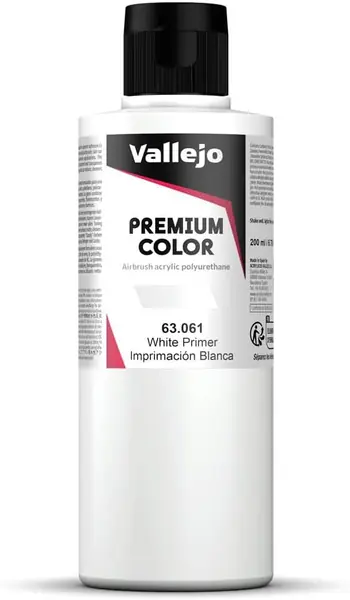
Vallejo Premium Color RC white acrylic primer bottle for airbrushing

Lexan slot-car bodies

Track Score 90/100
Bottle Size
6.76 fl oz (200 ml)
Color
White
Compatible Surfaces
Fiberglass, polyethylene, polycarbonate, metal, Lexan
Formula
Acrylic-polyurethane
View on Amazon

Slot-car shells and RC bodies are a different priming problem: the plastic is often clear or slick, and a primer that merely sits on top will peel when the body flexes. The Vallejo Premium Color RC White is the one here whose label names fiberglass, polyethylene, polycarbonate, metal, and Lexan, which makes it the first bottle we check for a clear slot-car body.

It is a water-based acrylic-polyurethane rather than a plain acrylic, and the white base is useful under bright or warm colors. The maker claims resistance to RC fuel with up to 35% nitro after curing; that matters little for an electric slot car, but it tells you the film is intended to stand up to more than display handling. We like that the 200 ml bottle gives enough for several bodies without moving to a different product line.

The white is also easier to read on a clear shell than gray, so you can see whether coverage is even before the color coat. We keep this bottle separate from our general black primer because it is a specialist, not an all-purpose replacement. For a clear body that needs a bright base, that focus is the reason to choose it.

Worth Noting

  • Four-hour dry time slows recoating
Our Verdict

We choose this white primer for clear Lexan and polycarbonate slot-car bodies because its label names those slick plastics and it builds a bright base for color.

Check Latest Price
5.

Gaahleri Kaleido Colorworks Primer Best for Seam Work

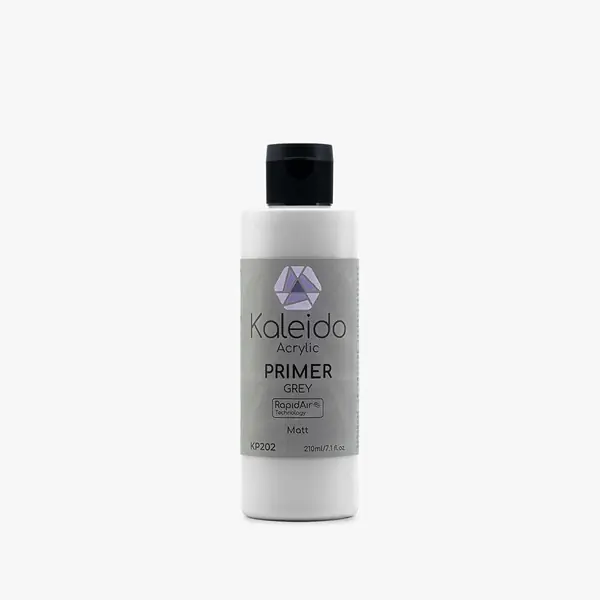
Gaahleri Kaleido Colorworks gray primer bottle for airbrush model building

Seam work

Track Score 89/100
Bottle Size
210 ml
Color
Gray
Finish
1200-grit
Compatible Surfaces
ABS, PS, resin
View on Amazon

The Kaleido Colorworks primer is the one we look at when sanding is part of the job. Its 210 ml bottle is billed as a high-density gray that sprays to a 1200-grit finish, and the maker describes the film as sandable without chipping or leaving raised edges. The gray pigment is meant to cover seam lines and color shifts, which saves a separate primer step on multipart builds.

The primer is intended for ABS, PS, and resin, and the gray is a sensible neutral base for almost any topcoat. We like that combination for parts that will be handled after priming: armor plates, seam lines, and slot-car shells that need a smooth base. We treat the finish as the reason to choose it over a general-purpose bottle, not as a shortcut through surface prep. It is not the cheapest way to buy gray, but the large bottle goes a long way, and for a builder who already knows what a 1200-grit film should feel like, that is the point.

Our Verdict

We like the Gaahleri gray for seam work and sanding: the fine 1200-grit film and large bottle make it a specialized but useful buy.

Check Latest Price
6.

Micro-Mark Surface Primer Best for Touch-Up Work

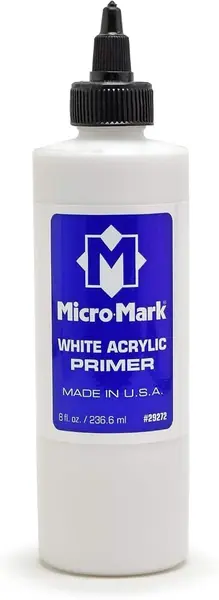
Micro-Mark white acrylic surface primer bottle made in the USA

Touch-up work

Track Score 88/100
Bottle Size
8 fl oz (236 ml)
Color
White
Application
Brush-on, thins for airbrush
Dry Time
0.5 hours
View on Amazon

Micro-Mark calls this a brush-on acrylic, and that is the honest way to read it: the 8-ounce bottle is not a ready-to-spray airbrush primer, but it thins to airbrush consistency and gives you a white base for small parts and touch-ups.

We like it for the jobs where a full airbrush session is overkill: a chipped edge, a small conversion, or a handful of parts that need a white base. The acrylic is water-based and intended for plastic, resin, wood, and metal, and the flat finish does not hide detail. It also dries in about half an hour per the label, so a touch-up does not stall a build.

For airbrushing, expect to thin it and build coverage in two or three passes; it is thinner than a dedicated spray primer, and that is both its advantage on detail and its limitation on coverage. As a brush-on first, it is a useful bottle to keep on the bench. As your only airbrush primer, it asks more patience than the Vallejo or Army Painter options.

Our Verdict

We keep the Micro-Mark bottle for touch-ups and small parts, where its brush-on white acrylic is easier than setting up a full airbrush session.

Check Latest Price
7.

Nicpro Surface Primer Set Best for High-Volume Priming

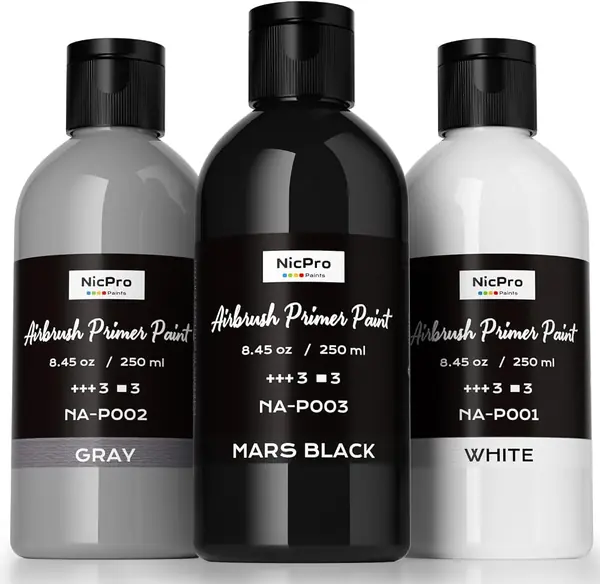
Nicpro three bottles of black gray and white airbrush primer

High-volume priming

Track Score 86/100
Bottle Size
8.45 fl oz (250 ml) each
Finish
Matte
Application
Ready to spray
Set Contents
Black, gray, white
View on Amazon

Three 250 ml bottles for about the price of one hobby-size primer is the reason the Nicpro set gets a place here. You get black, gray, and white, all water-based and billed as ready to spray, which makes it the high-volume option for a club, a classroom, or anyone priming a lot of parts at once.

The colors are the practical part: gray for a neutral base, black for shadows, white for bright topcoats. The set is also self-leveling and matte, and the label gives a 20 to 23 liters-per-minute airflow target for spraying directly. We appreciate having all three on the shelf for batch work, especially when everyone at the table needs a different base.

The catch is setup: this is a thicker primer, and in a small needle it can sputter or clog unless you thin it and keep the air moving. A larger needle and a test pass on scrap will save you a frustrating session. Once it is dialed in, the coverage and the low cost per ounce are the reasons to choose it over a single premium bottle.

Our Verdict

We suggest the Nicpro set when volume matters more than refinement: three large bottles cover every base color, though the thick formula needs a little patience.

Check Latest Price

How We Tested Airbrush Primers

We built the shortlist from labels and spec sheets before we read a single review, sorting bottles by volume and cost per ounce, base color, whether they are ready to spray or want thinning, and the surfaces each maker lists. That narrowed a crowded shelf down to 14 bottles, which we bought ourselves and used over four months.

Testing looked like a normal weekend at the bench. Each primer went through the same gravity-feed airbrush and onto plastic kit parts, resin castings, metal figures, and a polycarbonate slot-car body, sprayed inside a ventilated booth with a respirator and gloves on, as every label directs. We worked each one up and down the pressure range to find where it flowed cleanly and where it began to spit or tip-dry at the nozzle, and we counted spraying sessions between nozzle cleanings.

Film thickness got checked against fine detail: a mist coat over raised panel lines and rivets showed whether the surface stayed crisp or went soft. We timed how long each coat stayed tacky before a second pass was safe, then scribed a hatch through the cured film and pulled tape across it to see what lifted. Primed pieces lived in a storage box and got handled for weeks, which is how edge rub and chipping showed up, and we wet-sanded a few to see whether the coat powdered or gummed up the paper.

Coverage was tracked by how many parts a single bottle carried, and decanted samples spent a cold snap in an unheated garage so we could see which ones separated or turned gritty after shaking.

How to Choose an Airbrush Primer

Choose the Base Color Before the Brand

Black is the shadow base: it makes dark schemes rich and is the first step in a zenithal prime, where you spray gray or white from above to pick out raised detail. Gray is the neutral default for seeing detail and judging coverage. White gives bright colors a clean start and keeps reds and yellows from going muddy. We reach for black most often because it hides thin coverage and works under almost any topcoat.

If you paint a mix of schemes, a three-tone set like Badger Stynylrez gives you all three without three separate purchases. If you mostly paint dark armor or slot-car interiors, the Army Painter black is the more focused buy.

Know Whether It Is Ready to Spray

Ready-to-spray primers save time, but they are not all equally thin. A bottle designed for a fine needle can still clog if it sits or the air is too low. Start at the maker's pressure, test on scrap, and only thin in small drops; over-thinning can make the primer watery and slow to cover. We prefer to adjust pressure before adding thinner.

Stynylrez is the one here where pressure matters most: keep it at 20 PSI or above, because below that it can clog a fine needle. Nicpro lists a 20 to 23 liters-per-minute airflow target and rewards a larger needle. If you want the least mixing, Army Painter and Vallejo are the simpler start.

Prep the Surface and Match the Plastic

Primer cannot rescue a greasy or dusty part. Wash plastic and resin, degrease metal, and let everything dry before spraying. For ordinary polystyrene and resin, the standard Vallejo, Badger, and Gaahleri primers are the sensible choices. For clear Lexan or polycarbonate slot-car bodies, use a primer whose label names those plastics; the Vallejo Premium Color RC is the one here that does.

A hidden area is the place to test a new combination. Spray a thin coat, let it cure, then scratch it with a fingernail before you commit the whole body. If it lifts, the surface is not ready or the primer is not matched to the plastic.

Film Thickness, Detail, and Sandability

Two thin passes beat one wet coat every time. A heavy coat fills panel lines and softens faces; a thin coat leaves the detail and can be built up. We keep the airbrush moving and stop before the surface looks wet. A matte finish is useful because it shows the surface honestly before color goes on.

If you sand between coats, look for a primer that advertises a fine finish and sandability, such as the 1200-grit Gaahleri or the self-leveling Badger. The finer the film, the less likely you are to erase detail while chasing a seam.

Buy for Volume and Store It Cold-Weather Smart

A 100 ml bottle is a fine first purchase; a 200 ml bottle or a three-pack is better if you prime often. Cost per ounce matters more than the sticker on one bottle, but a huge bottle is no bargain if it sits and separates. We look for a size we can finish in a season.

Storage is part of the value: keep caps tight, shake or stir thoroughly, and protect bottles from freezing. Badger warns that a frozen bottle may be unusable, so avoid ordering Stynylrez during a cold snap if it will sit outside.

Frequently Asked Questions

Final Verdict

For most modelers, we recommend the Vallejo Surface Primer Black first. It sprays cleanly, covers in thin coats, and leaves a flat base that makes color behave; the 200 ml bottle gives you room to practice without changing products.

If you need a white base for a clear slot-car body or RC shell, the Vallejo Premium Color RC is the better choice. If you want all three tones in one purchase and do not mind a little more fussing with pressure, the Badger Stynylrez set is the stronger buy.