Best FPV Drone Cameras of 2026

The camera is the part of an FPV build you stare at the whole time you fly, and often the part bought last to clear free shipping. The spec sheet doesn't help much. The TVL figure most boxes lead with says less about picture quality than the sensor behind the lens, and a superwide lens is either exactly right or badly wrong depending on whether you're threading a whoop through a garage or flying a 5-inch over a field.

A sky that turns into a white smear will send a camera out of a build mid-session, so low-light handling and dynamic range got as much attention as anything printed on the box. Each of the 14 units went into a frame that suited its size, and the picks run from a whoop camera small enough to lose on the bench to a digital HD air unit.

Our Top Picks

The Best FPV Drone Cameras

1.

RunCam Phoenix 2 SPV3 Best Overall
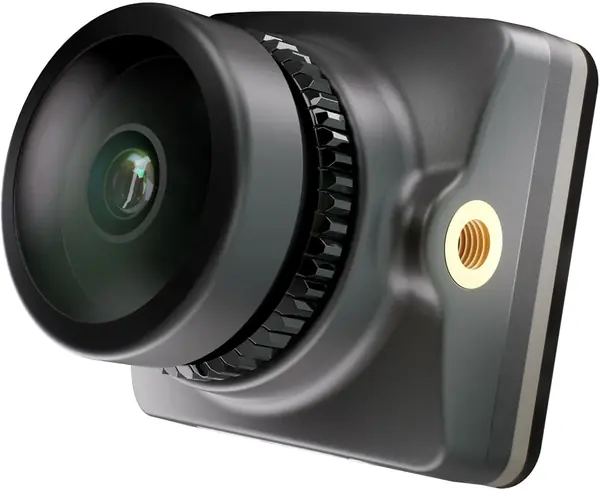
RunCam Phoenix 2 SPV3 black analog FPV camera with lens hood and 19x19mm mount

5-inch analog builds

Track Score 88/100
Weight
0.26 oz
Mounting
19 x 19mm
Power Input
DC 5-36V
Field Of View
160 degrees
View on Amazon

A camera that runs from a 1S whoop pack to a 6S build without a regulator in between is one you can move from project to project, and that flexibility is where our recommendation starts. The Phoenix 2 SPV3 takes 5-36V, and its Global WDR and 160-degree lens give it the most convincing analog picture in this group.

The 19x19mm body is the size most 3-inch and 5-inch stacks are cut for, and at 7.5 grams it doesn't weigh down a small quad. The lens hood is the detail we didn't expect to care about: it shades glare on bright days, takes the scrape that would otherwise land on the glass, and unscrews when it gets too scuffed. Behind it, the covered back plate keeps dust and stray solder off the board, which is more than the bare-board cameras here offer.

Settings go through a RunCam OSD board or your transmitter's menu, and you can switch between 4:3 and 16:9 and between NTSC and PAL, so the camera follows the goggles you already own rather than the other way around.

What we tell people setting one up: leave the WDR on permanently, and pick 4:3 for box goggles and 16:9 for a widescreen display. That one choice decides whether the horizon stays readable when you drop out of sun into trees.

Worth Noting

  • Needs a separate VTX and antenna
Our Verdict

Our pick for most analog builds: the Phoenix 2 gives the most detailed picture here, runs on 5-36V, and bolts to a 19x19mm mount.

Check Latest Price
2.

AKK BA3 AIO Camera Best All-In-One for Tiny Whoops

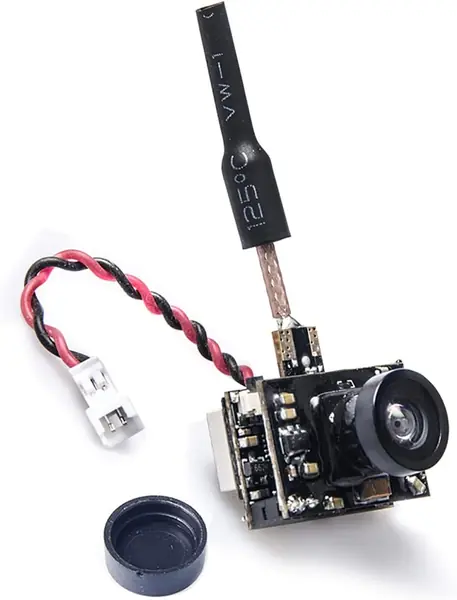
AKK BA3 black all-in-one FPV camera and 5.8GHz transmitter with brass antenna

Tiny whoops

Track Score 87/100
Weight
0.17 oz
Resolution
600TVL
Input Power
3.2-5.5V
Output Power
25/50/200mW
View on Amazon

A 1S whoop has almost no room for a second board, which is why the BA3 puts the camera, a 40-channel 5.8GHz transmitter, and a brass dipole antenna on a single 4.7-gram unit. You supply the 1S pack and the goggles; everything between them is already on the board.

The power switch earns its keep. 25mW is plenty for a living room, 50mW covers the yard, and 200mW reaches further than a whoop's battery usually allows. The 120° field of view is wide enough to see the floor coming up without turning the room into a fishbowl, and the 40 channels cover the bands most goggles scan, so finding a clear one takes seconds.

Against the dedicated cameras here the resolution shows its age — a Phoenix 2 or a Caddx Ant pulls more detail out of the shadows — but in a set of box goggles on a 65mm indoor quad, we think the simplicity is worth more than the last few lines. The 3.2-5.5V input settles where it belongs: this is a 1S part, and it has no business on a 5-inch build.

Worth Noting

  • 600TVL picture is softer than the 1200TVL cameras
  • Micro-only 3.2-5.5V input limits bigger builds
Our Verdict

For a 1S whoop we recommend the BA3: camera, 40-channel transmitter, and antenna in 4.7 grams, with switchable power for indoors and the yard.

Check Latest Price
3.

Caddx Ant Best Ultralight Camera

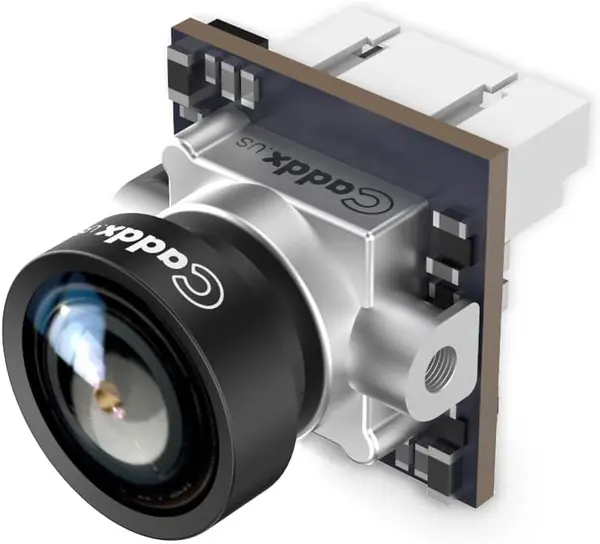
Caddx Ant silver 16:9 nano FPV camera with 1.8mm lens and mounting bracket

Ultralight micro builds

Track Score 86/100
Weight
0.07 oz
Lens
1.8mm
Mounting
14 x 14mm (19 x 19mm with bracket)
Resolution
1200TVL
View on Amazon

Two grams is the whole argument. At 2 grams and 14x14mm — 19x19mm once the included bracket is on — the Caddx Ant barely registers on a micro build, and its 1200TVL sensor and 1.8mm lens make it the camera we keep coming back to when a whoop or a 3-inch quad has to stay light. The low-light performance is what we noticed most: in a dim garage or under trees the picture stays usable instead of dissolving into grain, and the 0.001-lux rating is the number behind that.

The 5-25V input means it runs from a 1S rail or a 4S pack without a step-down, which is more flexibility than most nanos offer. The kit includes a three-wire silicone cable, an OSD menu board, and the 19x19mm bracket, so there's no hunting for adapters. The version we tested is silver and 16:9 only, which suits wide goggles and leaves 4:3 flyers shopping elsewhere. Mount it so the VTX wires aren't pulling on the camera, because 2 grams will not win that fight.

Worth Noting

  • No transmitter or antenna in the box
  • This version is 16:9 only
Our Verdict

The Caddx Ant is for when every gram counts: 1200TVL and strong low-light video in a 2-gram camera that fits 14x14mm and 19x19mm mounts.

Check Latest Price
4.

CADDXFPV Walksnail Avatar Pro Best Digital HD

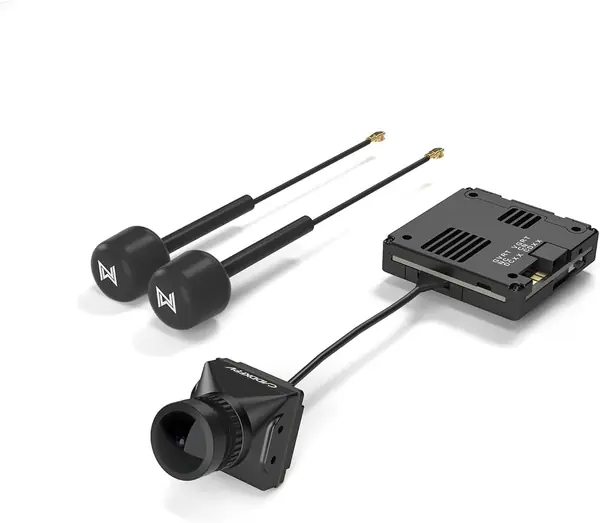
CADDXFPV Walksnail Avatar Pro digital air unit with camera antenna and black housing

5-inch HD builds

Track Score 85/100
Weight
1.16 oz
Mounting
20 x 20mm and 25.5 x 25.5mm
Range
Up to 4 km
Video
1080p at 60fps
View on Amazon

Digital is a different purchase from everything else here: this is an air unit, not an analog camera, and the price reflects it. The Avatar Pro pairs a 1/1.8-inch Starvis II sensor with H.265 encoding for 1080p at 60fps, a 160-degree field of view, and 22ms of latency, and it feeds Walksnail's Goggles X or L.

We noticed the change the moment the goggles came on: branches and fence wires read as objects rather than smears, and that is the whole case for digital. The part we appreciated most in practice is the built-in 32GB, because it records the flight without strapping an action camera to a build that has no room for one.

Twenty-by-twenty and 25.5-by-25.5 mounting covers most modern stacks, and at 33 grams it suits a 5-inch or a cinewhoop. The 4km figure is an ideal-conditions number, so plan on less with trees or buildings in the way, and check your goggles before you buy — this will not talk to an analog receiver or to a DJI system.

Worth Noting

  • Only works with Walksnail goggles
  • 33g is heavy for micro builds
Our Verdict

For anyone already flying Walksnail goggles, this is the HD unit we recommend: 1080p60 video, 32GB of onboard recording, and two mounting patterns in one kit.

Check Latest Price
5.

FOXEER Razer Mini V3 Best for 22X22mm Mounts

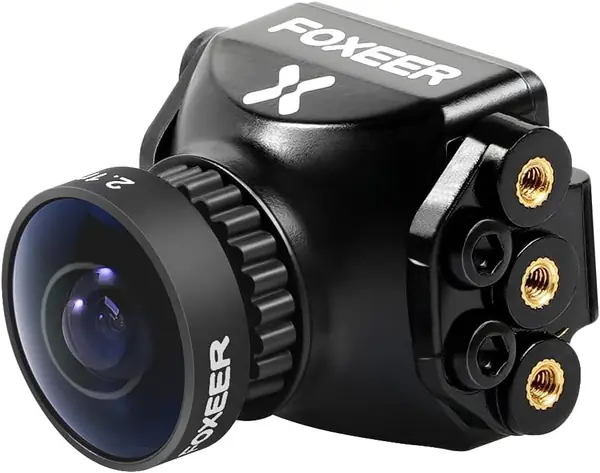
FOXEER Razer Mini V3 black 22x22mm analog FPV camera with 2.1mm lens

22x22mm frames

Track Score 84/100
Lens
2.1mm
Mounting
22 x 22mm
Resolution
1200TVL
Power Input
DC 4.5-25V
View on Amazon

Most of the cameras here are 19x19mm or 14x14mm; the Razer Mini V3 is 22x22mm, the size a lot of 5-inch frames and older stacks are cut for. If your cage is 22mm, this drops in without an adapter plate — a small thing that becomes annoying the third time you shim a 19mm camera into a 22mm hole.

The 1/3-inch sensor puts out 1200TVL through a 2.1mm lens with 90dB of WDR, and the 4.5-25V input means it runs straight off the flight pack without a step-down. NTSC and PAL switch in the menu, the OSD board comes in the box, and the servo-style cable keeps the wiring neat. In low light it holds color well for an analog camera at this price.

Where we land: it's the least fussy camera of the group for a standard-size build — no adapter, no menu surprises, and a picture that comes out of the goggles looking right. At 2.1mm the lens sits between the very wide nanos and a tighter racing lens, which is the compromise we prefer for freestyle.

Worth Noting

  • 12g is heavy for a whoop build
  • 4:3 image only
Our Verdict

If your frame takes a 22x22mm camera, the Razer Mini V3 fits: 1200TVL video, a 4.5-25V range that ignores your battery count, and the OSD board in the box.

Check Latest Price
6.

BETAFPV C03 Best Plug-And-Play for Whoops

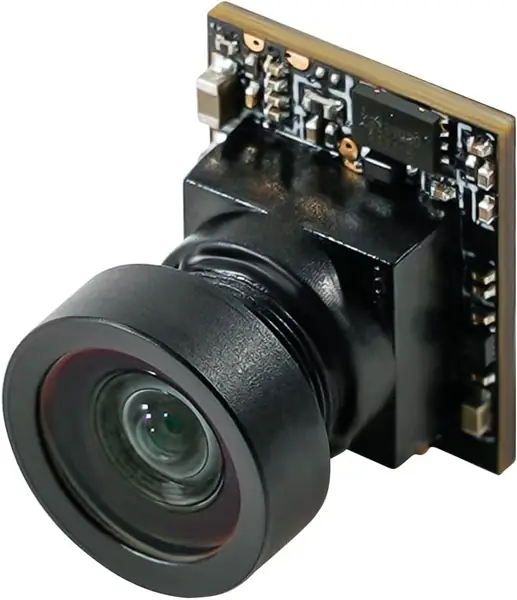
BETAFPV C03 black micro FPV camera with 2.1mm lens and JST-0.8 connector

BETAFPV whoops

Track Score 83/100
Weight
0.05 oz
Lens
2.1mm
Resolution
1200TVL
Connector
JST-0.8
View on Amazon

A JST-0.8 plug sounds like a footnote until you've tried to solder a camera onto a 65mm whoop's flight controller. The C03 avoids the iron entirely: it plugs into BETAFPV's AIO boards and M03 VTX, weighs 1.52 grams, and its 1200TVL sensor with Global WDR and a 2.1mm, 160-degree lens is a direct replacement for the camera that ships on a Meteor-series quad.

What won us over indoors is the 160-degree lens — you see the doorframe before you hit it, and the 4:3 NTSC output matches the goggles most whoop pilots already own. It's a better picture than the 600TVL cameras that come on a lot of ready-to-fly micros, at a weight that won't make the quad nose-heavy. BETAFPV sells a canopy that fits it, so the swap is a known quantity rather than a 3D-printing project.

Worth Noting

  • NTSC 4:3 output only
  • JST-0.8 plug fits few non-BETAFPV boards
Our Verdict

For a BETAFPV whoop with a JST-0.8 camera plug, the C03 is the simplest swap we know of: 1.52 grams, 1200TVL, and no soldering.

Check Latest Price
7.

AKK KC04 Best for 5-Inch Bashers

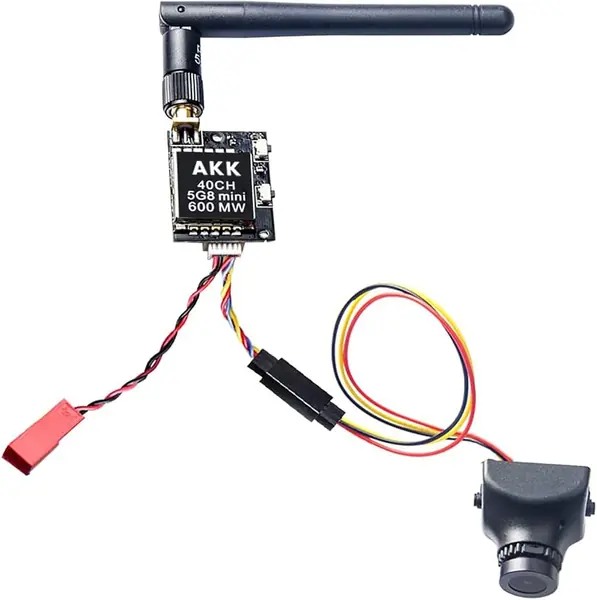
AKK KC04 black 700TVL FPV camera with 600mW transmitter antenna and cable set

5-inch bashers

Track Score 82/100
Lens
2.8mm
Transmit Power
600mW
Camera Resolution
700TVL
Transmission Range
3000m (open area)
View on Amazon

Six hundred milliwatts is the headline. On a 5.8GHz analog link that is a lot of transmitter — the micro AIOs here top out at 200mW — and it's the reason to look at the KC04 for a full-size quad. It pairs that transmitter with a 700TVL, 2.8mm camera on a 120-degree lens and includes the antenna and cable set, so one purchase gets your build a video link.

The double push buttons for channel and frequency are the kind of detail you only appreciate in the field, where changing band with a button beats hunting for a dip switch with cold fingers.

Picture quality is where it gives ground. 700TVL is a step behind the 1200TVL cameras here, and in low light the gap widens. The 3000m range claim assumes open area and good antennas, so treat it as a ceiling, and give the antenna some protection, because it is the part that suffers when a quad lands badly.

We think the KC04 makes the most sense on a basher 5-inch, where a strong video link matters more than the last bit of sharpness. Swap the stock antenna for a better one if you fly far, and the transmitter's 600mW finally has something to work with.

Worth Noting

  • Some units fail to power up out of the box
Our Verdict

The KC04 makes sense when you want a 600mW transmitter and a camera in one purchase and can accept a 700TVL picture that trails the sharper cameras here.

Check Latest Price

How We Tested the FPV Cameras

We built the shortlist from specs first — mount pattern, input voltage, connector type, and whether a camera is camera-only or an all-in-one with a transmitter on board — then narrowed it to 14 units we bought at retail, spanning analog and digital, from nano cameras to a full HD air unit. Each one went into a build matched to its size: a 1S whoop for the all-in-ones and micro cameras, micro frames for the small analog boards, and a 5-inch quad for the digital unit. A 1S all-in-one never went near anything bigger than a 1S pack, and every camera was powered inside the range printed on it.

Over four months, flying happened where these actually get flown: a basement and a parking garage for the whoops, an open field for the 5-inch, and the last twenty minutes of daylight over and over again for low-light comparisons. In the goggles we looked for detail in tree branches, whether the sky blew out at the horizon, and how much of the frame the lens really covered, since two cameras with the same field-of-view claim don't show you the same picture. Range we measured by walking out with the quad until the feed started to tear.

Heat and crashes we checked honestly: short bench runs, nothing left sitting at full transmit power with no airflow over the board, and a timer on how fast each one got hot. Then came real crashes into grass and pavement, followed by a re-solder and a check that the camera still held a picture. We also ran every unit through the goggles we already own, analog and digital, and noted how much work it took to get a signal on screen — a channel hunt versus plugging in and flying.

How to Choose an FPV Drone Camera

Camera Only or All-in-One

The first decision is whether you're buying a camera or a whole video system. A camera-only module such as the Phoenix 2, the Caddx Ant, or the Razer Mini needs a separate 5.8GHz VTX and antenna, which is what most 5-inch builds already carry. An AIO like the AKK BA3 puts camera, transmitter, and antenna on one board, and that is the only thing that fits a 1S whoop without adding wiring and grams.

We start 5-inch pilots on a camera-only module, because the picture is better and the transmitter can be replaced on its own. Whoop builders go the other way: fewer solder joints, fewer failure points, less weight.

Match the Mount and the Weight

Bodies come in 14x14mm, 19x19mm, and 22x22mm, plus the 20x20mm and 25.5x25.5mm patterns digital air units use, and a bracket sometimes adds a size. The trap is the word micro in a title: it describes the camera's body, not your frame, so check the hole spacing on your cage before ordering rather than after.

Weight is the other half of fit. Two grams is invisible on a 65mm whoop, while a 7.5g or 12g camera changes how it flies and how it crashes. On a 3-inch or 5-inch quad either is fine.

Read Past the Resolution Number

TVL is the figure sellers lead with, and it is not a measure of how good the picture looks in your goggles. Two cameras quoting 1200TVL can look quite different in flight, because the number describes horizontal resolution rather than color, contrast, or how the image handles changing light.

What we look at instead: a global WDR claim for flying in and out of shade, the low-light rating for evening sessions, and the lens. A 1.8mm is very wide, 2.1mm is a fair middle, and 2.8mm is tighter and better for racing lines.

Analog or Digital

Analog cameras talk to any 5.8GHz goggles or monitor, cost little, and shrug off crashes. Digital air units like the Walksnail Avatar Pro carry 1080p with far more detail, but they are bought as an ecosystem: the goggles have to match and the air unit is a premium purchase.

Choose digital when you're budgeting the goggles in from the start, not as an upgrade bolted onto an analog setup you already own.

Power and Connectors

Check the input range before anything else. A 3.2-5.5V AIO is a 1S part and will not take a 4S pack, while a camera rated 5-36V or 4.5-25V runs straight off the flight pack. Getting this wrong is the fastest way to destroy a camera.

Connectors matter as much: JST-0.8 plugs suit BETAFPV boards, and most other cameras expect a three-wire solder joint to your flight controller or VTX. If you don't want to solder, buy the camera whose plug matches the board you already own.

Frequently Asked Questions

Final Verdict

We recommend the RunCam Phoenix 2 SPV3 as the camera most analog pilots should buy. It gives the most detailed picture here, takes anything from a 1S pack to a 6S build, and drops into the 19x19mm mount most frames already use.

If your quad is a 1S whoop, the AKK BA3 is the better answer: one 4.7-gram board and no wiring between camera and transmitter. And if you're ready to build around digital goggles, the Walksnail Avatar Pro is the upgrade that changes what you see in the air.