Best Indoor Mini Drones of 2026

A mini drone is one of the few gifts that pulls a kid into the same room as the rest of the family, until the first knock against a lampshade sends it under the sofa and the controller gets put down for good. Surviving that first week has little to do with top speed. It depends on how much of each blade the guard covers, how many packs come in the box and whether the hover is steady enough for a beginner to stop and think before steering.

Count the batteries, not the headline minutes, since most boxes add every pack into one heroic number. Over six months in living rooms with ceiling fans, basements and hallways with a hard turn at the end, we timed every pack and crashed each drone repeatedly to see what still flew straight, with nervous first-timers and adults after stabilized family footage both at the controls.

Our Top Picks

The Best Indoor Mini Drones

1.

SYMA X100 Indoor Drone Best Overall
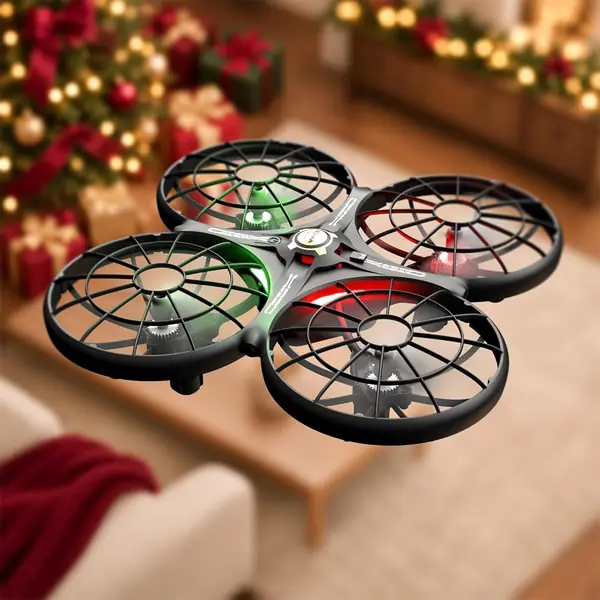
Black SYMA X100 mini quadcopter with a fully enclosed propeller cage and controller

First indoor drone

Track Score 90/100
Batteries
2
Weight
2.05 oz
Flight Time
Up to 20 min total
Obstacle Sensing
4-way infrared, about 12 in
View on Amazon

Four infrared sensors watch roughly a foot ahead of the SYMA X100 and steer it away from whatever it is about to hit. In a room with a sofa, a coffee table and a floor lamp, that separates flying from bracing for impact, and it is the main reason this is the drone we hand a beginner first.

The cage matters as much as the sensors. Instead of clipping two half-guards over the blades, SYMA encloses the propellers completely, so the parts that sting are the parts that are covered. Add one-key takeoff and landing, altitude hold and headless mode, and a child can be hovering within minutes of opening the box.

Two batteries give up to 20 minutes of total flying, which fits the way people actually use these indoors: a short burst, a swap, another burst. We were also impressed by how much it takes — this is the pick here that comes back from wall and coffee-table contact still flying, which matters more than any figure on the box when the pilot is eight.

What it is not is a camera drone. The X100 is built for the flying itself, and the 360-degree flips and headless mode are the entertainment. For a first indoor quadcopter that protects the furniture, the pilot and your patience all at once, this is the one we point people toward.

Worth Noting

  • Steering feels twitchy on the first flights
Our Verdict

Our pick for most rooms: obstacle sensors and a full cage let a beginner fly around furniture without a rescue mission.

Check Latest Price
2.

Holy Stone HS210 Mini Drone Best for Beginners

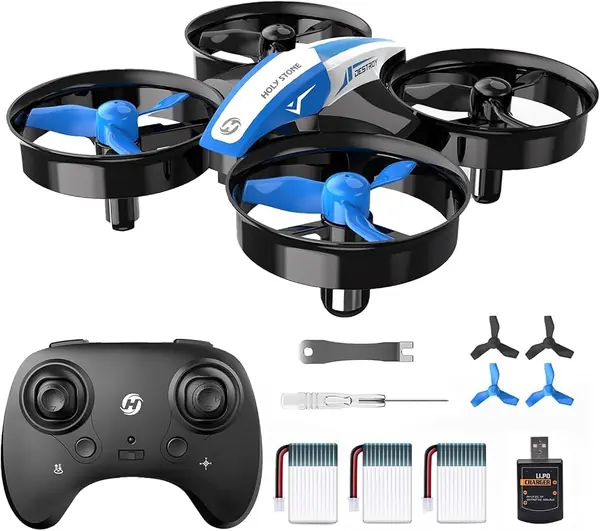
Blue Holy Stone HS210 mini drone with propeller guards and three batteries

First-time kid pilots

Track Score 89/100
Batteries
3
Weight
1.76 oz
Flight Time
Up to 21 min total
Beginner Aids
Altitude hold, headless mode
View on Amazon

Toss it into the air and it flies. That is the trick the HS210 leads with, and it sets the tone for everything else: one-key takeoff and landing, altitude hold that keeps the drone hanging where you left it when you let go of the sticks, and headless mode so that 'forward' stays the direction you are facing no matter which way the nose has spun. We think it is the easiest of these to get a nervous beginner airborne.

Under the hand-holding is a proper little quadcopter. Tap the button for a 360-degree flip, switch speed levels as confidence grows, and let the guards around the propellers absorb the learning curve; the walls and the sofa take the knocks instead of the blades.

Where it gives ground is longevity. Motors and plastic parts are the weak points once a drone is flown hard and crashed often, and a long season of indoor dogfights can end with a unit that will not lift. Everything about it is simple to live with, though, and the three-battery bundle means a dead pack never ends the afternoon.

Worth Noting

  • Motors and plastic parts wear out with hard use
  • Each battery gives only about seven minutes
Our Verdict

For a kid who has never held a controller, we start here: three batteries, guarded props and controls that forgive a shaky thumb.

Check Latest Price
3.

Holy Stone HS210FS Battle Set Best Two-Player Set

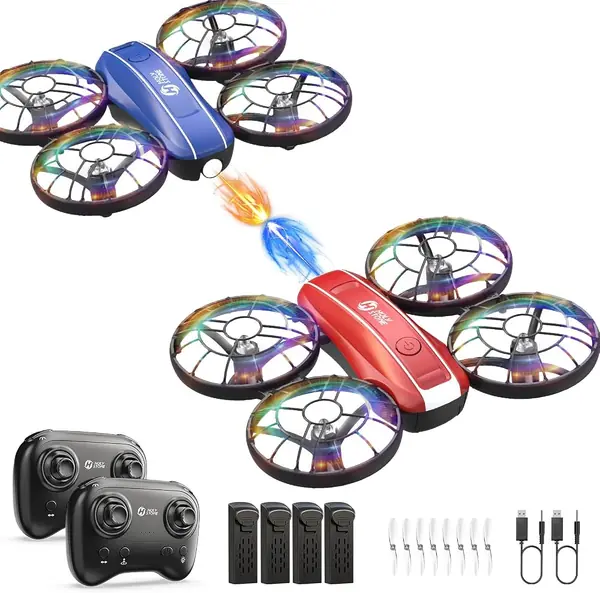
Two red Holy Stone HS210FS battle drones with two controllers and four batteries

Siblings and playdates

Track Score 88/100
Batteries
4
Total Flight Time
Up to 32 min
Battle Mode
Infrared, three-hit knockout
Drones Included
2
View on Amazon

Two drones, two controllers and four batteries arrive in one box, and the second drone exists for one reason: infrared battle mode. Each drone takes three hits before it is out, with a simulated shot sound from the nose, which turns a living room into airspace with rules.

What we like is that the game sits on top of proper beginner scaffolding. One-key takeoff and landing, altitude hold, headless mode, throw-to-launch and three speed steps mean nobody has to learn to fly before they can play, which is the entire point of a two-drone set.

The rest of the hardware is aimed squarely indoors: guards on all four propellers, RGB lights that make each drone easy to track across a room, and four batteries for about 32 minutes of total flying. Flips, circle fly and high-speed rotation are a button away, and the emergency stop cuts the motors if one gets away from a young pilot.

Our hesitation is that this is two toy drones rather than one good one, and the battle only works when somebody else is there to take the second controller. Buy it for the pair, not for the flying on its own.

Worth Noting

  • Battle mode needs a second pilot present
Our Verdict

Two drones, two controllers and infrared battle scoring: the set we recommend when the fun depends on flying with someone else.

Check Latest Price
4.

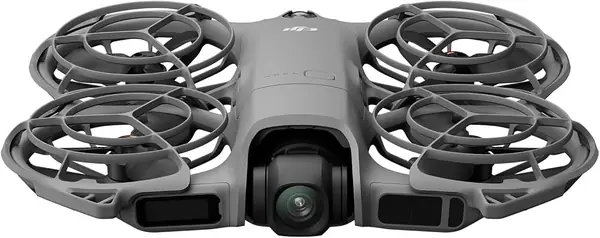
DJI Neo 2 Best Camera

Gray DJI Neo 2 mini drone with full-coverage propeller guards and 4K camera

Aerial family footage

Track Score 87/100
Weight
5.33 oz
Video
4K
Obstacle Sensing
Omnidirectional
Guard Coverage
Full-coverage propeller guards
View on Amazon

The Neo 2 is the most expensive drone in this group, and the money buys the two things a small indoor drone usually goes without: a camera that holds steady and obstacle sensors that work in every direction. It weighs 151 grams, it is C0 certified, and its propeller guards cover the whole rotor rather than a slice of it.

In the air it does what DJI is known for. It launches from an open palm, tracks a subject with ActiveTrack, records 4K, and responds to hand gestures, so recording can start and stop without a phone or a controller in your hand. Tracking is the part that impressed us most, because it is what lets the drone follow someone down a hallway instead of stopping to inspect the doorframe.

We think it earns the premium when video is the point of the purchase. If you are buying a drone to chase around the den with a kid, the toy picks here do that job for far less and are much less precious about being grabbed out of the air. Two practical notes: DJI rates this one for adults, and at just over five ounces it is the heaviest drone we recommend for indoor flying.

Worth Noting

  • Rated for adults rather than children
  • Heaviest drone in this group
Our Verdict

Buy it when the footage is the point: steady 4K and obstacle sensing on all sides, at the highest price here.

Check Latest Price
5.

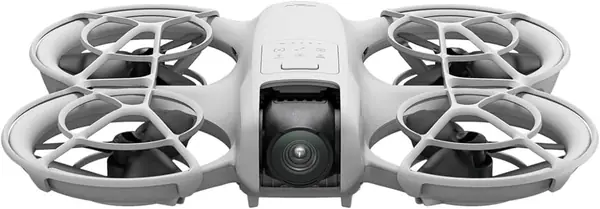
DJI Neo Best Lightweight Camera Drone

Gray DJI Neo mini drone with propeller guards and palm-launch design

Travel and vlogging

Track Score 86/100
Batteries
1 included (1435 mAh)
Weight
4.76 oz
Video
4K stabilized
Guards
Built-in propeller guard
View on Amazon

At 135 grams, the Neo launches from a flat palm and lands back on it with no controller and no takeoff surface. That is the whole idea: a camera drone small enough to live in a jacket pocket, light enough that a knock against a bookshelf rarely ends the flight, and fitted with a propeller guard for the moments it does bump something.

What it shoots is genuinely good for the size. There is 4K stabilized video, 12-megapixel stills, subject tracking that keeps you in frame, and eight QuickShots that fly a preset move while you stand still. You can run it controller-free, add voice control, or pair a remote if you want sticks in your hands.

Two practical notes from living with it. Flight time per charge is short enough that we point people at one of the multi-battery combos rather than the single-pack version. And on Android the DJI Fly app has to come from DJI's website rather than Google Play, then be used to activate the drone before the first flight. Neither takes long to sort out, and both are forgotten by the second flight.

Worth Noting

  • No obstacle avoidance indoors
Our Verdict

Our lightest camera pick: 135 g, palm takeoff and no controller needed, as long as you can live without obstacle avoidance.

Check Latest Price
6.

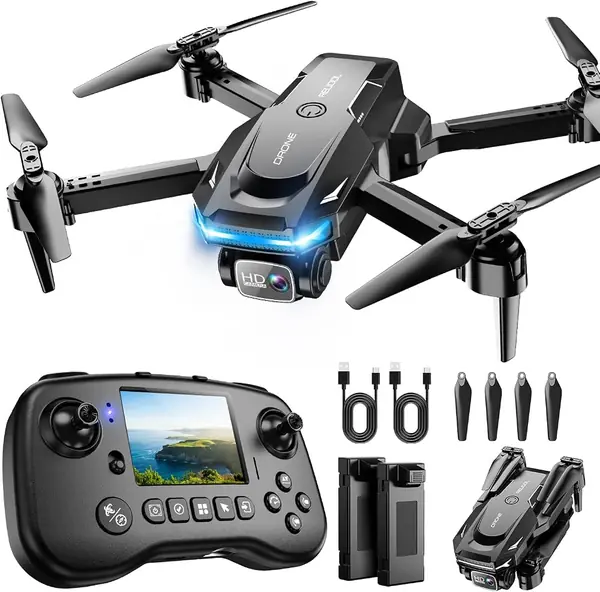
RELIDOL PK01 Screen Drone Best for Phone-Free Flying

Black RELIDOL PK01 folding drone with a screen-equipped controller

Phone-free flying

Track Score 85/100
Batteries
2 (25 min total)
Video
1080p
Range
30 m
Screen
Built into controller
View on Amazon

The PK01 puts live video on a screen built into the controller, which means no phone clipped to a handset, no app competing for Wi-Fi, and nothing for a child to drop on the kitchen floor. If you have ever handed a nine-year-old your phone so they could see what the drone sees, you will understand why we like this arrangement.

Around that screen sits a familiar beginner package: a 1080p camera on an adjustable mount, one-click 360-degree flips, waypoint flight, headless mode, and a folding frame with guards over the motors. Two batteries cover up to 25 minutes of total flying, and the controller reaches about 30 meters, which is plenty for a room and a hallway.

Stability is where it needs care. The PK01 can drift and wants trimming and calibration before it will sit still, and a unit that never settles will fight you in a tight room; do the calibration in the open before you fly it near a shelf. The screen still makes it the friendliest of these for a child flying without a phone.

Worth Noting

  • Needs a separate microSD card to record
Our Verdict

A sensible choice when the pilot has no phone: live video sits in the controller and the guards are already fitted.

Check Latest Price
7.

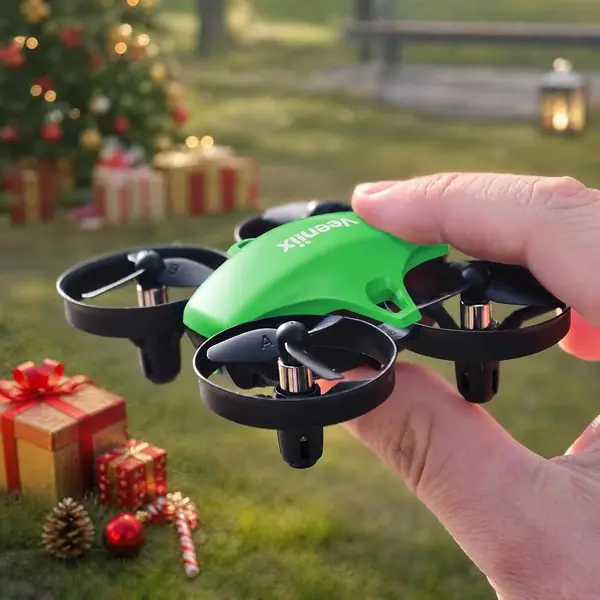
Veeniix V995 Mini Drone Best for Cheap First Flights

Green Veeniix V995 palm-sized drone with a full propeller cage and remote

Cheap first flights

Track Score 83/100
Batteries
3
Weight
0.79 oz
Total Flight Time
21+ min
Guard
Full propeller cage
View on Amazon

At 0.79 ounces and a palm's width, the V995 is the lightest drone here and the least expensive, the sort of purchase that answers a question: does anyone in this house actually enjoy flying? It arrives with a full propeller cage, three batteries and a low-power alarm that warns you before the drone drops.

The trick list is longer than the price suggests: toss it to launch, one-touch takeoff and landing, altitude hold, headless mode, 360-degree flips, automatic rotation, circle fly and three speed settings. Three batteries add up to more than 21 minutes, about seven each, which is enough for a few rounds of landing it on the couch.

Hover stability is where the corners were cut. The V995 tends to drift and needs trimming before it will hold a position, and light as it is, a ceiling fan's draft will push it sideways; do the trim in a still room and it settles down. That is the kind of thing you learn to work around on a drone this small rather than send back.

So we recommend it as a trial run rather than a keeper. It will teach you whether indoor flying becomes a hobby, and it will tolerate a few crashes while it does. When you want the drone that lasts, the SYMA X100 is the step up, and it protects itself better in the bargain.

Worth Noting

  • Batteries can stop holding a charge
Our Verdict

We recommend it as a cheap trial run: a caged, three-battery drone that shows you whether indoor flying will stick.

Check Latest Price

How We Tested (and Crash-Tested) Indoor Mini Drones

We started by gathering every indoor mini drone we could find that would plausibly live in a furnished room, then filtered on the things that decide whether it gets flown twice or twenty times: how completely the guards enclose the blades, how many packs are included, how much drone you're moving around breakables, and whether the camera feeds to a phone or to a screen built into the controller. From that pool we bought 14 and flew them for six months.

Most flights happened where these actually live — a living room with a ceiling fan and a coffee table, a finished basement, a hallway with a sharp turn at the end. We timed each pack with a stopwatch, ran it dry, and added up the real total across the box instead of trusting the print. We measured hover drift by holding altitude for 30 seconds and marking how far the drone wandered, and put each one on a kitchen scale before flying it around a room full of lamps.

First-timers, kids and adults both, took the controller while we watched: whether one-key takeoff and headless mode actually cut the panic, whether altitude hold bought them a pause, and how quickly they could bring it back to a landing. Two-player sets got two people flying at once, so we could see if hits registered and whether the controllers stepped on each other. Camera models were judged on where the live view appeared and how far behind the motion it ran. And because crashes are the real test, we flew each drone into cushions, walls, and table legs on purpose, then kept flying to see which ones developed a wobble or a noisy motor. Packs were charged with the supplied cable on a stone counter with someone in the room.

How to Choose an Indoor Mini Drone

Protection Before Performance

Indoor flying means contact, so start with what covers the blades. A full cage wraps every propeller completely, which is what you want when a child is holding the controller; a pair of clip-on guards covers two rotors and leaves the rest exposed. Infrared obstacle sensing goes a step further by steering the drone away before it arrives — our top pick has it, and in a furnished room it is the difference between a flight and a series of saves.

If a first-timer will be flying, insist on the full cage and treat sensing as the upgrade. Neither replaces supervision, and neither makes a hallway with a ceiling fan a good idea.

Count Batteries, Not Headline Minutes

Every 'up to 20 minutes' claim in this category is total flying time across the packs in the box, not one heroic flight; per battery, expect a handful of minutes from the toy-grade drones. That changes what you are shopping for: two or three packs rather than one, plus a routine of charging everything overnight.

USB charging takes longer than the flight itself, so a drone with a single battery spends most of its life on the floor. The DJI models sell multi-battery combos for exactly this reason, and they are worth the difference if you plan to film.

The Beginner Aids That Actually Help

Three features do most of the work. Altitude hold keeps the drone at the height you left it when you release the throttle, so a nervous pilot can stop and think. Headless mode makes the controls relative to where you stand rather than where the nose points, which solves the classic moment when the drone turns to face you and left stops working.

One-key takeoff and landing removes the two hardest seconds of any flight, and speed modes let a child grow into the throttle. If the model has an emergency stop, test it on the first flight, before you need it.

Camera, Weight, and the Room You Have

You do not have to pay for a camera to enjoy indoor flying, and the toy-grade drones here are the better fliers for the money. If you do want footage, decide how much resolution matters: a 1080p stream is fine for seeing the room from above, while DJI's stabilized 4K with tracking is a different class of purchase and a different class of price.

Weight follows from that choice. The camera drones run four to five ounces against an ounce or two for the toys, which means more momentum near lamps, more noise in a shared room, and more airspace needed to fly them. In a small apartment, the light one wins.

Frequently Asked Questions

Final Verdict

We recommend the SYMA X100 first. Its obstacle sensors and full propeller cage let a beginner fly in a furnished room without a rescue mission, and it costs no more than the other toy-grade picks while holding up better to the crashes that follow.

If the footage is the point, the DJI Neo 2 is the upgrade worth paying for. If two kids want to fly at the same time, buy the Holy Stone HS210FS and let them shoot each other out of the air.