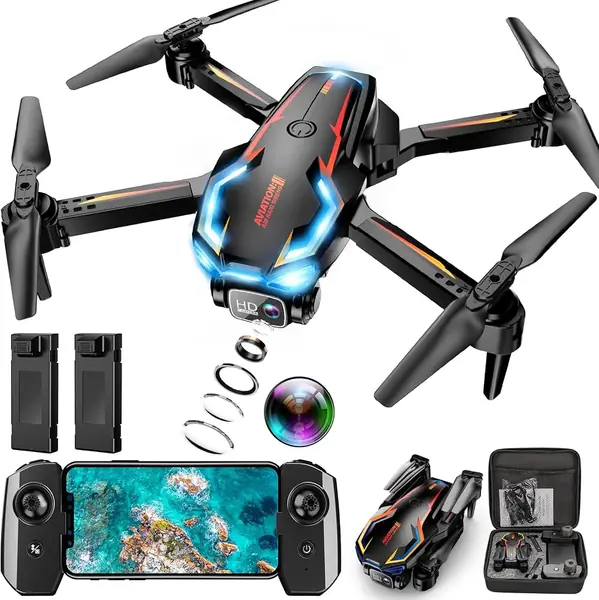
Best RC Drones of 2026

The first minutes with a new drone mix thrill and quiet panic: framing a shot, holding altitude and remembering which stick does what while the battery ticks down. A good drone shortens that learning curve with a steadier hover, a camera that doesn't jitter and controls that match your skill.

The loudest specs are rarely the important ones. A 4K label means little without stabilization, and total battery minutes matter more than one impressive maximum. In the U.S., a recreational drone of 250 grams or more needs FAA registration and Remote ID; below that line, it does not. We flew 12 drones in backyards, parks and living rooms, checking whether a first-timer could launch without a phone and whether each survived a few bumps, and the eight picks run from camera-first flyers to guarded indoor toys.

Our Top Picks

The Best RC Drones

1.

DJI Mini 4K Best Overall
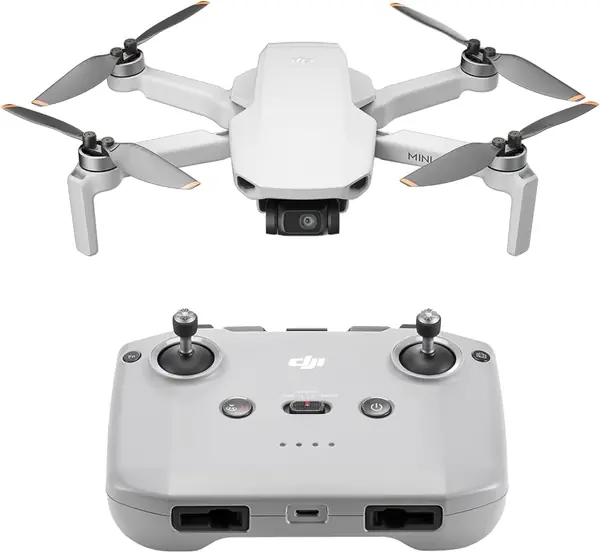
DJI Mini 4K gray folding camera drone with 4K gimbal camera and controller

First camera drone

Track Score 92/100
Camera
4K UHD, 3-axis gimbal
Weight
8.47 oz (under 249 g)
Max Flight Time
31 minutes
Max Transmission
10 km (32,800 ft)
View on Amazon

Two hundred and forty-nine grams is the figure that decides more drone purchases than any camera specification. Stay under it and, in the U.S., you skip FAA registration and Remote ID for recreational flying. The Mini 4K weighs 8.47 ounces with its battery and props, so it clears the line with room to spare, and it folds down to something you can drop in a jacket pocket — the difference between a drone you fly most weekends and one that lives in a closet.

The camera is where the money went. A 4K sensor hangs on a three-axis mechanical gimbal, which holds the horizon level while the aircraft leans into the wind; DJI rates the airframe for Level 5 wind, about 38 kph. On our breezier afternoons the horizon stayed flat while the drone visibly worked, and that is the whole game for aerial video. Stills come out at 12 megapixels, which is plenty for a print or a post.

The included RC-N1 controller holds your phone and connects through the Lightning, USB-C, or micro-USB cable in the box, so most handsets work without an adapter. One practical wrinkle: on Android the DJI Fly app is not distributed through Google Play, so you download it from DJI's site before the first flight. This version ships with one battery; the three-battery combo stretches the kit to 93 minutes of flying between charges, and that is the version we suggest for a first season.

For anyone whose goal is aerial photos and video rather than racing around a park, this is the drone we send them to. The Ruko F11PRO 2 costs less and adds a longer box total, but it weighs more and folds larger. If the simplest possible first flight matters more than footage, the Neo is the better teacher.

Worth Noting

  • No obstacle sensing to catch a lapse
  • Real flights run shorter than 31 minutes
Our Verdict

We tell most first-time buyers to start here: the Mini 4K skips registration, holds a steady 4K shot in wind, and costs far less than the fancier DJI models.

Check Latest Price
2.

Ruko F11PRO 2 Best Value Camera Drone

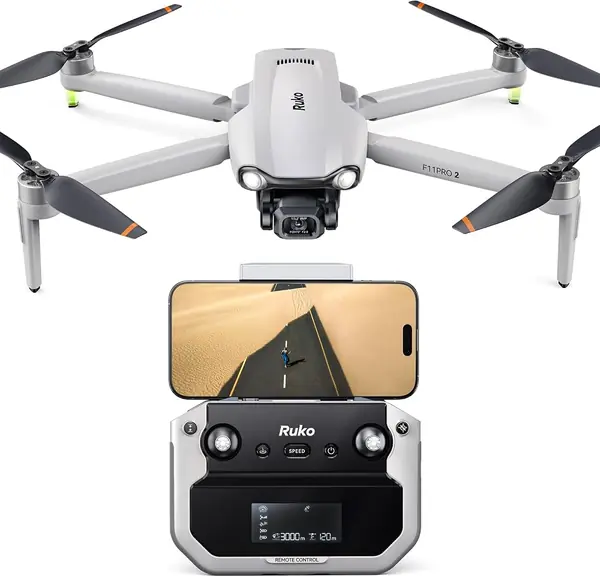
Ruko F11PRO 2 gray folding GPS drone with gimbal camera and carrying case

Budget aerial photos

Track Score 91/100
Flight Time
70 minutes total (2 batteries)
Camera
4K/30fps, 3-axis gimbal
Weight
12.6 oz
Max Range
10,000 ft
View on Amazon

A mechanical gimbal is what separates footage that looks like video from footage that looks like a leaf in a storm, and it is usually the first thing a budget drone gives up. The F11PRO 2 keeps it: a three-axis gimbal steadying a 4K/30fps camera, with 6K stills, in a kit that costs noticeably less than the DJI it is chasing.

That combination is why it earns a place here. GPS return-to-home flies the aircraft back on its own if the battery sags or the link drops, and beginner mode, follow-me, circle fly, and waypoint routing cover the rest of what a first-time adult buyer actually wants. We also like that the box includes a molded shell case and a second battery — the 70-minute claim is two flights, not one.

In the air it feels like a bigger, more deliberate aircraft than the Mini 4K, and it wants a level patch to calibrate on, so a picnic table beats long grass. The live feed also thins out at the far end of its 10,000-foot range: the aircraft keeps flying, but the picture on your phone can freeze until it comes back, so frame your shots closer in than the maximum.

Budget for a wall adapter — the batteries charge from a USB cable and the box does not include a plug, so plan on using one you already own. For a pilot who wants GPS insurance and a stabilized camera and does not need the smallest folded footprint, this is the value pick of the group.

Worth Noting

  • Over 250 g, so FAA registration applies
Our Verdict

If you want GPS return-to-home and a mechanically stabilized 4K camera without paying DJI money, this is the drone we point you to.

Check Latest Price
3.

DJI Neo Fly More Combo Best for Beginners

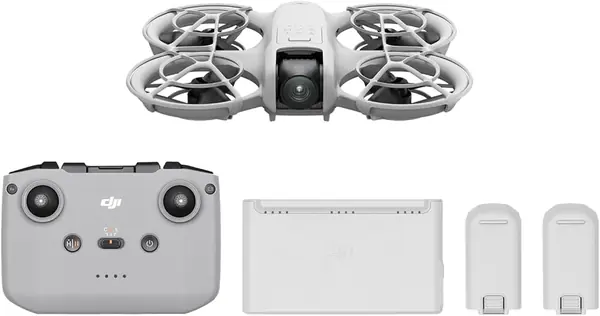
DJI Neo gray palm-sized drone with propeller guards, controller, and three batteries

First-time flyers

Track Score 90/100
Weight
4.76 oz
Video
4K stabilized
Batteries
Three, plus charging hub
Control Options
Controller, app, voice, or none
View on Amazon

You set the Neo on your open palm, press the button, and it lifts off and hovers; press again and it comes back to your hand. That single interaction is why it is the drone we hand someone who has never flown, and the 135-gram body with full propeller guards means a clip against a doorframe is a bounce rather than a repair.

It shoots 4K with DJI's stabilization and can track a subject, so you can put it up, walk away, and let it film you. Eight QuickShots automate the orbit, dronie, and rocket moves that would take an afternoon to learn on a manual quadcopter. You can fly it controller-free, from the app, by voice, or with the included RC-N3, which is the configuration we suggest for distance and control.

The Fly More kit's three batteries and two-way charging hub matter more than the spec sheet suggests: a small pack will not hold a session on its own, and rotating three keeps you flying. What it is not is a landscape camera. Think vlogs, family footage, and follow shots rather than a wide alpine reveal.

Worth Noting

  • Gets pushed around in stronger wind
Our Verdict

The easiest way into the hobby: launch it from your palm, let it follow you, and hand the controller to someone who has never flown.

Check Latest Price
4.

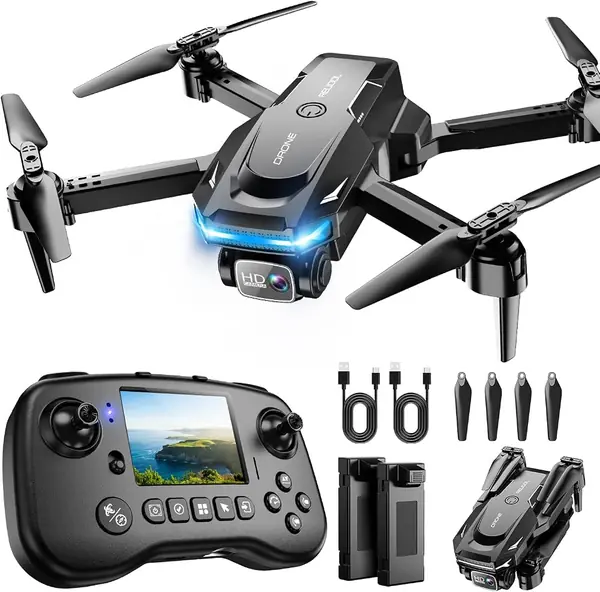
RELIDOL PK01 Best Budget Drone with a Screen

RELIDOL PK01 black folding drone with 1080p camera and screen-equipped controller

No-phone beginners

Track Score 89/100
Flight Time
25 minutes total (2 batteries)
Camera
1080p, 80° adjustable
Control Range
30 m (about 100 ft)
Controller
Built-in screen
View on Amazon

The pitch is built into the controller: a screen, on the remote, with no phone clamped on and no app to babysit. For a beginner that is the whole appeal — you see what the camera sees while you fly, and nothing depends on a handset that might refuse to pair. We think it is the right first drone for anyone who has watched a friend fight with a phone mount.

The surprise is that the rest of it holds up. The 1080p camera sits behind an 80-degree adjustable lens, the drone flips and runs waypoint routes on command, and one-key start is paired with an emergency stop that cuts the motors when a flight goes wrong. Two batteries stretch a session to roughly 25 minutes in total.

The limit is range. RELIDOL rates it at 30 meters — call it 100 feet — and that is the honest operating envelope, because past it the picture and the controls both get sketchy. Treat it as a backyard and cul-de-sac drone, keep it inside that circle, and it is an easy machine to hand a twelve-year-old.

Worth Noting

  • Drifts off course in a light breeze
Our Verdict

We like the screen built into the controller: at toy-drone money it takes the phone out of the equation, provided you keep it close.

Check Latest Price
5.

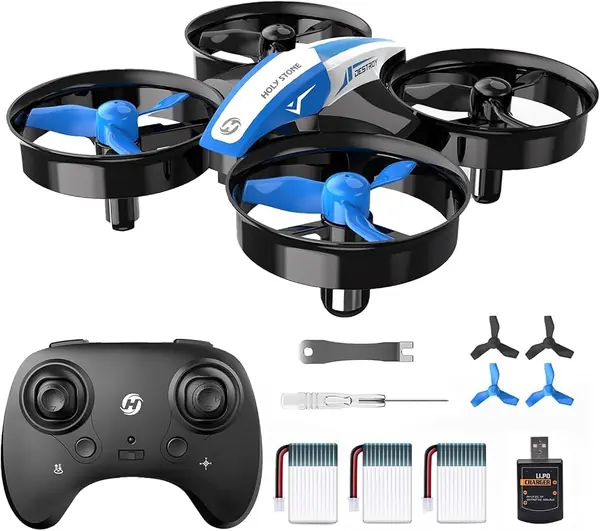
Holy Stone HS210 Best for Kids

Holy Stone HS210 blue mini quadcopter with propeller guards and three batteries

Young first pilots

Track Score 87/100
Flight Time
21 minutes total (3 batteries)
Weight
1.76 oz
Control Range
160 ft
Flying Aids
Altitude hold, headless mode, 3 speeds
View on Amazon

There is no camera on the HS210, and that is the point. Strip out the video and you get a 1.76-ounce quadcopter built for the learning curve: four full propeller guards, three batteries good for about 21 minutes in total, and a 160-foot control range that keeps it inside the yard.

It also carries the aids that make a first flight encouraging — altitude hold so it hovers when the sticks are released, headless mode so forward means the way the pilot is facing, three speed settings, and one-key takeoff and landing. Toss it into the air and it stabilizes itself, which is a better party trick than it sounds.

Where it earns its keep is the transition. A kid who can hold a hover and land on purpose with this has already learned throttle and orientation, and moving up to something faster afterward is a much shorter step. It is the least expensive useful lesson in this group, and the one we hand over without a list of warnings.

Worth Noting

  • Motors can quit after a few weeks
Our Verdict

The drone we hand a kid who has never flown: two ounces, full prop guards, three batteries, and no camera to worry about.

Check Latest Price
6.

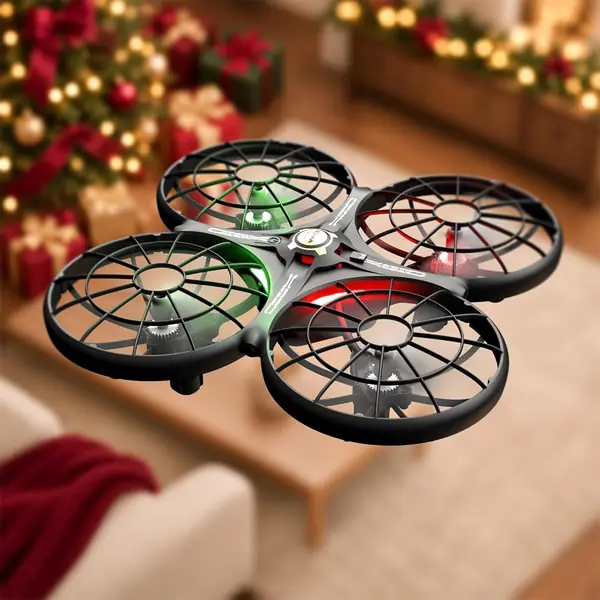
SYMA X100 Best Indoor Drone for Kids

SYMA X100 black indoor mini drone with fully enclosed propeller guard

Indoor play

Track Score 86/100
Flight Time
20 minutes total (2 batteries)
Weight
2.05 oz
Propeller Guard
Fully enclosed
Obstacle Sensing
4-way infrared, about 12 in
View on Amazon

Four infrared sensors watch for walls, furniture, and pets within about a foot and steer the X100 around them, which turns a living room into flyable space instead of an obstacle course. The propellers sit inside a fully enclosed guard, so there is nothing spinning on the outside to catch a finger or a curtain.

For a five- to eight-year-old flying indoors, that is the combination we want: one-key takeoff and landing, altitude hold, headless mode, a flip button, and two batteries for about 20 minutes of play. It weighs two ounces and makes no apology for being a toy, which is exactly why we are comfortable handing it to a six-year-old. Once a kid wants to fly outside, the Holy Stone above is the better next step.

Worth Noting

  • Indoors only; a breeze ends the flight
Our Verdict

Obstacle sensors and a fully enclosed prop guard make this the one we are happiest to see flying around a living room.

Check Latest Price
7.

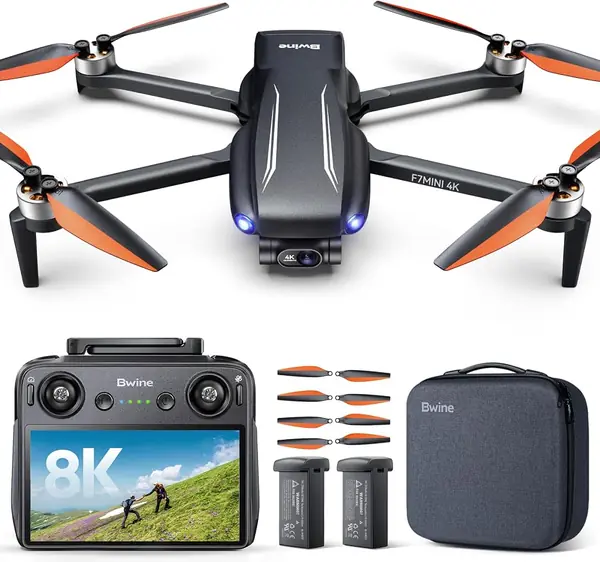
Bwine F7MINI 4K Best for Big-Screen Framing

Bwine F7MINI 4K black and orange folding drone with 5.5-inch screen controller

Big-screen framing

Track Score 85/100
Flight Time
64 minutes total (2 batteries)
Camera
4K video, 8K photos
Stabilization
3-axis brushless gimbal
Controller Screen
5.5 in, 1080p
View on Amazon

Eight-K photos from a 249-gram drone is a claim worth squinting at. The number comes from a 48-megapixel sensor behind an f/1.8 lens with 5x zoom, and as with high-megapixel phone cameras, it is the fine detail in good light that benefits rather than the dusk shots.

The rest of the hardware is more straightforwardly convincing. A three-axis brushless gimbal plus electronic stabilization handles 4K video, and the controller carries a 5.5-inch 1080p screen rated at 500 nits — bright enough to frame with outdoors — so nothing gets clipped onto your phone. Two batteries are rated for 64 minutes in total, and the whole kit folds into a case that fits a daypack.

The transmission claim is 20,000 feet, which is far more than you should ever use, since the aircraft has to stay in sight to fly legally. GPS brings follow-me, auto return, and a beginner mode, and at under 249 grams the F7MINI 4K sits on the right side of the registration line.

For a pilot who wants a big screen, 8K stills, and a genuine gimbal without crossing that line, there is more camera here than anywhere else in this group after the DJI pair. It is not the drone we hand a total beginner — the Neo is smaller and simpler — but it is the one that makes the case for skipping DJI entirely.

Worth Noting

  • Early units show connection and battery faults
Our Verdict

We admire the hardware — a 5.5-inch controller screen, 8K stills, a real gimbal under 250 g — and wish the early reliability matched it.

Check Latest Price
8.

Loiley X69 Best for Gift for Teens

Loiley X69 black and orange folding drone with 2K camera and carrying case

Gift for teens

Track Score 84/100
Flight Time
26 minutes total (2 batteries)
Camera
2K, 90° adjustable
Hover
Optical flow positioning
Folded Size
5 x 3 x 2 in
View on Amazon

This is a calm-evening drone, and it is honest about it. The X69 folds to about five by three inches, ships with a carry bag, and pairs a 2K camera with optical-flow positioning that helps it hold a hover instead of wandering.

The camera tilts through 90 degrees from the controller, so you can reframe a shot without landing, and holding up a palm triggers a photo. Two batteries give roughly 26 minutes in total, and the case is the reason this one ends up in the car rather than on a shelf.

It is a toy-tier drone with a better-than-toy camera, which is why we point gift-givers here instead of at the cheapest thing on the shelf. A twelve-year-old can be flying it within an afternoon. Keep it out of gusty air and close enough to see clearly — this is a backyard, cul-de-sac, and still-morning-beach drone.

Our Verdict

The cheap camera drone we point gift-givers to: 2K footage, a steady optical-flow hover, and a carry case that keeps it all together.

Check Latest Price

How We Chose and Tested These Drones

We started by researching the current market for drones sold to beginners, hobbyists, and families, then filtered the shortlist by camera stabilization, flying weight, control type, battery count, folded size, and replacement-part costs. We flew 12 drones over five months, charging every pack on a non-flammable surface. The testing scenes were ordinary: a living room obstacle course for guarded mini models, a backyard for first flights, and an open park for range and wind checks, all within visual line of sight and below 400 feet.

Each flight began with a timed battery run, noting how long the pack lasted and how much total time the included batteries delivered. We weighed each drone, checked whether it fell above or below the 250-gram registration line, then folded it into a daypack to see how it traveled. For camera models, we filmed the same route — a slow pass and a turn — and reviewed the footage for jitter, wobble, and lag in the video feed, and noted how crisply each turned and stopped. We also flew each with its intended setup — built-in screen, phone clamp, or app only — and made distance passes within visual line of sight, watching for dropouts and a stuttering picture.

Beginner suitability got its own pass: first-time flyers used one-key takeoff, altitude hold, headless mode, and GPS return while we stood nearby, and we noted which aids made them calmer. Guarded kids' models flew around curtains, table legs, and patio chairs; we watched how close the drone got before obstacle sensing stopped it or a guard took the bump. On gusty days we hovered in place and measured drift, then checked each drone after the first months for motor noise, vibration, battery swelling, and spare-part costs. Fun counted too: we noted which drones people kept flying after testing.

How to Choose an RC Drone

Camera drone or flying toy?

Two product types share the same shelf. The toy tier runs on direct 2.4 GHz radio, flies 100 to 300 feet, wears full propeller guards, and carries a fixed camera or none at all. The camera tier adds a mechanical gimbal, GPS return-to-home, and a video link measured in kilometers. A toy that streams 1080p to your phone is still a toy: the sensor is real, the steadiness is not.

Our rule is simple. If you want footage you would show someone, put the money into the gimbal tier; the DJI Mini 4K is our default there. If a kid is learning to fly, buy the toy tier first. The Holy Stone HS210 has no camera at all, which is a large part of why it survives a first season of crashes.

The 249-gram line and what it buys you

In the U.S., a recreational drone weighing 250 grams or more has to be registered with the FAA and carries Remote ID; below that line, neither applies for recreational flight. Several picks here are built to sit under it — the Mini 4K at 8.47 ounces, the Neo at 135 grams, the Bwine — while the Ruko F11PRO 2, at 12.6 ounces, is not.

The weight that counts is the flying weight, battery and props included, not the bare airframe. And staying under 249 grams buys paperwork relief, not freedom: keep the aircraft in sight, stay below 400 feet, and stay clear of airports and restricted airspace wherever you fly.

Gimbals, EIS, and camera numbers

A three-axis mechanical gimbal physically holds the camera still while the aircraft leans, and it is the single biggest difference between footage that looks professional and footage that looks like it was shot in a paint shaker. Electronic stabilization helps, but it crops the frame and works harder when the wind picks up. Fixed lenses on the toy tier get neither.

Ignore the megapixel arms race. A 12-megapixel camera on a gimbal beats a 48-megapixel still from a drone fighting a breeze. If video is the point, spend on the gimbal; if stills are, ask about sensor size before you look at the number on the box.

What you will fly it with

There are three ways to see what the camera sees. A screen built into the controller — the RELIDOL PK01 and the Bwine both have one — means no phone, no clip, and no notifications mid-flight. A phone-clamp controller like the Mini 4K's holds your handset and uses it as the display. The Neo can fly with no controller at all.

One trap worth knowing before you unbox: DJI's Fly app is not distributed through Google Play, so Android users download it from DJI's own site. Do that at home on Wi-Fi. If clipping a phone into a controller every time sounds like friction you will resent, pay for the screen.

Minutes, batteries, and a real session

Every flight-time figure is a maximum measured in still air at a constant speed, and you will not fly that long. The more useful number is the box total: two batteries rated at 70 minutes means two flights of roughly half an hour, and three batteries rated at 64 minutes works out to the same per pack.

So count packs, not minutes. A kit with three batteries — the Neo Fly More, the Holy Stone — keeps a session going while the others charge. Spare props are the other thing worth ordering with the drone rather than after the first crash.

Frequently Asked Questions

Final Verdict

For most people the DJI Mini 4K is the answer: it clears the registration line, shoots steady 4K from a real gimbal, and is forgiving enough that a first flight ends with a grin rather than a repair. That combination is what makes it the drone we recommend by default.

If the budget is tighter, the Ruko F11PRO 2 keeps the mechanical gimbal and adds GPS return-to-home for less money, at the cost of a larger, heavier aircraft. And if the pilot is eight years old, start with the Holy Stone HS210 and save the camera for season two.