Best Mini Drones with Camera for Travel of 2026

A mini drone is easy to fly; the footage is the hard part. Over a treeline on a gusty day, a camera without real stabilization turns the horizon to jelly. Two buried specs decide most of it: whether the camera hangs from a mechanical gimbal, and whether the drone stays under the 250-gram line that simplifies registration.

Over eight months on an empty soccer field, a windy ridge, a backyard where GPS wanders and a lake shore with the sun in the lens, we timed every flight until the drone forced itself down, counted the batteries in each kit and re-flew routes weeks later to see what drifted or dropped its connection. The picks include options for anyone who would rather not clamp a phone into a controller and one built for filming yourself. None of them excuses skipping an airspace check before takeoff.

Our Top Picks

The Best Mini Drones with Camera for Travel

1.

DJI Mini 3 Best Overall
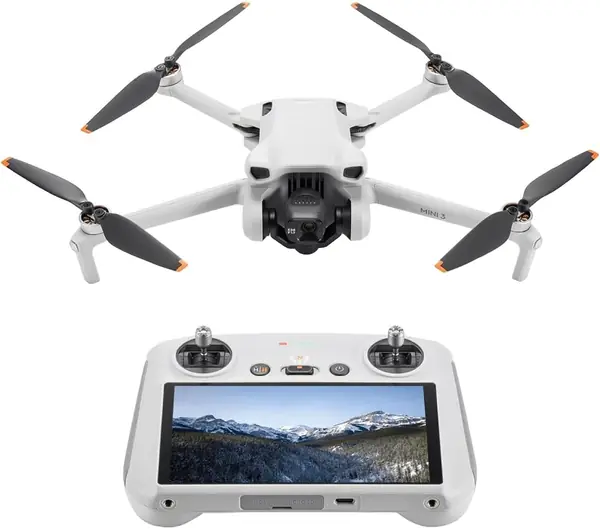
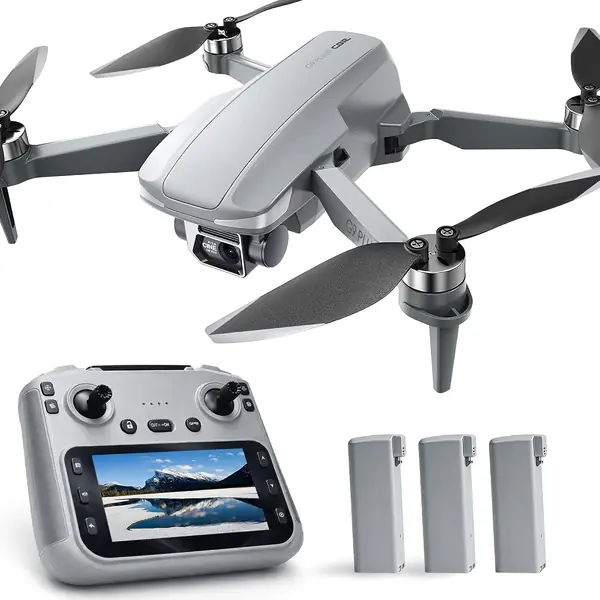
DJI Mini 3 gray folding camera drone with gimbal and DJI RC controller

Aerial photo/video

Track Score 91/100
Camera
4K HDR video, 48 MP stills
Weight
Under 249 g
Flight Time
38 min
Stabilization
3-axis mechanical gimbal
View on Amazon

The Mini 3 is the drone for flights that are about the picture rather than the novelty of flying. Its 4K HDR video and 48 MP stills give you room to crop, and the 3-axis mechanical gimbal keeps the frame steady when the air is moving. At under 249 g, it also fits the travel case and the lightest recreational category.

What settles it for us is the combination of image quality and 38 minutes of rated flight time. That's enough time to scout a location, shoot a couple of passes, and still land with margin. The DJI RC controller with its built-in screen is another detail we appreciate: no phone, no cable, and no notification interrupting the shot.

Vertical shooting is a practical advantage we didn't expect to use as often as we do. Turn the camera and a waterfall, lighthouse, or tall building fits the frame without cropping the sides. The 10 km transmission is more range than most of us need, but it gives you confidence when you're framing a wide landscape from a distance.

The trade-off is the battery math. Fit the Intelligent Flight Battery Plus for up to 51 minutes and the drone goes over 249 g, so you lose the easy registration story. We keep the standard battery for travel and accept the shorter flight. If you want the longest flights and don't mind the extra weight, the larger pack is still there.

Worth Noting

  • Some units fail early
Our Verdict

We recommend the DJI Mini 3 to anyone who wants the strongest still-and-video combination in a sub-250 g drone without moving up to a larger aircraft.

Check Latest Price
2.

DJI Mini 4K Best Value

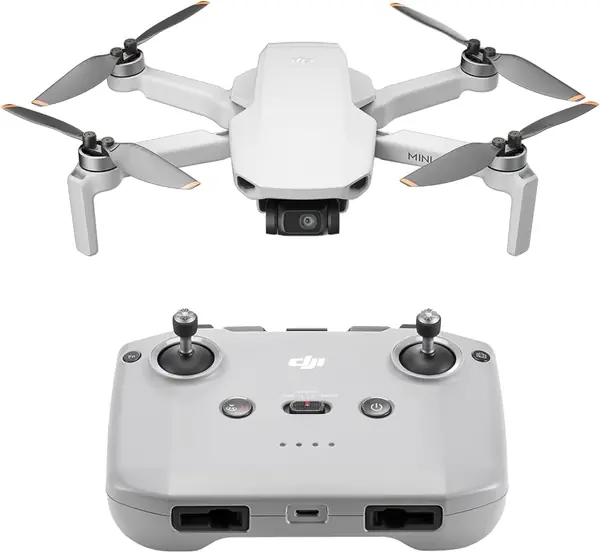
DJI Mini 4K gray folding drone with three-axis gimbal and RC-N1 controller

First serious drone

Track Score 90/100
Camera
4K video, 12 MP stills
Weight
Under 249 g
Flight Time
31 min
Stabilization
3-axis gimbal
View on Amazon

The Mini 4K is the one we point to when someone wants a real camera drone without paying for the top pick. You still get a 3-axis gimbal, 4K video, and the same under-249 g travel freedom, but the camera is a 12 MP stills unit rather than the Mini 3's higher-resolution stills. We think that's the right trade for a first serious drone.

The 31-minute rated flight time is enough for a couple of passes over a subject, and the 10 km transmission gives you room to move around an open field. The controls are the familiar DJI layout, with GPS return and automated flight modes doing the heavy lifting when you want a steady shot. We like that the learning curve is short enough to spend the first afternoon shooting rather than reading.

It's the value play in this group, and the one we recommend when the camera matters but the budget is finite. For travel, the compact body disappears into a daypack; for a first pilot, the automated modes make the first flight feel manageable. We also appreciate that the controller uses the phone you already carry rather than adding another screen to the bag.

Worth Noting

  • No obstacle sensing
  • Single-battery kit limits longer outings
Our Verdict

First-time pilots get stabilized 4K and DJI handling here at the lowest entry point in this group.

Check Latest Price
3.

Bwine F7MINI Best Long Flight

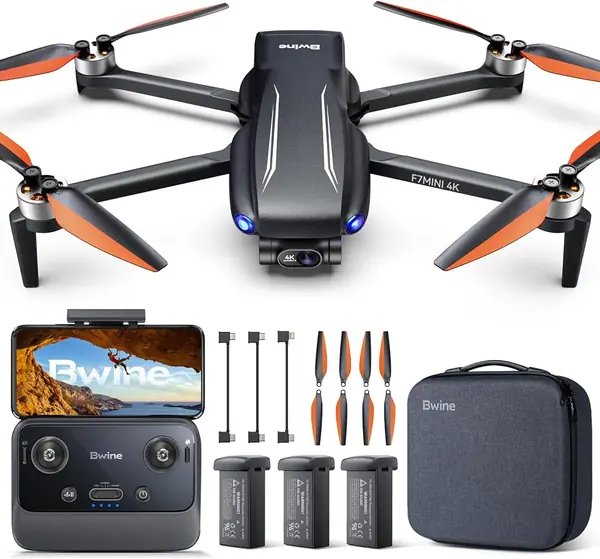
Bwine F7MINI dark gray and orange folding drone with gimbal and case

Long flight days

Track Score 89/100
Camera
4K/30 fps video, 48 MP photos
Weight
Under 249 g
Flight Time
96 min total with 3 batteries
Stabilization
3-axis brushless gimbal
View on Amazon

The F7MINI makes its case with the kit: three batteries, a 3-axis brushless gimbal, and a 4K/30 camera in a sub-250 g folding frame. The 96 minutes of total flight time is the reason to look here, especially if your trips involve a lot of short takes rather than one long cinematic pass.

The camera uses a 1/2-inch CMOS sensor with a 48 MP still mode and an f/1.8 aperture, which gives you more flexibility than the entry-level 12 MP drones when you want to crop or print. We like the gimbal's steadiness in light wind, and the 20,000 ft transmission is more range than most recreational flights need.

What makes it a runner-up for us is the battery math: three packs of roughly 32 minutes each mean you can spread a shoot across a morning without hunting for an outlet. The controller is straightforward, and the folding body is easy to live with in a daypack. We think this is the travel kit for someone who values airtime over the DJI badge.

If the cleanest possible image and the most mature app are the priority, the DJI picks are still ahead. The Bwine makes sense when a long day of flying matters more than prestige, and the three-battery case makes that an easy call.

Worth Noting

  • Battery and link faults can occur
Our Verdict

A 3-axis gimbal and a three-battery kit without DJI pricing make the Bwine F7MINI a strong travel pick.

Check Latest Price
4.

Ruko U11MINI Best All-In-One Controller

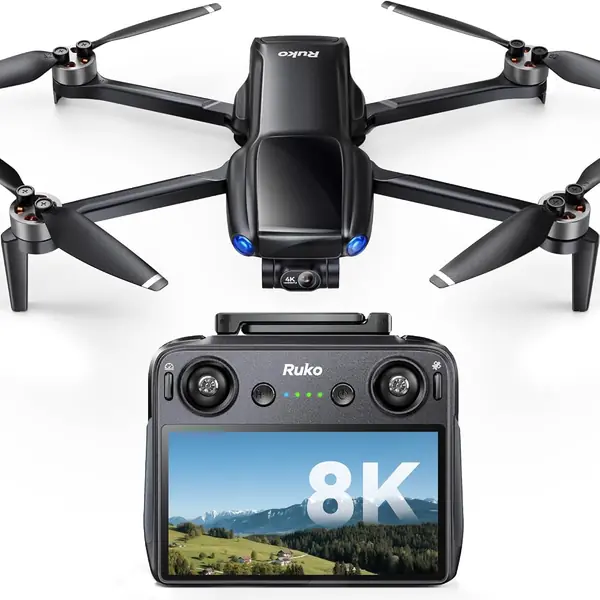
Ruko U11MINI black folding drone with three-axis gimbal and touchscreen controller

Phone-free travel

Track Score 88/100
Camera
4K/30 fps video, 8K photos
Weight
Under 249 g
Flight Time
64 min
Controller
5.5-inch 1080p touchscreen
View on Amazon

The U11MINI's 5.5-inch touchscreen controller is the feature that changes the routine: no phone, no cable, and no notifications. The 3-axis gimbal and 4K/30 camera put it in the same conversation as the DJI picks, and the 20,000 ft transmission is more range than most recreational flights need.

We like the all-in-one approach for travel because the screen is always ready and the live view stays off your phone battery. The 64-minute flight time is spread across the kit, so you can plan a morning of short flights rather than one long one. For a phone-free setup, this is the most satisfying controller here.

The controller is the piece that makes the kit feel complete. If you mostly fly close and want the simplest possible setup, the Ruko is easy to live with. If you want the most refined image pipeline, the DJI Mini 3 is still the camera-first choice.

Our Verdict

The Ruko U11MINI suits travelers who want a built-in screen and a stabilized 4K camera without tethering a phone.

Check Latest Price
5.

HOVERAir X1 Best for Hands-Free Self-Filming

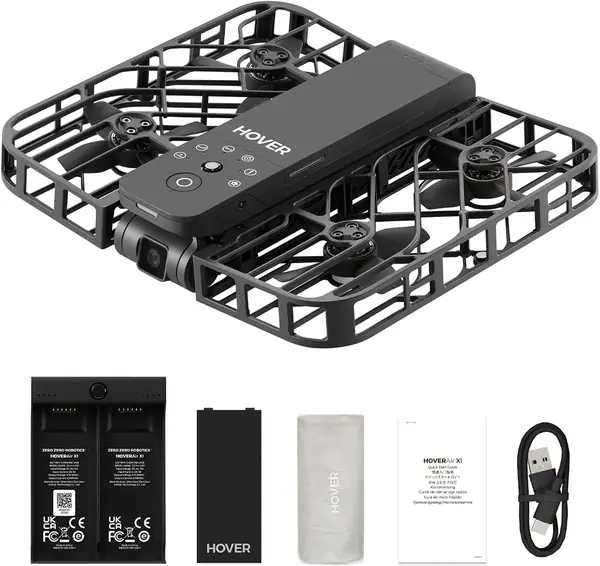
HOVERAir X1 black folding self-flying camera drone with battery and charging hub

Hands-free filming

Track Score 87/100
Camera
2.7K/30 fps video
Weight
4.41 oz
Stabilization
Triple stabilization
Control
Palm takeoff, app control
View on Amazon

The X1 isn't a traditional camera drone, and that's the point. You unfold it, set it on your palm, and press a button; it takes off, follows, and lands without a controller. At 4.41 oz, it's the lightest pick here and the easiest to carry without thinking about it.

The 2.7K camera and triple stabilization are built for motion rather than fine landscape detail. Follow mode tracks you from the front or back at up to 15 mph, and the preset paths cover orbit, zoom-out, and bird's-eye shots. We like it for walk-and-talk clips and solo hikes where a controller would get in the way.

The app adds manual control and a live preview, but the X1 is happiest when you let it do the flying. The enclosed frame makes it less intimidating to launch near people, and the folding body disappears into a small bag. We treated it as a personal camera, not a replacement for a full manual drone.

Where it earns its place for us is the footage you can't get with a controller in your hand: the follow shots, the palm launches, the quick orbit while you're hiking. It is the drone to take on solo trips, leaving the bigger one at home. It won't replace a Mini 3 for landscapes, but it does a different job well.

Worth Noting

  • Short battery life between charges
Our Verdict

For solo creators who want hands-free follow footage more than a traditional camera drone, the HOVERAir X1 is the pick.

Check Latest Price
6.

Holy Stone HS175D Best for Budget Training

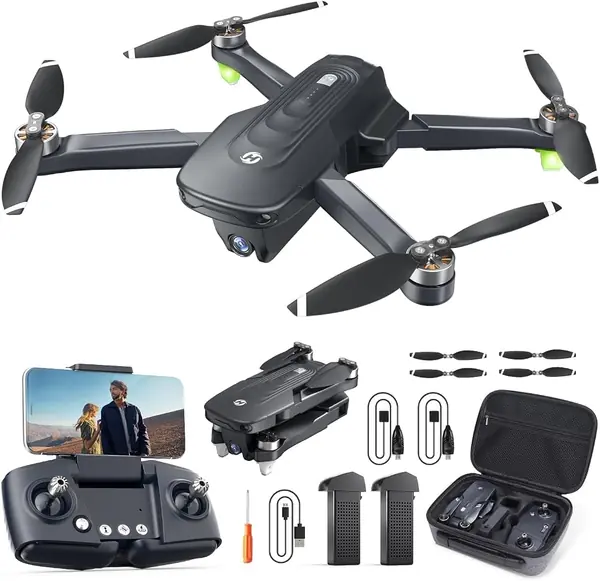
Holy Stone HS175D matte black folding GPS drone with controller and two batteries

Budget training

Track Score 86/100
Camera
4K, 110° wide angle
Weight
Under 249 g
Flight Time
46 min with 2 batteries
GPS
Auto return-to-home
View on Amazon

The HS175D is the budget option that still looks like a camera drone on paper: 4K video, GPS return, two batteries, and a folding frame under 249 g. The 110° wide-angle lens is a practical choice for landscapes, and the 90° adjustable camera helps you frame without moving the whole aircraft.

The 46 minutes across two batteries is more airtime than the single-battery DJI Mini 4K kit, and the GPS return-to-home feature is a useful safety net for a first pilot. We like the folding body and the simple controller layout; it's the kind of kit you can toss in a car and fly from a field without a lot of setup.

Our reservation is flight consistency: at the budget end, a GPS link can drop, and we treat the HS175D as a fair-weather trainer rather than the drone we trust over water or dense cover. Keep flights close, check the home point, and land when the warning signs appear. For the money, it's a reasonable way to learn the basics before moving up.

Worth Noting

  • Video relies on electronic stabilization
Our Verdict

We recommend the Holy Stone HS175D for a first GPS drone on a tight budget, provided you keep flights close and conditions calm.

Check Latest Price
7.

CHUBORY GPS Drone Best for Screen-First Beginners

CHUBORY gray folding GPS drone with 4.5-inch screen controller and three batteries

Screen-first beginners

Track Score 85/100
Camera
4K, 90° adjustable
Weight
Under 249 g
Flight Time
90 min with 3 batteries
Controller
4.5-inch screen
View on Amazon

The CHUBORY kit reads like a more expensive drone: a 4.5-inch screen controller, three batteries, a 4K camera, and a sub-250 g folding frame. We think that's a compelling package for a beginner who doesn't want to use a phone.

The 90 minutes of total flight time is the headline for travel; it lets you spread flights across a morning instead of nursing one pack. GPS return and follow modes cover the basics, and the controller keeps the live view off your phone. The screen is not a touchscreen, so plan on using the buttons, but the layout is simple enough for a first pilot.

Worth Noting

  • EIS only rather than a mechanical gimbal
Our Verdict

The CHUBORY suits budget-minded beginners who want a screen controller and a long three-battery kit.

Check Latest Price
8.

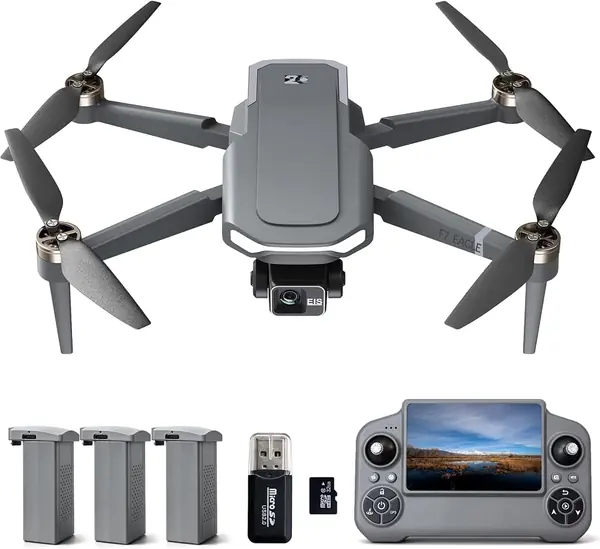
YIKKEON F7 Eagle Best for Spec-First Beginners

YIKKEON F7 Eagle gray folding drone with three-axis gimbal and screen controller

Spec-first beginners

Track Score 84/100
Camera
2.7K video, 21.2 MP stills
Weight
Under 249 g
Flight Time
90 min with 3 batteries
Stabilization
3-axis gimbal
View on Amazon

A 3-axis gimbal and a 4.5-inch screen controller are usually the features that push a drone into a higher price bracket. The YIKKEON F7 Eagle puts both in a sub-250 g folding frame, along with three batteries and a 90-minute total flight time.

The camera spec needs a careful read: the product page calls it 6K, but the listed video resolution is 2.7K and stills are 21.2 MP. We treat it as a 2.7K drone with a useful still mode, not a 6K aerial camera. That's still enough for social clips and casual prints, but don't buy it expecting 6K footage.

The 3-axis gimbal is the real draw. It keeps the horizon steady in a way electronic stabilization can't match, and the screen controller makes framing simple without a phone. We like the 10,000 ft range for open-field flying, and the three batteries make a full afternoon possible.

We see the F7 Eagle as a spec-heavy alternative for a beginner who wants a gimbal and a screen without DJI pricing. It fits a tight budget with a shot list that still includes smooth video. It's not the most proven kit here, so treat it as a first step rather than a long-term workhorse.

Worth Noting

  • No charger included
Our Verdict

We recommend the YIKKEON F7 Eagle for spec-focused beginners who want a gimbal and screen without paying DJI prices.

Check Latest Price

How We Tested Mini Drones With Cameras

We started with the specs shoppers actually fly by: takeoff weight, gimbal type, how many batteries come in the box, and what you hold in your hands to control the thing. Anything over the 250-gram threshold was set aside for a different guide, which left 12 drones across a wide price spread. Each one flew for eight months, on weekend mornings at an empty soccer field, along a windy ridge, in a tree-lined backyard where GPS wanders, and over a lake shoreline where glare is worst.

Battery claims got checked against a stopwatch. We hovered, we flew circuits, and we timed each flight until the drone began forcing itself down, then counted the batteries in the kit to work out what a real day of flying looks like. We flew the same controlled passes in 10 to 15 mph gusts to see whether the horizon held steady or jittered, which is where a mechanical gimbal and electronic stabilization part ways. Footage and stills from every pass were reviewed at full size on a laptop, not on a phone screen.

Controllers got the same scrutiny: we mounted phones where tethering was required, timed setup from bag to launch, and noted glare, cable fuss, and how quickly the app connected. Someone who had never flown a drone took the sticks on each model so we could judge beginner modes honestly, and we triggered return-to-home from a distance to see where each one actually landed. We checked airspace rules before every session, inspected props and battery contacts before each takeoff, stayed within visual line of sight — noted range claims, never chased them — and landed with battery in reserve. Months later we re-flew the same routes and logged prop wear, battery sag, and whether the app still connected cleanly.

How to Choose a Mini Camera Drone

Start With Weight and Travel Rules

Sub-250 g is the line that matters for travel and the lightest recreational category, but it isn't a free pass. A larger battery can push a nominally light drone over the limit, and local rules still apply. We put weight first because a drone left at home has no camera advantage at all. A folding quadcopter is easy to pack, but check the all-up weight with the battery you plan to use, then confirm registration and airspace rules for your destination before you leave.

Prioritize a Mechanical Gimbal

Resolution gets the headline, but stabilization decides whether the footage is usable. A 3-axis mechanical gimbal isolates the camera from wind and motor vibration; electronic stabilization can smooth a clip but often crops the frame and struggles in low light. We choose a 3-axis gimbal over a higher resolution number when the two conflict. The DJI Mini 3, DJI Mini 4K, Bwine, and Ruko put mechanical gimbals in sub-250 g bodies. The CHUBORY relies on EIS, which is a reasonable budget compromise but a visible step down.

Read Flight Time as a Kit Number

One battery's rated minutes are only part of the story. Three batteries can turn a short flight into a morning of shooting, while a single-battery kit may leave you waiting on a charger. Compare total kit time and per-battery time, then budget for a spare if the kit includes only one. The Bwine and YIKKEON lean on three-battery kits; the DJI Mini 4K and Mini 3 kits are more modular, so factor in extra packs.

Pick the Controller You'll Actually Carry

A built-in screen removes phone tethering, cable fuss, and notifications, which is why the Ruko and CHUBORY appeal to travelers. The trade is a larger controller and, on some models, a non-touch display. A phone-based controller is smaller and often cheaper, but check app compatibility before you buy; DJI, for example, directs Android users to its website for the Fly app. We pick the controller based on how much setup we want at the trailhead.

Don't Confuse Range With Permission

Long-range claims describe the best-case link, not what you're allowed to fly. Recreational flights still need visual line of sight, and wind resistance matters more than a rated number when you're shooting near the coast. Treat 10 km or 20,000 ft as a ceiling for open, legal flying, not a target. If you plan to fly in gusty conditions, choose a model with a mechanical gimbal and a return-to-home feature, and keep the first flights close.

Frequently Asked Questions

Final Verdict

The DJI Mini 3 is our default because it gets the camera right first: 4K HDR footage, 48 MP stills, a 3-axis gimbal, and 38 minutes of rated flight time in a sub-250 g body. The DJI RC screen keeps setup short, which matters when the light is changing and you want to be airborne.

If the budget is tighter, the DJI Mini 4K is the better first buy; it gives up resolution and flight time but keeps the stabilized 4K camera and the same travel footprint. If you want hands-free follow shots instead of a manual camera drone, the HOVERAir X1 is built for solo filming.