Best Nippers for Gunpla of 2026

Nip a part off the runner and leave a white stress mark behind, and you learn what a dull pair of nippers costs. A good pair cuts close enough that you barely need to sand, and clean enough that the part snaps free without a chalky scar.

Thin single-edge blades get flush against the part but chip if you twist or overload them; thicker double-edge nippers take rougher handling and give up some precision. Spring feel matters more than most people expect, since a light spring lets the blade wander and a stiff one makes your hand ache by the third runner. We built with 14 pairs over six months, and the six here cover the whole build, from rough first cuts to the final flush pass.

Our Top Picks

The Best Nippers for Gunpla

1.

Tamiya Sharp Pointed Side Cutter No. 123 Best Overall
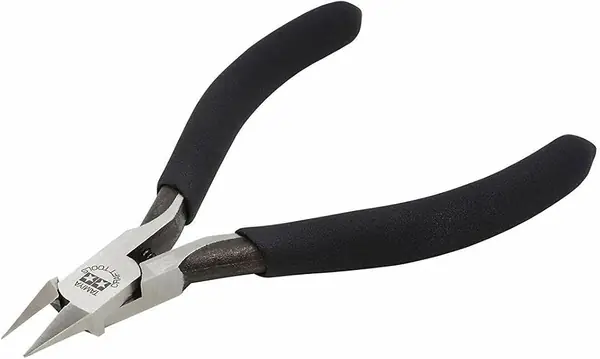
Tamiya Sharp Pointed Side Cutter No. 123 with grey PVC handles

First serious builds

Track Score 96/100
Weight
3 oz
Blade Type
Sharp pointed side cutter
Handle Material
PVC
Overall Length
115 mm
View on Amazon

The combination of slim pointed jaws and a midrange price is what makes the Tamiya No. 123 our default Gunpla nipper. The blades come to a fine point, so you can slip them into tight gates between parts, and the 115 mm body gives you enough reach without feeling unwieldy in a crowded runner.

What we appreciated most in testing was the control. The PVC-covered handles stay planted, and the cutter takes parts off with a close, clean snip rather than a crunch. That matters on Gunpla because a gate that separates cleanly leaves less of a nub to sand and less chance of dragging the part before it lets go.

We also like that it works as a single do-most-things pair. You can remove parts from the runner and trim most gates with it, then keep a hobby knife for the last film. It is not a single-edge finishing tool, so the final cut can still leave a tiny nub, but the broader utility makes up for that on a first serious build.

The slim jaw is why this pair stays within reach between builds. It is not the cheapest nipper here or the most delicate finisher, but it hits the balance we want for a first serious pair.

Worth Noting

  • Thin tips can chip if twisted
Our Verdict

For most Gunpla builders, the Tamiya No. 123 is the nipper we recommend first: thin pointed jaws cut close, the grip stays controlled, and the price is reasonable for a tool this capable.

Check Latest Price
2.

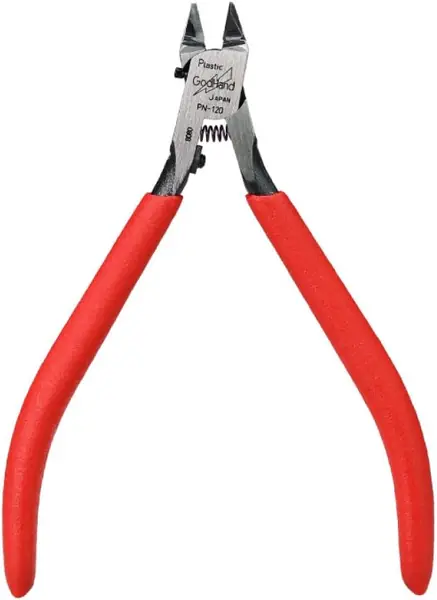
GodHand PN-120 Single-Edge Nipper Best for Flush Finishing

GodHand PN-120 single-edge plastic model nipper with red handle

Final flush cuts

Track Score 95/100
Weight
2.4 oz
Blade Type
Single-edged
Material
Carbon steel
Cutting Capacity
Under 3.0 mm
View on Amazon

The single-edge blade is the reason to step up to the GodHand PN-120, and we recommend it as a dedicated finishing nipper rather than a rough-cut workhorse. One side is flat and thin, so it can sit against the part while the cutting edge comes down through the gate.

That geometry is what produces the close, nearly flush cut. The flat side registers against the plastic, and the blade slices rather than pinches, so the nub left behind is small and the whitening around it is limited. On curved or narrow parts, the thin profile also gets you closer than a bulkier side cutter.

We like the control the 3 mm capacity gives you on standard Gundam gates. The tool is rated for plastic only, and that is the right way to treat it: use an older pair for thick runners, then bring this one in for the final pass. It rewards a light squeeze and a steady hand, not force.

The PN-120 is the pair we keep for the last cut. It is not the tool we hand to someone who wants one pair to do everything, but the time it saves at the sanding stage is why it stays in our rotation.

Worth Noting

  • Premium price for a finishing tool
  • Delicate edge needs careful handling
Our Verdict

If clean final cuts matter more than versatility, the GodHand PN-120 is our finishing pick: its single-edge blade slices close and leaves little to sand, though it asks for careful handling.

Check Latest Price
3.

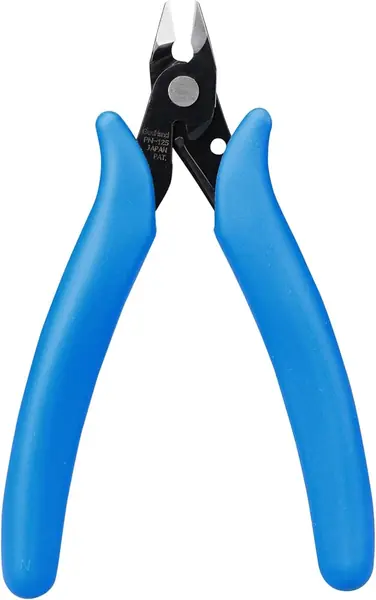
GodHand PN-125 Nipper Best First Nipper

GodHand PN-125 blue plastic model nipper with soft TPE grip

First Gunpla builds

Track Score 94/100
Weight
1.94 oz
Blade Type
Standard all-purpose nipper
Cutting Width
2 mm
Handle Material
Thermoplastic elastomer
View on Amazon

The budget price and beginner-friendly all-purpose build are what make the GodHand PN-125 our recommendation for a first nipper. It is a standard all-purpose nipper, so it is the pair you can use for the whole build without babying it.

We like the soft TPE grip and the light 1.94-ounce body. The handles fill the hand without feeling bulky, and the spring action is easy to repeat over a long build. The edge bites with a light squeeze, and the spring returns the handles predictably, which makes repeated cuts feel less tiring. It cuts cleanly enough that most parts come off the runner without drama.

For a first kit, this is the pair we recommend because it is easy to trust. The cutting width is listed at 2 mm, so keep it for standard gates and use a hobby knife for the last film. We also appreciate that it is simple to replace if you eventually want a dedicated finishing nipper.

It is the pair we hand to someone who wants to start building without overspending on a tool they are still learning to use. The comfortable grip is what makes a long first build feel less tiring, and the light body is easy to keep under control when you are still learning how much pressure a gate needs.

Worth Noting

  • Leaves a little more cleanup than single-edge
Our Verdict

The GodHand PN-125 is the pair we hand a new Gunpla builder: it is comfortable, sharp, and inexpensive enough to learn on, and it does not demand the delicate touch of a single-edge finishing tool.

Check Latest Price
4.

stedi Ultra-Thin Single-Blade Nipper Best Budget Single-Edge

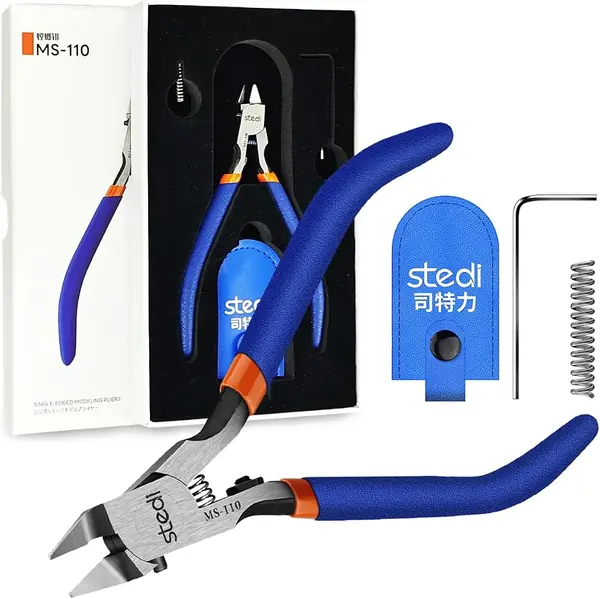
stedi orange single-blade model nipper with thin cutting jaw

Budget finishing cuts

Track Score 93/100
Weight
5.29 oz
Blade Type
Ultra-thin single-blade
Material
Alloy steel
Spring
Stiff spring
View on Amazon

A single-edge blade at a budget price is the whole appeal of this stedi nipper. It gives you the flat-side-against-the-part geometry that makes finishing cuts cleaner without pushing you into premium-tool territory.

We were pleased by the control. The stiff spring gives the handle a positive return, and the ultra-thin single blade lets you come in close on narrow gates. It does not feel as refined as the GodHand PN-120, but it also does not ask you to treat it like a fragile instrument.

On standard Gunpla gates, the thin blade leaves a small nub that is easy to clean up, and the edge stays on track if you keep your wrist straight. Use it for the final pass after a sturdier cutter has taken the part off the runner; the single-edge design is not meant for levering or thick gates.

For a builder who wants single-edge performance on a budget, we think this is a strong step up from a generic double-edge cutter. It is not the pair we choose as the only nipper in a toolbox, but it earns its place beside a more robust first-cut tool.

Worth Noting

  • Heavier than the other finishing nippers
Our Verdict

The stedi single-blade nipper is the budget route to a thin finishing edge: it cuts close and stays controlled, though its heavier body and smaller track record make it a second pair rather than a first.

Check Latest Price
5.

Army Painter Plastic Frame Cutter Best for Miniatures

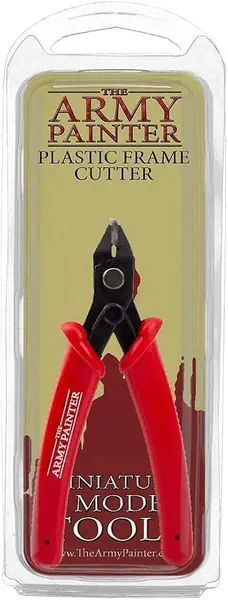
Army Painter stainless steel plastic frame cutter with safety grip

Miniatures and Gunpla

Track Score 92/100
Weight
2.82 oz
Handle
Safety grip
Blade Length
10 mm
Blade Material
Stainless steel
View on Amazon

The miniature-first design and compact cutting head are what set the Army Painter Plastic Frame Cutter apart here. It is built for clipping Warhammer and D&D frames, and that same thin-blade approach works on Gunpla runners.

We liked the stainless-steel blades and the way the flat side can be laid against a part before you squeeze. The cutter reaches into tight frame intersections, and the safety-grip handle stays comfortable during a long session of clipping pieces. It is a solid step up from twisting parts off the runner.

For Gunpla, we think this is more of a first-cut and general-trim tool than a dedicated nub finisher. The blade is thin, but the cutting geometry is aimed at miniatures, so you may still want a single-edge nipper or hobby knife for the last film. We did not mind that trade-off because the tool feels at home on both kinds of plastic.

The compact head makes short work of crowded frames. It is not the specialist we choose for the cleanest possible gate cut, but it is a versatile frame cutter.

Worth Noting

  • Spring is the weak point over time
Our Verdict

The Army Painter Plastic Frame Cutter is our pick for builders who move between Gunpla and tabletop miniatures: its compact stainless head clips parts cleanly, though it is not the finest Gunpla finishing tool.

Check Latest Price
6.

stedi Double-Edge Model Nipper Best for First Cuts

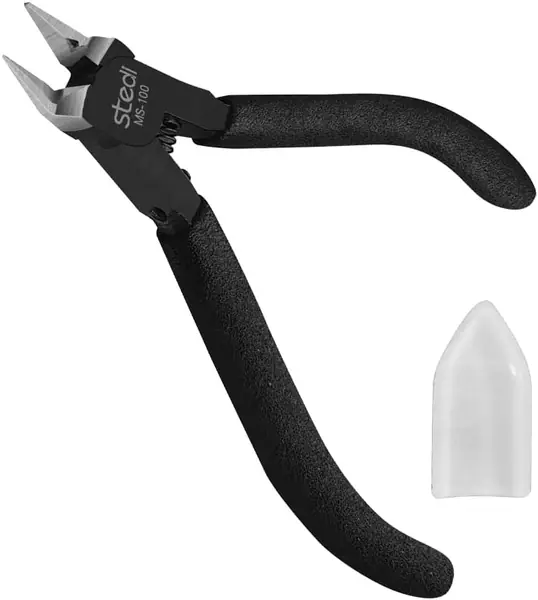
stedi black double-edge model nipper with non-slip grip

First cuts

Track Score 91/100
Weight
1.6 oz
Blade Type
Double-edged
Material
Chromium-molybdenum steel
Cutting Width
0.16 inches
View on Amazon

The double-edge blade is for the first cut, not the final nub. That is the role this stedi nipper fills best: it is a light, low-cost pair for taking parts off the runner before a thinner finishing tool steps in.

We think that first-cut role is exactly where it belongs. The 1.6-ounce body and non-slip matte handle make it easy to maneuver around a crowded runner, and the moderate spring keeps the squeeze from feeling tiring. The double-edge geometry cuts from both sides, which is fine for roughing but leaves more of a nub than a single-edge design.

The jaws are thin enough for most model gates, but this is not a tool for thick sprue or metal. We like it as the pair that does the dirty work while a single-edge nipper handles the final pass. It is also a sensible choice for a beginner who wants two tools without spending much.

It is not the pair we choose when a build has to be display-clean, but it is the one we use to protect the edge on a better finishing nipper. The light body is the detail that makes it easy to keep in the same tool tray.

Worth Noting

  • Blade durability is inconsistent
Our Verdict

The stedi double-edge nipper is a useful first-cut tool for builders who want a light inexpensive pair to rough parts off runners, but it is not a finishing nipper.

Check Latest Price

How We Tested Gunpla Nippers

We started by pulling together the nippers that show up again and again in build threads and hobby shops, then narrowed the shortlist by blade type, stated cutting capacity, handle material, and price so the final group spanned budget all-purpose cutters through specialist single-edge finishing nippers. Fourteen pairs made the cut, and we built with them for six months.

Most of that time was spent at a desk with a cutting mat, working through kits from simple entry-grade builds to denser master-grade ones. We used the two-cut method on every part — a rough snip away from the part, then a flush pass close to the surface — and noted whether the part popped free cleanly, whether it left a white stress mark, and how much sanding the nub needed afterward. We tracked how many cuts each pair made before the edge started to drag, checked for rolling, chipping, or a loose pivot after every kit, and kept every pair within the maker's stated plastic capacity.

For ease of use, we noted how the spring returned, whether we could make a clean one-handed cut, and how the handle felt after a long session. Thin blades slipped into tight inner frames and under overhangs; wider ones felt steadier but blocked our view of the cut. We compared what each pair delivered against its price to judge value at the first-cut and finishing stages, and kept nippers and sprue fragments well out of reach of kids in the house.

How to Choose Nippers for Gunpla

Match the blade to the cut

Single-edge nippers have one flat side and one cutting edge. That flat side can sit against the part, so the blade slices close and leaves a smaller nub; they are the better choice for the last cut. Double-edge nippers cut from both sides and are more forgiving for roughing parts off the runner. If you build often, we like a two-nipper setup: a double-edge or all-purpose pair for the first snip, then a single-edge tool for the finish. A single-edge nipper can do both jobs, but it is more delicate and slower on thick gates.

Plan for the two-cut method

The cleanest Gunpla cuts usually come in two steps. First, cut the gate a few millimeters away from the part so the runner takes the stress; then come back with a fresh, thin edge and trim the remaining nub flush. This keeps the part from twisting and reduces white marks. It also protects a finishing nipper from the force of the first cut. If you only buy one pair, use a lighter squeeze and cut slightly proud rather than trying to remove the whole gate in one bite.

Treat the edge as the wear part

Thin blades are sharp because they are thin, and that is also why they chip. Keep plastic-model nippers for plastic only, stay inside the maker's rated gate size, and never twist or lever a part free. The spring and the tip are the usual wear points. We prefer to use an older pair for rough cuts and save the best edge for the final pass rather than ask one delicate nipper to do everything. If the blade starts crushing rather than slicing, replace it.

Fit the handle and spring to your hand

A nipper you use for a whole build should feel balanced and easy to return. A stiff spring gives a positive, controlled action but can tire your hand; a softer spring is easier on long sessions but can feel vague. Handle shape matters as much as weight: the Tamiya No. 123 and GodHand PN-125 both stay comfortable over a long build, while the stedi single-blade has a heavier, more deliberate feel. If you have small hands, start with a lighter pair.

Decide how much specialization you need

A budget all-purpose sprue cutter is enough for a first build, and the GodHand PN-125 is the one we hand to beginners. Once you are building regularly and want to cut down sanding, a single-edge finisher such as the GodHand PN-120 pays for itself. The Tamiya No. 123 sits in the middle: it is more precise than a starter pair but sturdier than a dedicated finishing tool. Buy the specialty nipper when cleanup is the part of the build you most want to shorten.

Frequently Asked Questions

Final Verdict

We recommend the Tamiya No. 123 as the default Gunpla nipper. It cuts close, stays controllable, and handles enough of the build that you can wait on a second specialty tool. When the final nub is what bothers you, add the GodHand PN-120 for finishing cuts; when the budget is tight, start with the GodHand PN-125.