Best Paints for Model Rockets of 2026

Paint a rocket the night before a launch and you learn quickly: the enamel seems dry, you twist on the nose cone, and a thumbnail takes a crescent out of the gloss. Rocket paint has to grip a paper body tube and a slick plastic nose cone, cure hard enough to survive handling and hold a scheme you'll be reading from 30 feet away.

Chemistry is the first decision. Water-based acrylics are nearly odorless and clean up with soap and water; solvent enamels smell strong, need thinner and cure to a harder, glossier film. We brushed and airbrushed 16 sets onto body tubes, nose cones and fin stock, counting how many coats white and yellow took to hide the primer. Dozens of shades are worth little if the bottles skin over between builds, and the eight picks run from airbrush sets to a single jar of flat black.

Our Top Picks

The Best Paints for Model Rockets

1.

Testors 9146XT Enamel Paint Set Best Overall
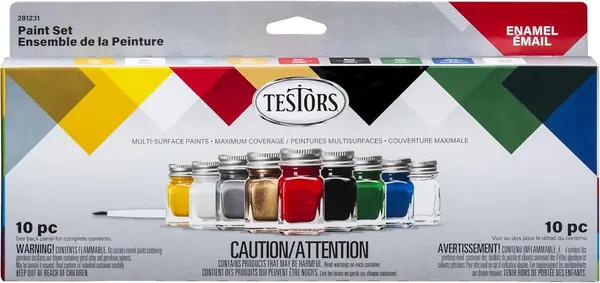
Testors 9146XT enamel paint set with eight gloss color bottles, thinner, brush, and tray

Gloss rocket finishes

Track Score 97/100
Paint Type
Solvent-based enamel
Finish
Gloss
Bottles
8 x 1/4 fl. oz.
Included
Thinner, brush, tray
View on Amazon

Eight gloss colors — yellow, red, dark blue, green, black, white, gold, and silver — cover nearly every scheme in a classic rocket catalog, and we like that the set assumes you own nothing else. The quarter-ounce bottle of thinner in the tray is the part we appreciate most: enamel needs its own thinner for cleanup and for spraying, and having it in the box means a first coat goes on the same afternoon the kit arrives.

Enamel behaves the way a rocket wants. It flows out flat instead of sitting on the surface, so a brushed body tube shows fewer brush marks than a water-based acrylic leaves, and the solvent in it bites into bare plastic in a way acrylic cannot. It also cures to a film that shrugs off handling on the way to the pad, which is why a gloss enamel remains the traditional rocket finish.

Volume is where the set asks you to plan. A quarter ounce covers fins, a nose cone, and a stripe comfortably, but laying a full gloss coat down a long body tube will drink it faster than you expect, so we buy a second bottle of whatever color the rocket mostly is and treat the rest of the box as trim.

A bottle can still arrive stiff if it sat in a warehouse long enough, so stir it with a few drops of the included thinner before you judge the color. Most come back to a workable consistency; the ones that do not are worth raising with the seller rather than fighting.

Worth Noting

  • Solvent fumes and thinner cleanup
Our Verdict

For a rocket that needs gloss yellow, red, blue, and a metallic accent, this is the set we hand a first-time builder: durable enamel, thinner included, and no guesswork about which colors to buy.

Check Latest Price
2.

Vallejo Basic Colors USA Acrylic Set Best Acrylic Set

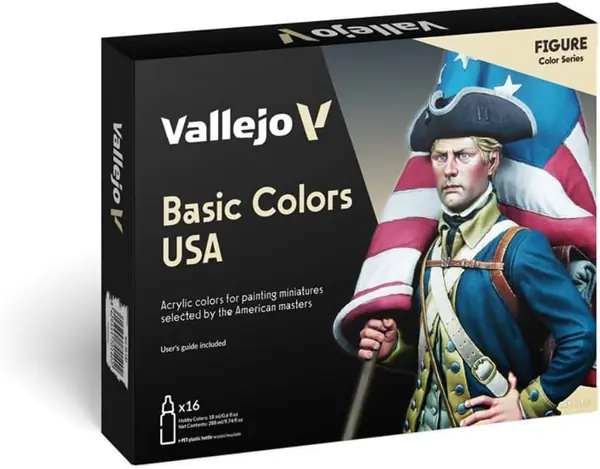
Vallejo Model Color Basic Colors USA set of sixteen 18 ml eyedropper bottles

Indoor brush work

Track Score 96/100
Paint Type
Water-based acrylic
Finish
Matte
Bottles
16 x 18 ml
Dispensing
Eyedropper bottles
View on Amazon

The dropper tip is what makes this set workable on a bench with a half-painted rocket on it. Two drops of yellow and one of orange in a paper cup gives you a fin stripe, and nothing is lost to a wide-mouth jar drying out between sessions. Water cleanup means the brush rinse goes down the sink instead of into a jar of thinner.

What we don't love is the palette. This is a historical miniature range, and bottles like flat flesh and clear orange will never touch a rocket; the greens and browns that make it good for figures sit unused while you go through white, yellow, and black. Read the color list before you buy, not the bottle count.

Opacity is where the line earned our attention. Whites and yellows that go streaky in cheap acrylics go down here in a couple of thin coats, and thinning with water does not turn them into a wash. That matters when every extra coat is another chance to fill a launch lug or soften a fin fillet you spent an evening getting sharp. A rocket is mostly one big flat surface, and this is one of the few acrylic ranges where we do not dread that surface.

Worth Noting

  • Matte finish needs a gloss clear coat
Our Verdict

If you want to paint indoors with no solvent smell and clean brushes in the sink, this sixteen-bottle acrylic set is our pick — thin with water, mix freely, and top with a gloss clear coat.

Check Latest Price
3.

Vallejo Model Air Basic Colors Set Best for Airbrushing

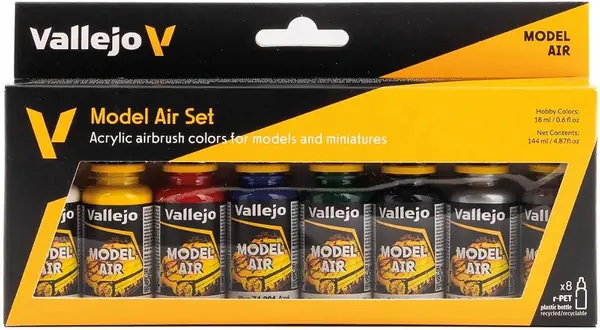
Vallejo Model Air basic colors set of eight 17 ml pre-thinned acrylic bottles

Airbrushed body tubes

Track Score 95/100
Paint Type
Water-based acrylic
Bottles
8 x 17 ml
Application
Airbrush-ready, pre-thinned
View on Amazon

The bottles arrive at spraying consistency, so the first cup does not need a pipette of thinner and a guess. Opening a dropper bottle is the whole preparation. On a project that means spraying white, cleaning the brush, spraying silver, and cleaning again, that is most of an evening saved.

The eight colors are the ones a rocket actually uses: white, medium yellow, red, blue, olive green, black, and both silver and gold, which puts a metallic nose cone in the same cup as the body color. Coverage is even and the metallics do not settle into a gray sludge the way ordinary silver often does.

Most of our use for this set is the least glamorous part of a build: a white or silver body tube, sprayed in two light passes with nothing left to sand. It levels out and dries without the grainy edge that comes from thinning a brush acrylic too aggressively, and the airbrush rinses clean with water. We keep a brush-first bottle nearby for the nose cone and the fin fillets, where a dropper tip is the wrong tool.

Worth Noting

  • Eight shades will not cover an elaborate scheme
Our Verdict

For an airbrush and nothing else, we go straight to this set: eight shades pre-thinned to spray, so you can load a cup and shoot a body tube without measuring thinner first.

Check Latest Price
4.

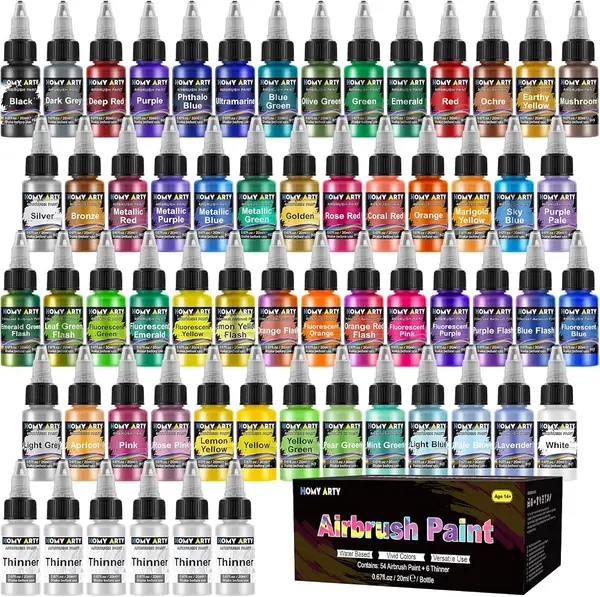
HOMY ARTY 54-Color Airbrush Paint Set Best Airbrush Color Range

HOMY ARTY airbrush paint set with sixty bottles of acrylic color and thinner

Wide airbrush palettes

Track Score 94/100
Paint Type
Water-based acrylic
Colors
54 colors plus 6 thinners
Application
Airbrush-ready
Bottle Volume
0.67 fl oz each
View on Amazon

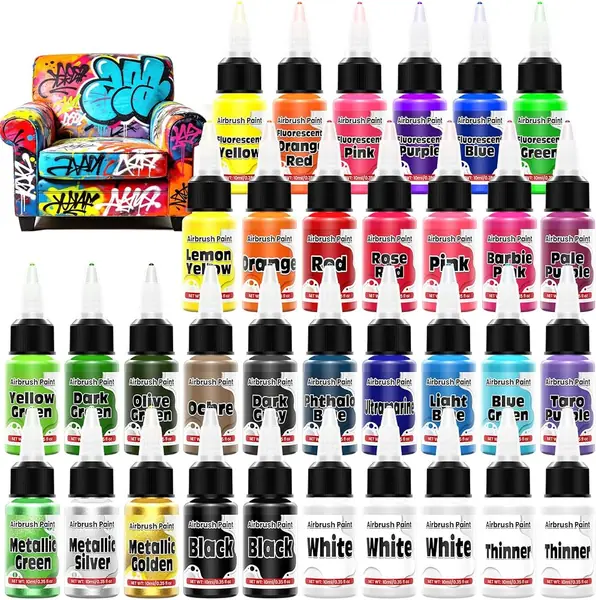
Fifty-four colors and six bottles of thinner arrive in one box — 33 standard shades, seven metallics, seven fluorescents, and seven iridescents. It is the fluorescents and iridescents that make this set interesting for rockets: a fluorescent orange fin on a white tube reads at a distance in a way a standard gloss red never quite does.

The paint is sold ready to spray, and most colors go through a 0.3 mm needle without complaint. A few come out thick enough to want a couple of drops of the included thinner, and the maker's own guidance — one or two drops per ten of paint when your compressor runs at low pressure — is worth following rather than fighting a sputtering nozzle.

Plastic is the weak point. On a bare nose cone this paint can rub off with a thumb once it is dry, so scuff the cone, wash off the mold release, and put down a primer before color. The same is true of most water-based airbrush acrylics, and it is the difference between a finish that survives a landing and one that does not.

What keeps this set on our shelf is range rather than refinement. When the design calls for a color no hobby line makes — a hot pink, an iridescent purple — this is the box we open, and the cost of that range is a pigment load that needs building up in light passes. It is a colorist's set, not a one-coat one.

Worth Noting

  • Restocking one color means buying another full set
Our Verdict

When a scheme calls for a color nobody else sells, this is the airbrush set we open: fifty-four shades plus six thinners, ready to spray without mixing.

Check Latest Price
5.

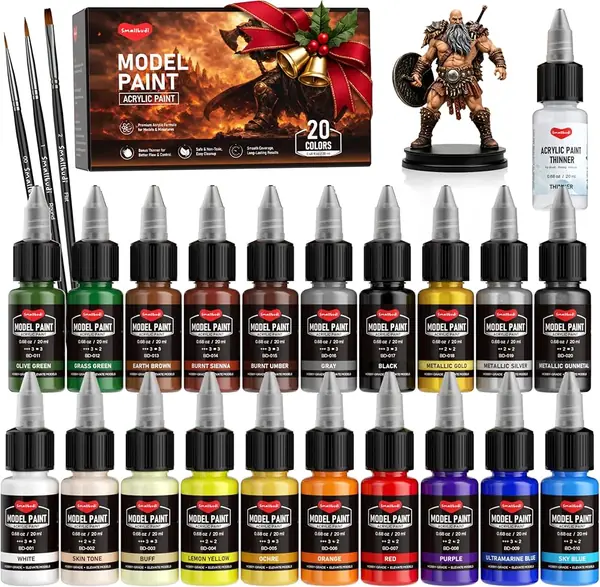
Smallbudi 20-Color Model Paint Set Best Budget Starter Kit

Smallbudi model paint set with twenty acrylic bottles, three brushes, and thinner

First rocket kit

Track Score 93/100
Paint Type
Water-based acrylic
Finish
Matte
Bottles
20 x 20 ml
Included
3 brushes, 1 thinner
View on Amazon

Twenty colors, three brushes, and a bottle of thinner in one box is why we hand this set to someone starting from nothing: there is no second order to place and no guessing which brush a body tube wants. The printed color wheel and instruction sheet are the kind of extra that turns out to matter when you are mixing a shade for a fin and have no idea where to begin.

The paint is a matte model acrylic, thinned to brush straight from the bottle. It levels out on a paper tube, dries fast enough to recoat the same afternoon, and holds up on white, the color where budget sets usually fall apart. The colors stay consistent through a stroke, so a long pull down a fin does not darken halfway.

Dropper bottles are the other quiet win: pour a small batch, brush a fin, cap the rest, and nothing dries out in the drawer between builds. A twenty-milliliter bottle is generous for a starter kit, and that matters more than it sounds — a first rocket usually gets painted, sanded back, and painted again while you learn what a thin coat looks like.

Worth Noting

  • Palette leans toward figure and fantasy colors
Our Verdict

A complete first paint kit — twenty colors, three brushes, and a thinner — for a rocket builder who owns nothing yet and wants to start on the kitchen table.

Check Latest Price
6.

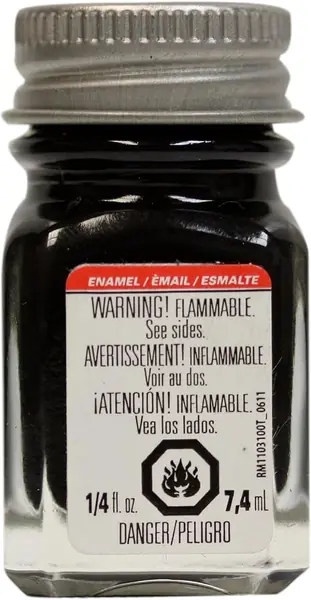
Testors Flat Black Enamel Best for Detail and Touch-Ups

Testors flat black enamel paint in a 0.25-ounce bottle with black cap

Detail and touch-ups

Track Score 92/100
Paint Type
Solvent-based enamel
Finish
Flat
Size
0.25 fl oz
Dry Time
1 hour
View on Amazon

Flat black is the color that makes the rest of a rocket look finished. It goes on nose cones and inside the launch lug, it kills the shine where a plastic cone meets a paper tube, and it is the one shade you can brush over a sanded repair without the patch showing.

We keep a bottle in the same drawer as the sandpaper, and it is what we reach for between bigger jobs. Coverage is good enough that one brush coat over a scuffed nose cone reads as deliberate rather than touched up, and the flat finish hides brush direction in a way gloss never will. Nothing about it is precious, which is exactly why it gets used.

Worth Noting

  • Expensive by volume for a small bottle
Our Verdict

One bottle of flat black solves the parts a color set forgets — nose cones, launch lugs, and the shadowed inside of a fin — and it dries to a real matte, not a satin pretending.

Check Latest Price
7.

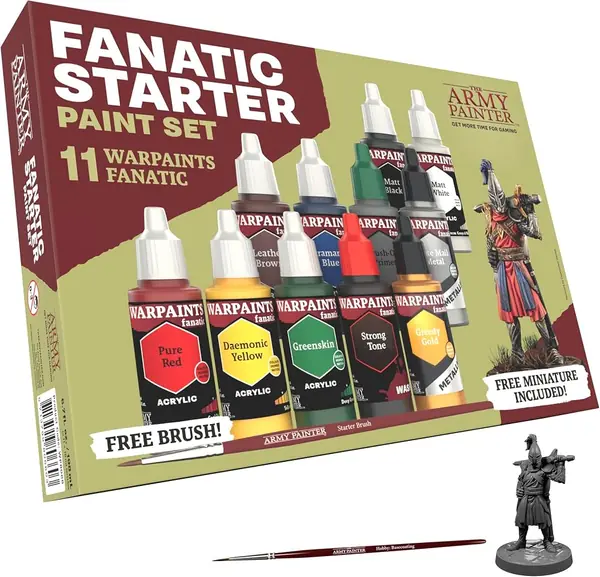
Army Painter Warpaints Fanatic Starter Set Best for Detail and Trim Work

Army Painter Warpaints Fanatic starter set with dropper bottles, brush, and miniature

Detail and trim work

Track Score 91/100
Paint Type
Water-based acrylic
Finish
Satin
Contents
7 acrylics, 2 metallics, 1 wash
Also Included
Brush and miniature figure
View on Amazon

There is a free miniature in the box, and that is the honest description of what this is: a beginner's figure-painting kit with a brush, a wash, and a guide that walks through thinning, priming, and layering. The bottles hold the same Fanatic acrylic the range is built on, so nothing here is a beginner-only formula.

The pigment load is the reason to care. A drop goes a long way in a brush cup, and it thins with water without turning gritty, which is exactly the behavior you want on a plastic nose cone with molded detail — thin paint settles into the panel lines, thicker paint pulls back off the high spots.

The wash is the sleeper. A drop worked into a fin fillet or along a body-tube seam darkens the recess and makes a straight-from-the-bottle paint job look like it had more work in it than it did. That is a trick most rocket builders pick up late, and this set hands it to you on the first build.

What you give up is area. The brush in the box is meant to be worked an inch at a time, so we use it for nose-cone detail, fillets, and the inside of a launch lug, and leave the tube itself to a bigger bottle. It lives on the detail shelf rather than the paint shelf, and it earns the space.

Worth Noting

  • Satin finish, with no gloss colors in the set
Our Verdict

The paints are excellent — dense, smooth, easy to thin — but this set is built around a miniature, so we recommend it for the detail work on a rocket rather than the big panels.

Check Latest Price
8.

ERCorArt 33-Color Airbrush Paint Set

ERCorArt airbrush paint set with thirty-three color bottles, thinners, and primers

Big color variety

Track Score 87/100
Paint Type
Water-based acrylic
Included
2 thinners, 6 primers
Colors
33
Bottle Volume
0.35 fl oz
View on Amazon

Thirty-three colors, two thinners, and six primers make this the least expensive way here to fill an airbrush rack. The color list is the fun part: metallics, six fluorescents, a rose red and a Barbie pink that no military-minded hobby range will ever hand you.

It is a thin paint out of the bottle, which is the trade for that much color at this price. Short, light passes at low pressure build coverage; a heavy pass on a vertical body tube will run before it covers, and the primers in the box are worth using as a base rather than skipping.

Judged against the other airbrush sets here, this is the least refined of the three — thinner pigment, more passes before a color reads solid. What we keep it for is a club table or a classroom, where a dozen rockets need a dozen schemes and nobody is entering the result in a contest. The white primer under the fluorescents is the piece we use most: it is what makes those colors read at any distance.

Worth Noting

  • Smaller bottles than the hobby-brand sets here
Our Verdict

Thirty-three colors, thinners, and primers for the least money here — a thin paint that rewards light passes and covers a lot of different schemes.

Check Latest Price

How We Tested Model Rocket Paint

We started by pulling together more than 40 paint sets sold for models and miniatures, then narrowed the field by chemistry, finish, and how the paint is meant to leave the bottle — brush-ready jar, eyedropper, or pre-thinned for an airbrush. Price per fluid ounce and bottle design knocked out a few on paper alone. Sixteen sets came to the bench, and they stayed there for four months.

Testing happened on parts, not swatches: body tubes cut from spent rockets, spare plastic nose cones, and balsa fin stock. We brushed white and yellow over gray primer in thin coats and counted how many it took before the primer stopped showing through, then laid down one heavy coat on a second tube to see whether it leveled or pooled. Recoat windows were timed with a clock, and once a film had cured we pressed painter's tape onto it, pulled at an angle, and looked for what lifted; we also flexed painted fin stock to see whether the paint cracked along the grain.

Pre-thinned airbrush paints went through a fine nozzle straight from the bottle, while brush-ready paints were thinned according to the label and sprayed the same way — we noted clogs, tip dry, and whether a set's included thinner actually helped. Stray strokes were wiped with water first and thinner second, so we knew which paints came off a plastic nose cone by accident and which had to be sanded back.

Every enamel was brushed with a window open and a fan running, thinner capped between uses, and nothing flammable anywhere near the bench; enamel bottles and thinner stayed out of reach of kids. Sets were capped and stored upright between builds for the rest of the four months, which told us how lids sealed, whether paint skinned over in the bottle, and how far a small bottle really goes on a body tube. Nothing was handled or launched until it had cured.

How to Choose Paint for a Model Rocket

Acrylic or Enamel: Decide by Cleanup and Cure

These are two different evenings at the bench. A water-based acrylic thins and cleans up with tap water, smells of almost nothing, and lets you paint at the kitchen table while the house is awake — the Vallejo Basic Colors USA set is the version of that we keep coming back to. A solvent enamel needs its own thinner for thinning and cleanup, needs an open window or a garage, and cures to a harder, glossier film that takes handling.

Choose acrylic for indoor work and for anything a kid will help with. Choose enamel when the finish has to survive a lot of touching, and treat the fumes as part of the purchase rather than a surprise.

Match the Paint to the Surface It Has to Grip

A body tube is paper, fins are balsa or plywood, and the nose cone is usually polystyrene — three surfaces with three different appetites. Paper and wood soak up a first coat and want a primer or sanding sealer underneath if you care about a smooth tube. Bare plastic is the one that catches people: water-based acrylic sits on slick styrene and rubs off with a thumb, so scuff the cone with fine paper, wash off the mold release, and prime before color.

A model paint that names plastic on the label is not automatically a paint that grips it. The primer step is what makes the difference, and it costs one extra evening.

Gloss, Matte, and How Many Colors You Really Get

Classic rockets are gloss because gloss reads as finished and wipes clean at the field; matte suits a scale military build and shows every fingerprint. If the set you like is matte, add a gloss clear coat at the end and you get the shine back without losing the color.

The other trap is the color count. A sixteen-bottle set that is half military browns and flesh tones gives you eight or nine colors a rocket can use, so count the brights, the white, and the black before you decide the big set is the better buy.

Brush, Airbrush, and How Far a Bottle Goes

Pre-thinned airbrush paint saves you the measuring and gives up the ability to brush a large panel — it is thin by design, and a body tube sprayed in two light passes will look better than the same paint brushed on. Brush-ready hobby paint is the reverse: thick enough to control, and you thin it yourself with water or the matching thinner.

On volume, a quarter-ounce jar of enamel handles fins and a nose cone comfortably, and a full gloss coat down a long tube takes more. Plan on a second bottle of the main color rather than improvising a mix halfway through a body tube.

Frequently Asked Questions

Final Verdict

For a first rocket or a fifteenth, the Testors 9146XT set is where we start. Eight gloss colors, a bottle of thinner, and an enamel hard enough to survive handling means one purchase covers a whole build, and the yellow, red, and blue are exactly the shades a classic scheme wants.

If you paint indoors, or you want to mix a custom shade instead of picking from eight, the Vallejo Basic Colors USA set is the better buy: water cleanup and a dropper bottle for every color, in exchange for a matte finish and a clear coat.