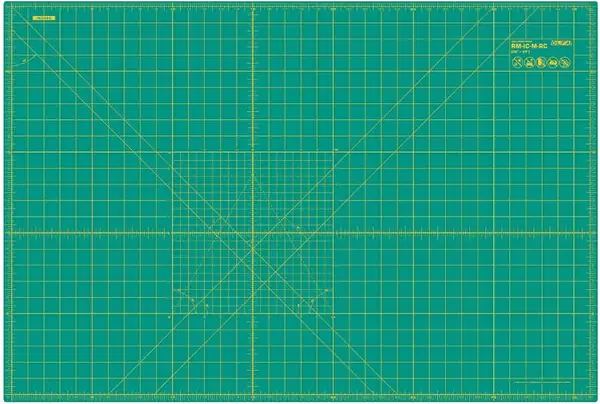
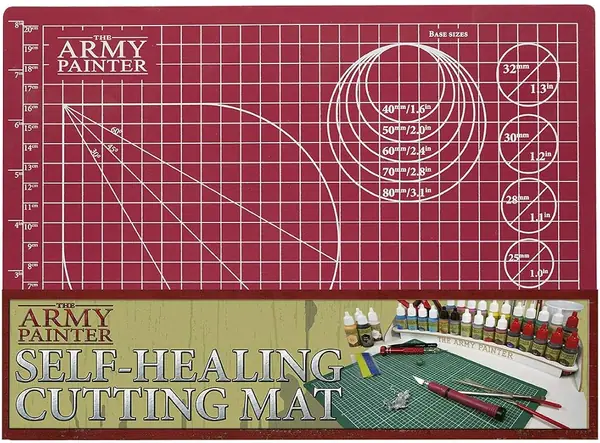
Best Self-Healing Cutting Mats of 2026

The first cut into a cheap cutting mat tells you everything. Instead of closing behind the blade, the surface opens into a fuzzy trench that grabs fabric, drags on a rotary cutter and never quite goes away. A good self-healing mat stays flat and forgiving, spares the table underneath, keeps the blade gliding true and still looks presentable a year later.

Layer count and thickness lead every product page, and they matter, but a mat that arrives curled from a warehouse never flattens, and a new one that smells like a hot tire perfumes a sewing room for a week. We cut on 14 mats over six months, and the nine picks cover what crafters and modelers actually need: a small board for desk work, a rotating square for squaring quilt blocks and oversized mats for laying out a whole quilt.

Our Top Picks

The Best Self-Healing Cutting Mats

1.

Dahle Vantage 10472 Cutting Mat Best Overall
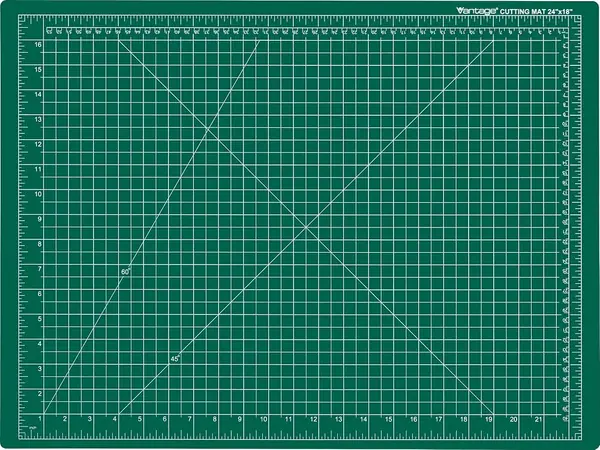
Dahle Vantage green 18 by 24 inch self-healing cutting mat with printed grid

Quilting and sewing

Track Score 99/100
Mat Size
18"L x 24"W
Thickness
1/8 inch
Grid
Inch, metric, and angled trimming guides
Layers
5-layer PVC
View on Amazon

The Dahle Vantage 10472 feels less like a mat and more like a thin worktop. Its 1/8-inch five-layer PVC does not flex or slide under a rotary cutter the way lighter mats do, and that steadiness is why it is our top pick. The 18-by-24-inch size is the other half of the argument: large enough for folded fabric and most quilt blocks, small enough to leave on a desk.

The screened grid is easy to read without dominating the surface. We used the inch and angled guides for squaring and bias cuts; having metric marks as well makes it easier to switch rulers without mental math. The guides are on the top surface, so the reverse is best treated as a plain protective side rather than a second measuring setup.

Thickness is where the Dahle earns its keep. The 1/8-inch PVC cushions the blade and makes deep scoring less likely to reach your table, and the five-layer construction holds its shape when you press down. On a dining table or a dedicated cutting station, that firmness is worth more than a mat you can roll up and tuck away.

It is heavier than the Fiskars and Idemeet, so it stays home rather than traveling to class. That is the right call for a mat that does most of its work on one table. The reward is a surface that does not skate, and a grid that stays readable through repeated use.

Worth Noting

  • Premium price for a standard-size mat
Our Verdict

For daily rotary cutting on a dedicated table, we put the Dahle Vantage first; its thick five-layer surface is the most stable mat here.

Check Latest Price
2.

Idemeet Self-Healing Cutting Mat Best Value

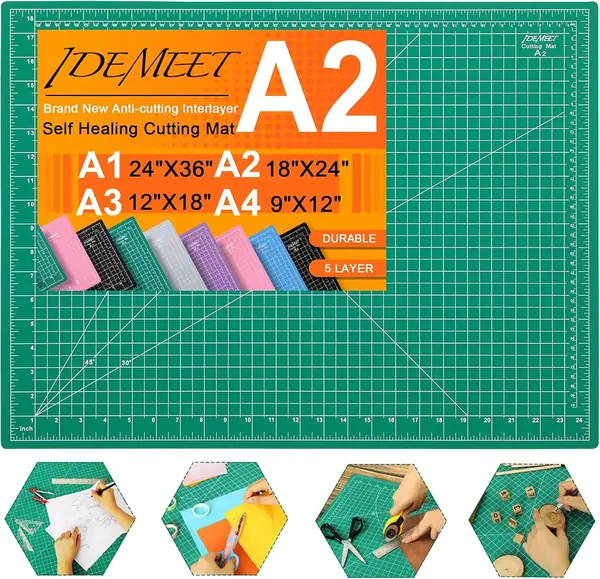
Idemeet green 18 by 24 inch five-ply self-healing cutting mat with grid

Everyday rotary cutting

Track Score 98/100
Thickness
0.28 inch
Construction
5-ply PVC
Weight
3 lb
Overall Size
24.8"L x 18.8"W
View on Amazon

The Idemeet arrives with more heft than its price suggests. At 3 pounds with a 0.28-inch body, it sits flatter and feels denser than the Fiskars, and that weight keeps it from creeping when you press a rotary cutter across the surface. It is the value pick when the Dahle is more mat than the budget allows.

The 18-by-24 class is right for most cutting jobs, though the overall footprint is closer to 24.8 by 18.8 inches, so measure your table before assuming it will tuck into a narrow slot. The double-sided grid includes inches, metric lines, and angle markings. We like having a second measuring face available after the first side starts to show wear.

Density is the reason this one competes. The five-ply build and thicker buffer layers give the blade more support than the inexpensive mats here, and the surface stays smooth through ordinary rotary cuts. Deep, repeated score lines can still stay visible, so rotate the mat and avoid bearing down in one lane; with that habit, the surface holds up well.

It is not as refined as the Dahle, and the finish is plainer than the premium pick. For a crafter who wants a substantial mat without paying premium money, though, this is the balance we prefer. The density is what keeps us coming back: it feels closer to a workshop surface than a folding craft accessory.

Worth Noting

  • Three-pound weight discourages travel
Our Verdict

The Idemeet gives most of the Dahle's density for less money, especially for regular rotary cutting.

Check Latest Price
3.

Fiskars Self-Healing Cutting Mat Best Budget Full-Size

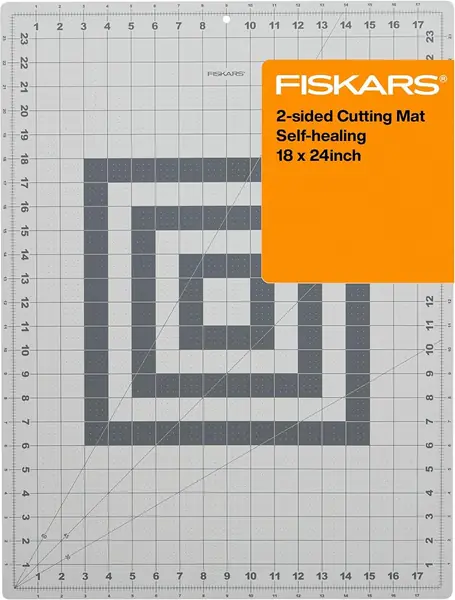
Fiskars gray 18 by 24 inch double-sided cutting mat with bias-line grid

Budget fabric cutting

Track Score 97/100
Mat Size
18"L x 24"W
Weight
1.5 lb
Sides
Double-sided grid
Angle Lines
30, 45, and 60-degree bias lines
View on Amazon

The Fiskars is the mat we suggest for the budget buyer who wants a full 18-by-24 surface. At 1.5 pounds, it is light enough to lift off the table and store upright, and the double-sided grid gives you a second measuring face when the first gets worn.

The grid is clear and the 30-, 45-, and 60-degree bias lines are genuinely useful for angled cuts. We found the markings easy to follow with a rotary ruler, and the lighter body is simple to reposition when a project moves from the sewing machine to the floor. It is a practical full-size mat rather than a permanent workshop surface.

Self-healing is the place to set expectations. Ordinary rotary cuts close up, but repeated cuts in the same lane can leave visible lines, so rotate the mat and vary your cutting path. The lifetime warranty is a meaningful backstop. We keep the Fiskars in the budget slot because it handles the basics and is easy to live with, not because it feels indestructible.

Worth Noting

  • Lighter build flexes more than thick mats
Our Verdict

Budget-minded sewists should start with the Fiskars: it delivers a full 18-by-24 surface and a useful double-sided grid for less than the thicker picks.

Check Latest Price
4.

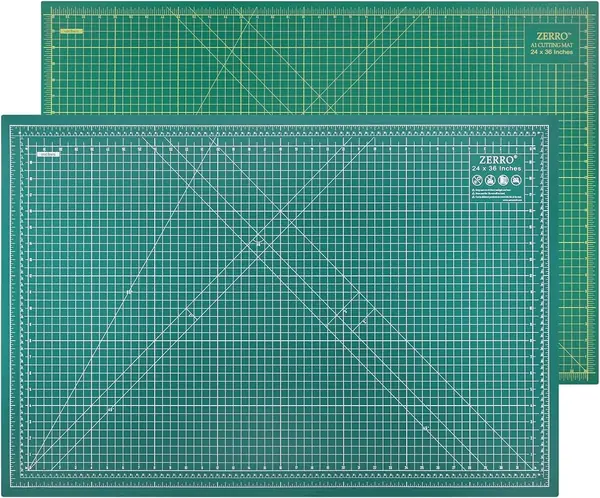
ZERRO Self-Healing Cutting Mat Best for Large Projects

ZERRO green 24 by 36 inch double-sided self-healing cutting mat with grid

Large fabric layout

Track Score 96/100
Mat Size
36"L x 24"W
Thickness
3 mm
Construction
5-ply PVC
Grid Size
34 x 22 inches
View on Amazon

A 24-by-36 mat changes the scale of a cutting project, and the ZERRO makes that scale useful when you are laying out yardage or squaring a full quilt section. The 36-by-24 surface gives you room to move a rotary cutter without resetting the fabric, and the 3 mm five-ply body is rigid enough to stay flat on a table.

We like the double-sided grid for the way it handles both inch and centimeter work; one side is inches, the other adds metric marks. The printed grid leaves a 34-by-22-inch cutting area inside the border, which is still generous but worth knowing if a project needs every inch. The surface has enough tooth to hold fabric without feeling sticky.

For large cuts, the size is the feature. It lets you keep a long ruler in place and make one continuous pass instead of repositioning a smaller mat. The extra surface also gives pattern pieces room to breathe, which matters when you are matching repeats or cutting several layers at once.

This is the large-format mat we recommend for quilters who cut yardage at home. It is heavier and costs more than the 18-by-24 picks, but the extra surface changes how quickly a big project moves. The extra room is the point, and the rigid body keeps long cuts steady.

Worth Noting

  • Needs a large dedicated table
Our Verdict

Choose the ZERRO when your projects need a 24-by-36 surface and you have a dedicated table to hold it.

Check Latest Price
5.

Calibre Art Rotating Cutting Mat Best Rotating

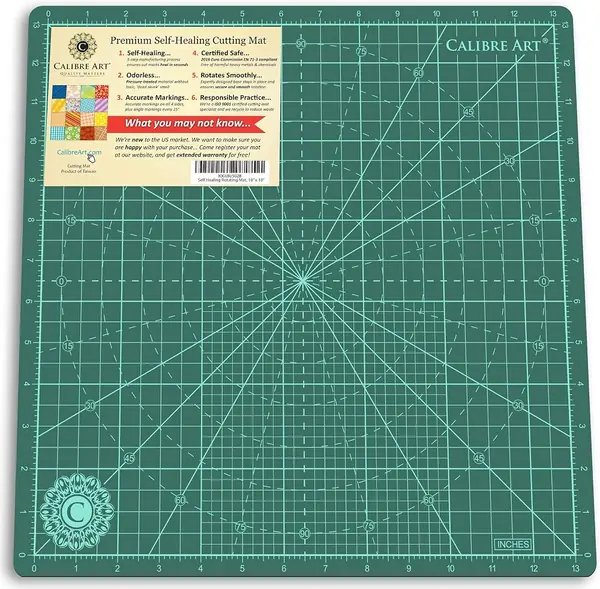
Calibre Art green 14 by 14 inch rotating self-healing cutting mat with grid

Squaring quilt blocks

Track Score 95/100
Mat Size
14 x 14 inches
Grid Size
13-inch grid
Base
Non-slip
Surface Standard
EN 71-3 compliant
View on Amazon

The rotating base is the whole reason to consider the Calibre Art. Instead of walking around the table or shifting a quilt block, you spin the mat and keep your hands in the same cutting position. That sounds like a small convenience until you are squaring a stack of blocks; then it becomes the thing that keeps the work moving.

The 14-by-14 surface with a 13-inch grid is sized for blocks, not yardage. The rotation is smooth and the base stays put, so the mat does not wander while you cut. We also appreciate that the surface is EN 71-3 compliant; in a craft room where children or sensitive materials are around, that is a useful reassurance.

The non-detachable base makes it sturdier than a loose mat on a turntable, but it also means this one lives on the table rather than in a drawer. For quilters who square up the same block size repeatedly, that permanence is the point. The clear markings and easy spin make it feel like a tool rather than an accessory.

Our Verdict

Quilters who square up blocks repeatedly will get the most from the Calibre Art's smooth rotating base and focused 14-by-14 surface.

Check Latest Price
6.

Elan Extra-Large Cutting Mat Best Extra-Large

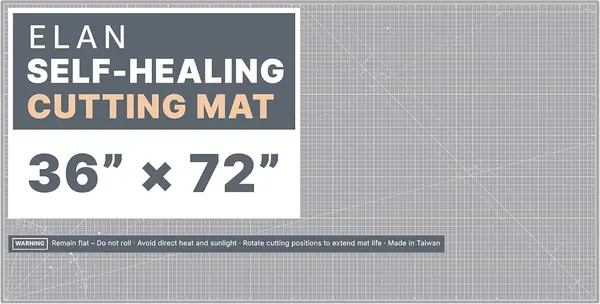
Elan gray 36 by 72 inch extra-large five-ply self-healing cutting mat

Full-table projects

Track Score 94/100
Mat Size
72"L x 36"W
Thickness
3 mm
Construction
5-layer recycled PVC
Grid
Imperial grid on both sides
View on Amazon

The Elan 36-by-72 is less a desk mat than a table cover. If you have ever laid a quilt backing across a dining table and hoped the fabric would stay put, the scale is immediately understandable: one surface, one grid, no repositioning every few feet.

Both sides carry an imperial patchwork grid, and the two gray tones give you a visual change when you flip the mat. The 3 mm five-layer PVC is firm enough to bridge a table without curling at the edges, and the recycled underlayers are a sensible touch for a product this large.

The size changes the workflow. You can leave a long ruler in place and make one continuous cut across a wide piece, and you can lay out pattern pieces without sliding them off the edge. It is the sort of surface that makes a wide project feel smaller.

The self-healing surface handles ordinary rotary cuts, though with any mat this large, flat support matters. A sagging table will make even thick PVC feel less solid. Keep it flat and out of direct sunlight; it is not a mat you fold away for the weekend.

We recommend the Elan when the project genuinely needs the full 36-by-72 surface. It solves a layout problem the smaller mats cannot, and in a dedicated sewing room that permanence is a feature rather than a drawback.

Worth Noting

  • Premium price for a niche size
Our Verdict

The Elan is the mat we choose when a full 36-by-72 layout is the job and the cutting table is permanent.

Check Latest Price
7.

DIYSELF Self-Healing Cutting Mat Best Small Mat

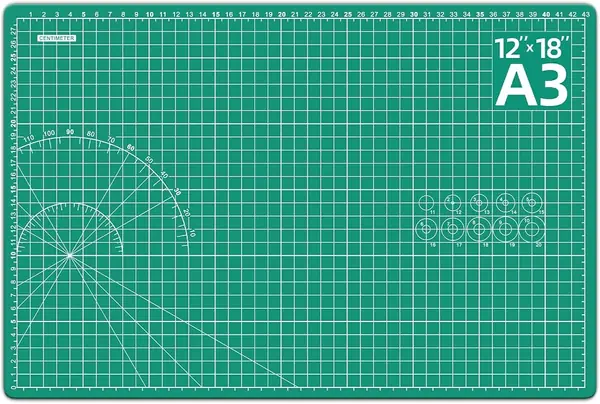
DIYSELF green 12 by 18 inch double-sided five-ply self-healing cutting mat

Small desk projects

Track Score 93/100
Mat Size
18"L x 12"W
Construction
5-ply PVC
Grid
0.5-inch grid
Weight
4.94 oz
View on Amazon

The DIYSELF costs little enough that you can keep one in a project bag and another on a small desk. At 18 by 12 inches, it is a trimming mat rather than a yardage mat, and that is exactly the role it fills well: squaring small blocks, cutting journal pieces, and protecting a table during quick hobby sessions.

The 5-ply PVC surface is light at under five ounces, so it travels easily and lies flat when you set it down. The half-inch grid, 45- and 60-degree lines, and numbered edges make it easy to line up small pieces without reaching for a larger ruler. The surface handles light rotary and craft-knife work, though it is not built for heavy, repeated cuts.

What we like most is the low-stakes convenience. It fits beside a sewing machine, slips into a drawer, and gives you a clean, gridded surface without taking over the room. It will not replace an 18-by-24 mat for garment work, but for small, frequent cuts it earns its place.

Our Verdict

Keep the DIYSELF on hand for small trimming, journaling, and class projects; it is the compact mat for when a full-size board is overkill.

Check Latest Price
8.

OLFA Self-Healing Rotary Cutting Mat

OLFA green 24 by 36 inch double-sided self-healing rotary cutting mat

Rotary cutting only

Track Score 92/100
Mat Size
24 x 36 inches
Thickness
1.5 mm
Construction
Triple-layer
Sides
Grid on one side
View on Amazon

The OLFA 24-by-36 is built around the rotary cutter. The triple-layer surface gives the blade a clean, stable field, and the large format lets you make long passes across folded fabric without stopping. For quilters who already work this way, it is a familiar, purposeful mat.

One side carries the grid; the reverse is a solid green surface. That gives you a measuring side and a plain protective side, and the dark green base makes the yellow grid easy to read across a wide cut. The 1.5 mm thickness is on the thin side, so it needs a flat table under it, but the mat stays put once it is down.

We like the way the grid supports bias strips and long straight cuts. The scale is generous enough for multiple layers of fabric, and the surface is designed to keep a rotary blade from dulling as quickly as it would on cardboard or a bare table. It is a tool for a dedicated cutting table, not a mat you fold into a bag.

The OLFA is a focused large rotary mat for someone who has the table and the cutter. It is simple and effective within that job. Our advice is to give it a permanent home and set it up before a project, not mid-cut.

Worth Noting

  • Rotary cutters only; not utility knives
  • Chemical odor can linger when new
Our Verdict

The OLFA is the large-format rotary mat we recommend for quilters who want a stable surface for long cuts and bias strips.

Check Latest Price
9.

The Army Painter Cutting Mat Best for Miniature Hobby Work

The Army Painter red A4 self-healing cutting mat with grid and base markings

Miniature hobby work

Track Score 91/100
Mat Size
A4
Thickness
3 mm
Construction
3-ply PVC
Markings
Grid and miniature base sizes
View on Amazon

The Army Painter mat is one of the few here with markings made for miniatures. The A4 surface includes common base-size guides, so you can check a figure's footing without hunting for a ruler. For assembling and painting Warhammer or D&D figures, that turns a generic cutting mat into a dedicated hobby station.

The 3 mm three-ply PVC is sturdy enough for hobby-knife work, and the red grid side is easy to read against gray plastic and metal. Flip it over and you get a clean black surface that works as a backdrop for photographing a finished miniature.

We like the dedicated feel of it: the base guides are useful, the surface is easy to wipe down, and the mat is small enough to leave out on a hobby desk. The base-size markings are the detail that makes it feel purpose-built rather than a scaled-down sewing mat.

For miniature hobbyists, this is the mat we recommend when the work is assembly, cleanup, and painting. It gives you a defined workspace and a scale reference in one piece. That focus is what makes it useful.

Worth Noting

  • A4 area limits fabric and pattern work
  • Three-ply build is lighter than five-ply mats
Our Verdict

Miniature painters and modelers should consider the Army Painter for its base-size guides and small, dedicated work surface.

Check Latest Price

How We Tested Self-Healing Cutting Mats

We started by gathering the mats a shopper would realistically compare — quilt-sized boards, rotating squares, oversized table mats, and small hobby boards — and filtered by the sizes available, the number of layers claimed, grid style and unit coverage, blade guidance from each maker, and price. From that pool we bought 14 mats, from small desk-sized boards to one that covers a dining table, and used them for six months.

The mats lived where they would live at home: on a sewing table beside a machine, on a kitchen counter for trimming quilt blocks, on a craft desk for cardstock and leather scraps, and at a hobby bench for painting figures. We cut strips, squares, and bias pieces with rotary cutters and craft knives, using only the blade types each maker specifies — the largest rotary-only mat never saw a craft knife. Grid accuracy was checked by cutting a square against the printed lines, measuring it with a steel ruler and square, then working off the angle lines under a bright lamp to see whether the markings stayed legible. After each session we ran a fingernail across the most-used stretch of surface to feel for grooves and counted how many passes it took before a cut closed over.

We laid each mat on a flat counter and pressed the corners to see whether it rocked, weighed it before carrying it to a class, and flipped every double-sided mat to keep working on the reverse grid. Odor got checked three times: out of the box, a day later, and after a week in a closed room. Mats were hand-washed with mild soap, dried flat, and stored away from heat and sunlight. At the end we compared price against usable gridded area to judge value.

How to Choose a Self-Healing Cutting Mat

Start With the Cutting Area

Mat sizes are usually labeled by overall dimensions, while the printed grid is smaller. The Dahle's 18-by-24 body, for example, carries a 17-by-22 grid; the ZERRO leaves a 34-by-22 cutting area inside its 24-by-36 border. That border is useful for handling, but it is not cutting room. We treat 18 by 24 as the default for sewing and quilting because it handles folded fabric and most blocks without swallowing a desk. Step up to 24 by 36 for yardage, or down to 12 by 18 for trimming and travel. Measure the table you plan to use before ordering.

Thickness, Layers, and Self-Healing

Self-healing is a surface quality, not a promise that every cut disappears. A 3- to 5-ply PVC mat closes light rotary cuts; deep score lines, repeated cuts in one lane, and heavy utility-knife pressure can leave visible marks. Thicker mats such as the 1/8-inch Dahle and the 3 mm ZERRO feel more solid and cushion the blade, while 1.5 mm mats are lighter and easier to move. We prioritize a mat that lies flat and resists flexing, then rotate it so wear spreads across the surface. If you cut daily, buy the thickest mat your table and budget allow.

Grid Markings and Blade Compatibility

Look for a grid you can read at a glance and markings that match how you work. Inch and metric lines, 30-, 45-, and 60-degree angles, and numbered edges all save reaching for a separate ruler. Double-sided mats give you a second measuring face, but check whether the reverse actually carries a grid; some list grids on one side only. Blade compatibility matters too: OLFA's 24-by-36 mat is designed for rotary cutters and warns against fixed-blade utility knives, while most mats here accept craft knives. Choose the mat that matches your blade first, then the grid that matches your ruler.

Frequently Asked Questions

Final Verdict

After handling the full set, we recommend the Dahle Vantage as the default self-healing cutting mat. Its 1/8-inch five-layer PVC is the most stable surface here under a rotary cutter, and the 18-by-24 size covers real fabric work without taking over the room. If you want to spend less, the Idemeet gives you a denser-than-average mat and a double-sided grid for a midrange price. For yardage and full quilt layouts, choose the ZERRO 24-by-36; its extra surface is worth the dedicated table.