Best Beginner RC Planes of 2026

Keeping the first flight from becoming the first crash is what a beginner RC plane is for. The usual story is a foam warbird, a spare battery and a park down the street, until a gust puts it in a tree. A plane you keep flying has flight assistance, a self-leveling mode that brings it back to straight and level when you let go of the sticks.

Channel count is the spec beginners skim past. Two channels usually means throttle and turning; four adds elevator and aileron, which is the step from steering to flying. We flew 12 planes over eight months, mostly on a school field at dawn before the wind came up, and none of the eight here needs a club field or an instructor on a buddy box.

Our Top Picks

The Best Beginner RC Planes

1.

VolantexRC P51D Mustang Best Overall
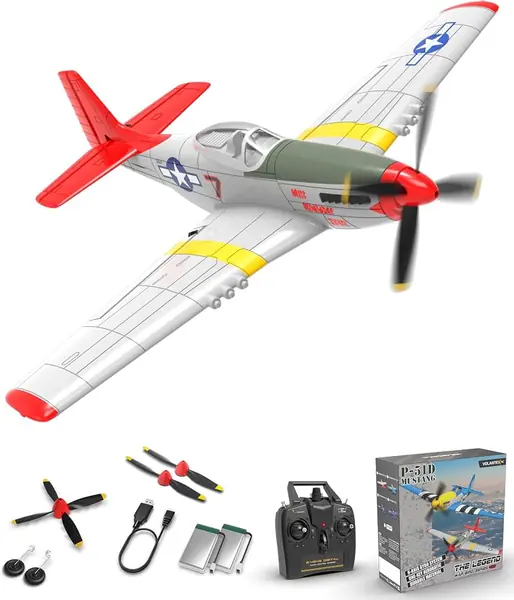
Red VolantexRC P51D Mustang foam RC plane with transmitter and two battery packs

First-time pilots

Track Score 86/100
Channels
4
Batteries Included
2 LiPo packs
Flight Modes
Beginner, intermediate, expert
Stabilization
6-axis Xpilot gyro
View on Amazon

The assist that earned this plane its spot starts about two seconds after the throw. Press the button, hold the left stick, let go, and the P51D levels off and hovers in place, waiting for your next command — which turns the most nerve-wracking moment of a first flight into a pause. That is why we hand this transmitter to someone who has never flown an RC airplane: it buys a startled beginner three seconds to think instead of three seconds to panic.

Behind the trick is a 6-axis gyro with three modes. Beginner applies full self-leveling assistance, intermediate halves the correction so you feel what the sticks are doing, and expert hands everything over for loops and rolls. The middle mode is where most new pilots spend their first several outings, and we like that the safety net stays on there. The geared motor exists for thrust and efficiency rather than outright speed, and the one-button aerobatics give you something to aim at once circuits stop being enough.

Two LiPo packs, the charger, and the transmitter all come in the box, so a session doesn't end when the first pack lands. The airframe is light foam, which cuts both ways: a slow nose-over onto grass is a non-event, and a full-throttle dive into the ground is not. The propeller is mounted to pop off rather than snap, and pressing it back on takes seconds, so the usual beginner damage is a field fix rather than an order.

A park-sized field is all it asks for. If you want the same three-mode ladder with a propeller designed to be re-seated after every bump, the LEAMBE P51 below is the near-twin to weigh against it — but the hover-and-wait launch is the feature that makes this one the default for a genuine first flight.

Worth Noting

  • Light airframe gets pushed around in gusty wind
  • Gyro or charger faults can end a session
Our Verdict

We make the P51D our top pick because the hover assist turns a bad launch into a pause and the three-mode gyro keeps teaching long after the first flight.

Check Latest Price
2.

LEAMBE P51 Mustang Best for Learning Aerobatics

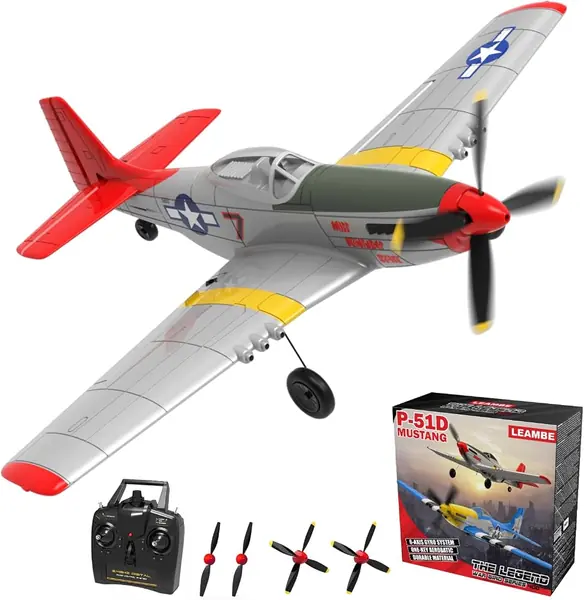
White LEAMBE P51 Mustang foam RC airplane with propeller saver hub and transmitter

Aerobatic practice

Track Score 85/100
Channels
4
Wingspan
15.75 inches
Flight Modes
Beginner, intermediate, experienced
Control Range
Up to 656 feet
View on Amazon

Two 4-channel P-51s sit at the top of this guide, and the gap between them comes down to physical details rather than flight behavior. This is the other one: a 15.75-inch wingspan trainer with the same three-mode assist ladder and a different answer to the propeller problem.

Its answer is a propeller saver, and we think it's the more elegant of the two solutions. The prop is designed to release instead of shattering when it clips grass or a curb — you walk over, press it back on, and fly again. Over a season of beginner mistakes that saves both money and the walk of shame, and it's the reason this plane stays flyable on afternoons when a fixed prop would have you ordering parts.

In the air the gyro behaves the way the controls suggest it will: responsive in intermediate mode, stable enough that a novice can fly a full circuit without fighting it, and rated to 656 feet of range. The 12.1-inch fuselage is the practical catch, because at the far end of that reach it is a speck with no obvious orientation — keep it close enough to read the wings. The elastomer foam is light and flexible, the screwdriver and charging cable in the box cover the basics, and the expert mode is genuinely manual rather than a slightly faster version of the middle one.

Worth Noting

  • Wheels detach on rough landings
Our Verdict

We like this one as a first aerobatic trainer: the propeller saver spares you a broken prop on a clumsy landing, and three modes make the jump to manual gradual.

Check Latest Price
3.

FMS Ranger 1220mm Best Large Trainer

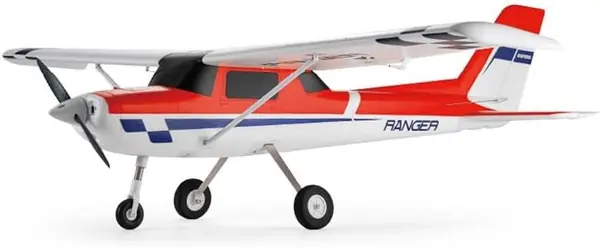
Red FMS Ranger 1220mm high-wing foam RC trainer airplane with transmitter

Large open fields

Track Score 84/100
Wingspan
1220mm
Assembly
No glue required
Material
EPO foam
Beginner Assist
Self-stabilizing mode
View on Amazon

A 1220mm wingspan — about four feet across — is the first thing anyone notices about the Ranger, and it tells you most of what you need to know about the kind of flying it's built for.

Assembly is the pleasant surprise. No glue is needed and the airframe goes together quickly enough that you can be at the field the same afternoon, which matters when enthusiasm is the scarcest thing in the house. The layout is a high-wing trainer with a large wing area, giving it low wing loading and the gentle stall behavior that follows from it. A spring-loaded nose gear soaks up the sort of arrival a new pilot produces, and the Reflex system offers a self-stabilizing beginner mode plus an advanced mode with more authority for when you want the plane to answer faster.

Size pays off once it's airborne. A four-foot high-wing is far easier to see and orient than the 12-inch warbirds here, it shrugs off a breeze that would ground the small stuff, and it flies slowly enough that a beginner has time to react rather than react late. It's the closest thing in this guide to a plane that teaches you to fly rather than one that tolerates being flown.

The buyer we have in mind is the one who has watched a few videos, set aside a budget, and wants an airframe to learn on for a full season instead of a toy to survive a weekend. What you get for the commitment is a trainer you keep flying after you've soloed, which is more than most first planes manage.

Worth Noting

  • Needs a large open field
Our Verdict

For beginners who have already decided the hobby is for them, this is the trainer we point at: big, slow, visible, and steady enough to fly in a breeze.

Check Latest Price
4.

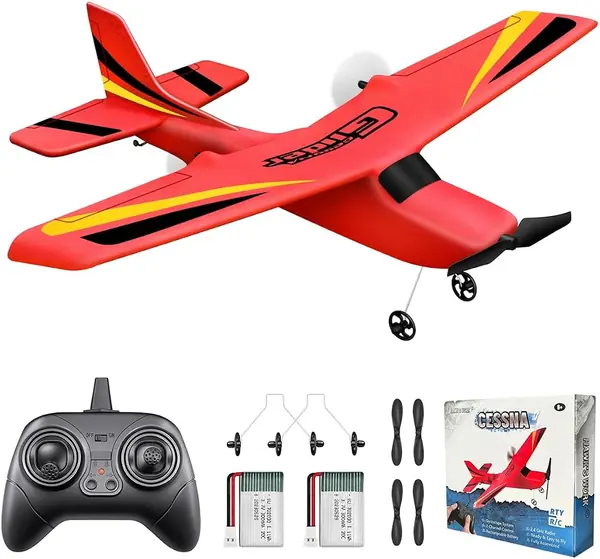
Hawk's Work 2-Channel Glider Best First Plane for Kids

Red Hawk's Work two-channel foam RC glider with controller and spare propellers

Young beginners

Track Score 83/100
Channels
2
Batteries Included
2
Warranty
1 year airframe
Recommended Age
8 years and up
View on Amazon

The box is the argument: two 300mAh flight packs, two spare propellers, three AA batteries for the transmitter, and a USB charging cable, backed by a one-year airframe warranty and a three-month battery warranty. For a first plane that is going to meet the ground repeatedly, that's a more useful package than a faster motor.

There are no moving control surfaces here — two motors do the steering by varying their thrust, which is what a 2-channel layout means in practice. A built-in stabilization system keeps it level, and you can either let it taxi five to ten meters down a hard surface or throw it by hand once you're confident. It's rated for ages 8 and up, and two or more can fly at the same time on 2.4GHz without stepping on each other.

We hand this one to young beginners and to anyone who wants the shortest possible path from box to air. It is the least expensive plane here that genuinely flies rather than hovers, the spare props and the second pack mean a bad landing rarely ends the outing, and among the small planes in this guide it's the only one whose warranty covers the airframe for a full year.

Worth Noting

  • No control surfaces, so wind pushes it around
  • Wheels fall off and get lost
Our Verdict

For a child's first season, this is the plane, with two packs, spare propellers, and a one-year airframe warranty behind it.

Check Latest Price
5.

DEERC 2-Channel Glider Best Budget

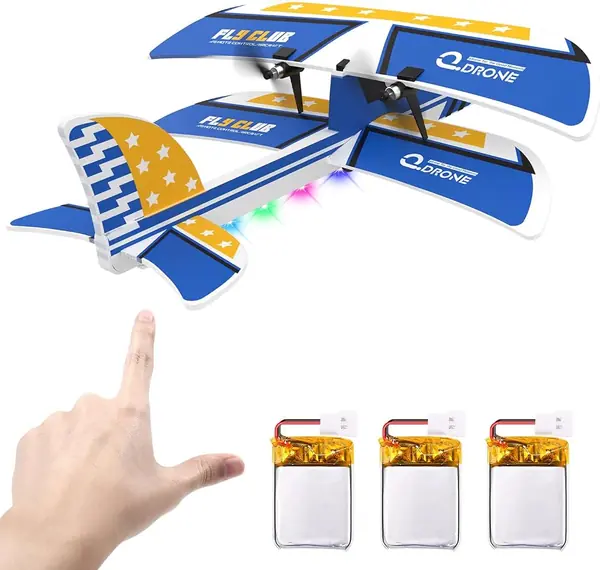
Yellow DEERC two-channel foam RC glider airplane with three battery packs

Tight budgets

Track Score 82/100
Channels
2
Batteries Included
3
Control Range
Up to 164 feet
Stabilization
6-axis gyro
View on Amazon

Three battery packs in the box is what earns this one a place. Each 185mAh pack is small on its own, but three of them back to back turn a short hop into a real afternoon, and this is the least expensive way here to get a stabilized plane into the air. For a first flight that may last ninety seconds before a tree intervenes, that math matters.

The 6-axis gyro does the stabilizing, twin motors do the climbing, and the whole plane is small enough for a yard, a quiet street, or the corner of a park. It's the one we think of for a kid who wants to fly after school without anyone loading a car, and the light EPP foam takes the kind of tumble that follows.

Two speeds let a nervous pilot start slow, and the transmitter turns the plane on and off remotely, which saves a lot of crouching in wet grass. It is a toy-grade airplane and behaves like one — the reward is that nothing about it is precious, so a beginner can experiment instead of protecting an investment.

Worth Noting

  • Short 164-foot radio range
  • Can climb away in a gust
Our Verdict

We keep this as the budget choice: three packs in the box, a gyro that keeps it upright, and a size that fits a yard.

Check Latest Price
6.

SYMA X550 Best for Stunt Fun

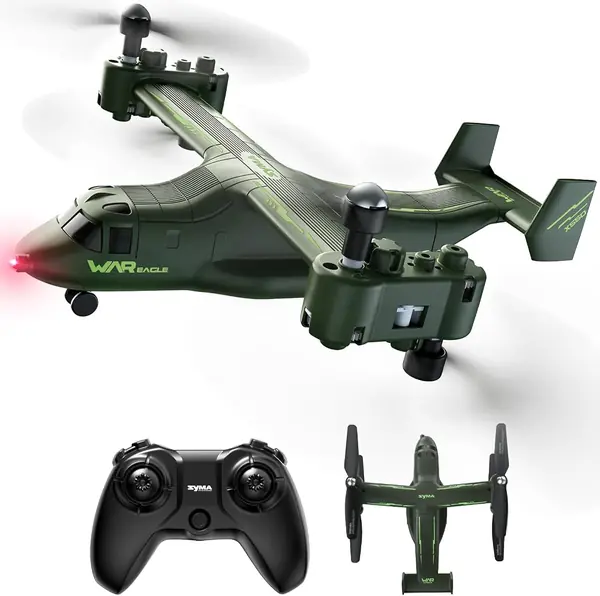
Green SYMA X550 four-channel RC stunt plane with military-style body and controller

Kids wanting tricks

Track Score 81/100
Channels
4
Speed Settings
2
Stunt Moves
6
Takeoff And Landing
One-key
View on Amazon

Six stunt moves on a 4-channel plane sounds like a lot for a beginner, and it is — which is why the two speed settings and the one-key takeoff and landing matter more than the trick list. Start on low, launch with the button, and the altitude hold keeps it at a steady height while you work out which stick does what.

What we appreciate is that the tricks live on buttons rather than on skill. Flips, spins, climbing spins, and circles are a press away, so a kid gets the payoff long before they can fly a clean circuit, and the military-style body looks good enough that it stays on the shelf between flights. It handles light wind, which is more than the smallest planes here manage, and the controls feel natural rather than twitchy.

This is the plane for a young pilot who is more interested in showing a friend something than in learning a proper traffic pattern. Give it to them with the low-speed setting selected, and let the trick buttons do the work of keeping them interested.

Worth Noting

  • Plastic body, not foam, so hard hits show
Our Verdict

We hand the X550 to kids who want a button that does something, and the stunt moves plus one-key landing deliver that on the very first flight.

Check Latest Price
7.

HobbyZone Carbon Cub S 2 Best for Committed Learners

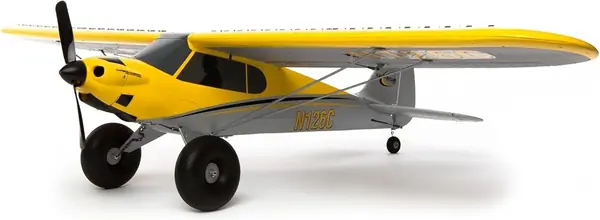
HobbyZone Carbon Cub S 2 high-wing scale trainer RC airplane with Spektrum transmitter

Committed learners

Track Score 80/100
Wingspan
1.3m
Flight Modes
Beginner, intermediate, experienced
Stabilization
SAFE technology
Transmitter
Spektrum DXS
View on Amazon

SAFE is the reason this plane is on the list at all. Let go of the sticks, or lose track of which way the nose is pointing, and the system takes over and levels the wings — it is the closest thing here to a plane that recovers on its own, and the reassurance is the whole point for a first season.

The rest is hobby-grade equipment: a 1.3m scale Cub airframe, beginner, intermediate, and experienced flight modes on a switch, and a Spektrum DXS transmitter running DSMX 2.4GHz. A big high-wing trainer with this much wing area flies the way a trainer should — slowly, visibly, and with enough time between your input and the consequence that you can learn from it.

We point at this one for the pilot who intends to keep flying rather than the family that wants a gift that flies. The mode ladder is a curriculum rather than a gimmick, the transmitter feels like a radio instead of a toy controller, and the airframe is sized to be flown at a club field rather than over a driveway.

Worth Noting

  • Battery and charger sold separately
Our Verdict

Beginners who intend to stay in the hobby are the ones we send to the Carbon Cub, for its SAFE recovery and hobby-grade radio.

Check Latest Price
8.

DEERC BF-109

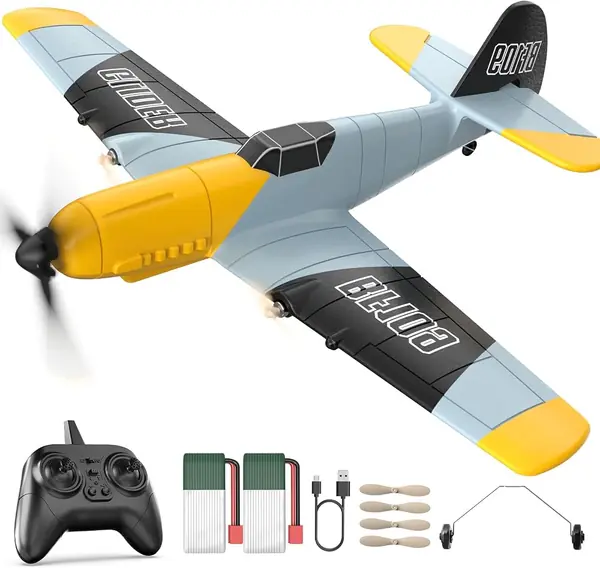
Yellow DEERC BF-109 three-channel foam RC warbird plane with two battery packs

Second-plane practice

Track Score 79/100
Channels
3
Batteries Included
2
Control Range
Up to 656 feet
Speed Settings
2
View on Amazon

The propeller in the nose doesn't spin. Two motors in the wings do the work on this one, and the nose prop is a static detail — worth knowing before the first flight, because most people expect it to turn and read its stillness as a fault. It isn't; the plane flies on the wing motors.

What you actually get is 3-channel control with two speed settings, a 6-axis gyro handling stabilization, and two ways to get airborne: a hand throw or a slide along the ground on the included gear. Listed range is 656 feet, which is plenty for an airframe this size and keeps it inside the part of the sky where you can still see which way it's pointing.

The EPP structure is the right material for a first warbird — light enough that a hard arrival is usually a matter of walking over, straightening the landing gear, and throwing it again. Two 350mAh packs come in the box, and the foam skin tolerates a few weeks of learning before it starts to show.

We place this in the middle of the guide deliberately. It suits a pilot who has already flown a two-channel glider and wants a fighter shape with real elevator and rudder authority, without stepping straight into a four-channel aerobatic trainer. Buy it as the bridge, not as the first thing you fly.

Worth Noting

  • Small 350mAh packs mean short flights
  • Motors can seize within a few weeks
Our Verdict

We treat the BF-109 as the sensible second plane: three channels, two speeds, and a warbird shape without a four-channel trainer's demands.

Check Latest Price

How We Tested Beginner RC Planes

We started by pulling every plane sold as a beginner model and reading the spec sheets — wingspan, flying weight, channel count, and exactly what came in the box. Anything that required glue, a separate radio, or a club airfield was set aside before a box ever arrived. That left 12 planes, which we weighed and measured on arrival, then flew for eight months, usually on a school field early in the morning before the wind got up, and again on breezy afternoons to see what a gust would do.

Every plane's first flight happened in its most forgiving mode: we launched into the wind, away from bystanders, climbed to a safe height, then let go of the sticks to see whether it leveled itself or kept drifting. From there we worked up the mode ladder to manual flight and noted how much the plane changed character. We also wrote down what each stick actually controlled, since a two-channel plane and a four-channel one ask for very different thumbs.

Crashes were part of the job: we clipped goalposts, nosed over on grass landings, then checked the foam and propeller mounts and counted the spare props in the box. We timed each flight from launch to low-battery cutoff and counted the packs included, and any battery that took a hard hit or looked puffy was retired rather than charged. To test the radio, we flew two and three planes at once and walked out to the edge of each one's range, and we inventoried every box to see what ready to fly actually included. By the end, the plane we reached for when nobody was making us test anything told us as much as the stopwatch did.

How to Choose a Beginner RC Plane

Flight Assistance Is the Feature That Matters Most

Every plane here carries a gyro, but they do different jobs. The most useful version is a mode ladder: a beginner setting that self-levels and restricts how far the plane will bank, a middle setting that still catches gross errors, and a manual top setting. One-key takeoff, hover, and landing aids sit on top of that and matter most in the first few flights.

The trap is expecting beginner mode to fly the plane for you. It doesn't. It stops a small mistake from becoming a wreck, which is a different and more valuable thing. Buy something with a genuine middle mode, and stay in it until you can fly a full circuit and land without thinking about which stick is which.

Channels Decide What the Sticks Actually Do

Two-channel planes steer by varying the thrust of two motors, so there are no moving control surfaces to damage — simple, inexpensive, and noticeably affected by wind. Three channels add throttle, elevator, and rudder, the layout of the DEERC BF-109. Four channels add ailerons, which is the layout hobby pilots use and the one that rewards a mode ladder.

If the pilot is an adult who wants to learn properly, start with four channels and full assist. If the goal is a first taste of flying with the least to break, two channels gets you there for less money and less repair time.

Foam, Propellers, and What's in the Box

EPP and EPO foam flex and then crack rather than shatter, and a cracked fuselage is a glue job rather than a write-off — keep foam-safe glue and clear tape in the flight box. Propeller mounting matters just as much: a saver hub that lets the prop pop off costs a ten-second refit, while a fixed prop costs an order. Rigid plastic bodies look sharper and show every impact.

Before ordering, count the packs and spare propellers in the box. A second battery does more for a session than a faster motor, because charge time usually outlasts flight time.

What Ready to Fly Leaves Out

Ready to fly means the airframe is assembled and the radio is included. It does not reliably mean a battery is. Some hobby-grade trainers are sold as RTF Basic, with the flight pack and charger listed separately, and those are real additional purchases before the plane leaves the ground.

Check three things before you order a remote control airplane: how many flight packs are in the box, whether the charger is included, and the stated charge time. Two packs is our minimum for a beginner, and three is better if the pilot is a child with limited patience.

Wind, Space, and How Far You Can Actually See

Small planes are cheap to crash and easy to lose in a breeze; big trainers are steadier but need somewhere to fly them. A 1220mm high-wing wants a field, while a 12-inch foam warbird is happy in a park. Match the plane to the space you can reach on a Tuesday afternoon, not the space you drive to twice a year.

Listed radio range is not the limit that matters — eyesight is. A 12-inch plane at 650 feet is a dot with no orientation, so fly inside the distance where you can read the wings. Early morning is usually the calmest hour, and calm air flatters every plane in this guide.

Frequently Asked Questions

Final Verdict

For a genuine first flight, we put the transmitter in a beginner's hands with the VolantexRC P51D. The hover assist absorbs a bad throw, two packs are in the box, and the three-mode gyro means the plane is still teaching you in month three rather than being outgrown in a weekend.

If the pilot is a child, the Hawk's Work glider is the kinder starting point — slower, lighter, and backed by an airframe warranty. And if you already know you will stay in the hobby, skip the toy tier entirely and start on the FMS Ranger, which is the one plane here you will still want to fly after you have soloed.