Best Model Airplane Kits for Beginners of 2026

Every unfinished model airplane in a closet started as a good intention. The box promises a few satisfying evenings and a plane for the shelf, and too often a first-timer gets a wordless instruction sheet and parts that don't quite meet. A good beginner kit takes most of that friction out before you open it.

Build method is the first fork. A snap-fit kit goes together without glue and forgives a wobbly start; a glue-and-paint kit asks for more patience and pays it back in visible detail. Scale matters too, since smaller parts are fussier in the hand and the finished plane has to fit where you plan to put it. Of the 14 beginner kits we built, the four here include display models, one plane that actually flies and a gift set with everything inside.

Our Top Picks

The Best Model Airplane Kits for Beginners

1.

SEBUNAS 1:72 F-14 Tomcat Quick Build Best Overall
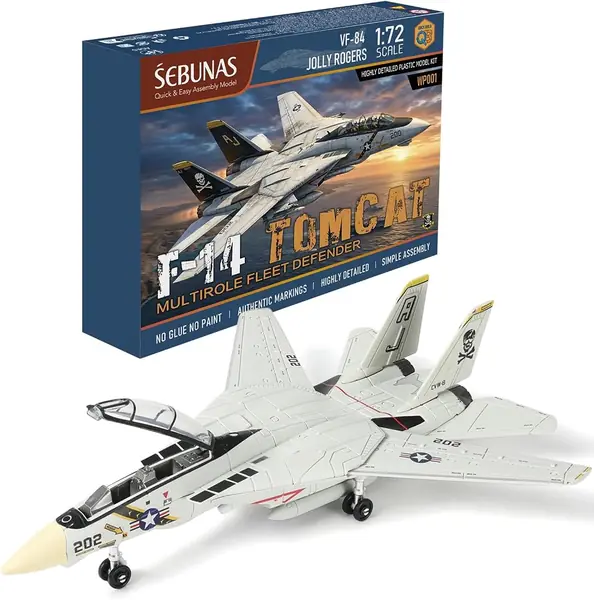
SEBUNAS 1:72 F-14 Tomcat snap-fit model kit in white plastic

First-time snap-fit build

Track Score 89/100
Scale
1:72
Assembly
Snap-fit, no glue
Piece Count
36
Item Dimensions
11.02 x 8.07 x 1.97 inches
View on Amazon

Thirty-six pieces is the number that matters here. The SEBUNAS F-14 is a 1:72 snap-fit kit, so a first-time builder can start without mixing glue or waiting for paint to dry. We hand this one to the person who wants a finished jet on the desk the same day. The parts click together, the instructions stay short, and the white plastic already looks like an aircraft rather than a bag of scraps.

The detail is the surprise. Surface detail, a distinct canopy shape, and movable wings give it more presence than the piece count suggests, and the wings invite handling instead of just staring. We like that it can be played with, not only displayed. The trade-off is in the joints: some parts need a little persuasion, and a few seams stay visible. A hobby knife and a sanding stick clean up the worst of it, but this is not a kit for someone who wants hidden seams without work.

That is exactly why it earns the top spot for beginners. A first build should end with something recognizable and sturdy, and this one does. If you want a traditional glue-and-paint project, look at the Airfix set or the Academy Hellcat. The movable wings are the detail we keep coming back to; they turn a small display model into something a younger builder can pose and repaint later.

Our Verdict

We recommend this 36-piece snap-fit F-14 to any first-time builder who wants a finished display model without glue, paint, or a long parts count.

Check Latest Price
2.

Airfix Best of British Spitfire & Hawk Gift Set Best All-In-One Starter Set

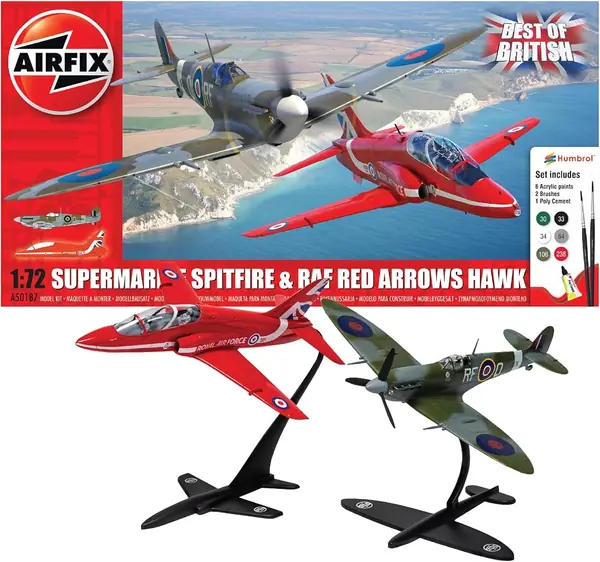
Airfix Best of British Spitfire and Hawk model kit with paint glue and brush

All-in-one gift build

Track Score 88/100
Scale
1:72
Piece Count
50
Includes
Paint, brush, glue
Skill Level
2
View on Amazon

The Airfix box solves the second shopping trip. Inside the Best of British set you get the Spitfire and Hawk parts, a brush, glue, and acrylic paint, so a beginner can open the box and start without hunting down hobby supplies. At skill level 2 and 1:72 scale, the two aircraft are small enough to finish on a kitchen table and detailed enough to look right on a shelf.

We like the all-in-one approach for a gift, especially for an older teenager or an adult who has never built a kit. The 50 pieces are not snap-fit, so there is real gluing and painting to learn, but the step up is manageable. Younger builders need close supervision around the glue and small parts. The starter paints are best treated as a way to finish the models in the box, not a full paint collection.

If you already own a knife, sanding sticks, and a cutting mat, the value shifts toward the models themselves. We still think the set earns its place because it removes a common first-kit stumbling block: not having the right supplies. The Spitfire and Hawk are also different enough in shape to keep the second build interesting. Just expect to spend more time on masking and paint touch-ups than on a snap-fit kit.

Worth Noting

  • Recommended for ages 14 and up
Our Verdict

This is the beginner set we recommend when you want the paint, glue, and brush in the box and a skill-level-2 build that still teaches real model-making.

Check Latest Price
3.

Academy F6F-3/5 Hellcat Best Budget Glue Kit

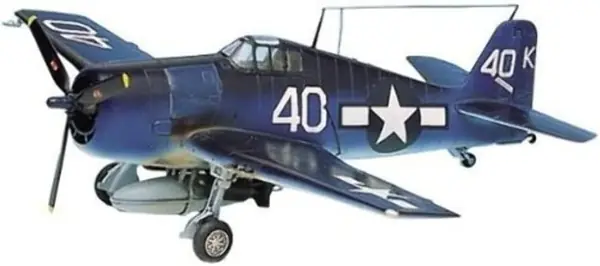
Academy 1:72 F6F-3/5 Hellcat plastic model kit in Navy color

First glue-and-paint build

Track Score 87/100
Scale
1:72
Assembly
Paint and glue required
Features
Detailed cockpit and landing gear
Markings
Two versions
View on Amazon

The Academy Hellcat is the traditional glue-kit answer to a first build. It is 1:72 scale, so the finished model takes up little shelf space, and the parts count stays low enough that you can see progress in a single session. We like the optional landing gear and the markings for two versions; they give a new builder a choice without adding a second kit's worth of complexity.

Detail is decent where it matters. The cockpit and landing gear are busy enough to look right through the canopy and on the shelf, and the engraved panel lines survive a simple paint job. This is a glue-and-paint project by design, so set aside a work surface and read the instructions before you open the cement. We keep a sanding stick and tweezers nearby; a few parts need cleanup before they sit flush.

For a first glue build, that is a fair trade. The Hellcat is affordable, the subject is recognizable, and the build does not demand a stack of aftermarket detail. If you want a kit that includes supplies, the Airfix set is the easier start; if you want the simplest possible build, the snap-fit F-14 is the one. The two marking options also let you practice decals on one scheme before committing to the other.

Worth Noting

  • Paint and glue are not included
  • Tiny 1:72 parts need steady hands
Our Verdict

For a first glue-and-paint build on a budget, this 1:72 Hellcat keeps the parts count low and the detail high enough to stay interesting.

Check Latest Price
4.

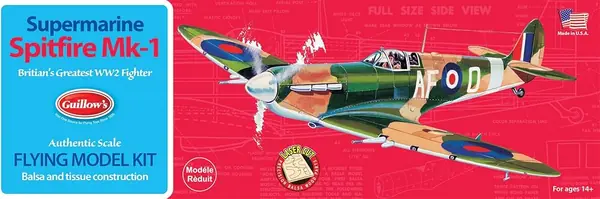
Guillow's Supermarine Spitfire Balsa Kit Best Build-And-Fly

Guillow's 16 1/2-inch balsa Supermarine Spitfire model kit with decals

Build-and-fly project

Track Score 86/100
Material
Die-cut balsa
Wingspan
16 1/2 inches
Build Options
Flying or static display
Recommended Age
10 and up
View on Amazon

A 16 1/2-inch wingspan makes the Guillow's Spitfire a different kind of beginner project. The frame is die-cut balsa, not plastic, and the kit includes tissue, decals, plastic detail parts, and a 24-page booklet. You can build it for static display or trim it to fly. For a first-time builder who wants to learn how an airplane is put together, that range is the appeal.

We like the booklet for a first build. It walks through the frame, covering, and finishing steps in a way that a short exploded diagram cannot, and the die-cut parts save you from cutting every rib by hand. The trade-off is time: tissue covering rewards a light touch, and a wrinkle shows through the finished surface. This is not a kit you finish in an afternoon, and it is not a snap-together plastic model.

What it gives back is a model that can actually leave the shelf. The balsa airframe is light, the wingspan is large enough to see in the air, and the build teaches skills that carry over to other flying models. We recommend it for a patient beginner, a parent-child project, or anyone who has built plastic kits and wants to try something that flies. It is the one here that turns a building session into an outdoor afternoon.

Our Verdict

This is the beginner kit we recommend when the goal is a model that can leave the shelf and fly, not just sit on it.

Check Latest Price

How We Chose and Tested Beginner Model Airplane Kits

We started with research, reading through dozens of kits and narrowing to kits actually sold as beginner-friendly. We filtered by build method — snap-fit versus glue — plus stated skill level, part count, and scale, then compared what each box included against what the buyer would still have to run out and purchase: paint, cement, brushes, decals. From that pool we bought 14 kits and built every one of them over four months.

Building happened where it usually happens: at kitchen tables and on a folding table in the garage on weekend afternoons, with plastic cement and paint kept in a ventilated spot and well away from younger kids in the house. We followed each kit's age rating rather than handing anything to a child below it. Every build began with dry-fitting parts before any glue came out, which is where fit problems surfaced — flash along the edges, seams that needed sanding, locator pins that missed their holes.

We didn't time anything formally, but we noted how many evenings a build held a first-timer's attention, whether the instructions were followable from diagrams alone, and whether the language was plain English or needed translation. Finished models were judged after a week on a shelf: whether seams still showed, whether decals sat flat, whether cockpit and landing gear detail read at arm's length, and whether the wingspan crowded the space. The balsa kit was trimmed and test-glided per its maker's instructions, with no power added. Value came last — sticker price plus whatever supplies the kit didn't include.

How to Choose a Beginner Model Airplane Kit

Pick the build method first

Snap-fit kits are the lowest-friction entry: no glue, no clamping, and often no paint. A traditional plastic model kit gives you more detail and a more traditional hobby experience, but it adds drying time, seams, and cleanup. Look for a stated skill level of 1 to 3, or a kit marketed as quick-build or beginner. A skill-level-4 kit with a hundred-plus parts is a second or third project, not a first one.

Part count is a useful shortcut, but it is not the whole story. A 36-piece snap-fit model can have fussy joints, while a 50-piece glue kit can go together cleanly. Read the completed size and the assembly notes, not just the number on the box. Choose snap-fit for the fastest first win, or a skill-level-2 glue kit if you want to learn cement and paint from the start.

Add up the supplies before you buy

Paint, glue, brushes, and a knife are the hidden cost of a cheap kit. An all-in-one set such as the Airfix Best of British includes paint, glue, and a brush, which is why it makes a good gift. A conventional kit like the Academy Hellcat assumes you already have those supplies or will buy them. Neither approach is wrong; just price the whole first session, not only the box.

Starter paints are usually enough for the model in the box, not a whole shelf of future projects. If you plan to build more, buy full bottles of the colors you use most and a bottle of thin cement. A self-healing cutting mat and a sanding stick are worth adding from the start, and they carry over to every kit.

Match the scale to your space

1:72 is the usual beginner scale: small enough for a shelf, with parts that are manageable if you have decent light. 1:48 gives you a larger model and more detail, but it also takes more paint and display space. The finished wingspan matters more than the scale label; a 16 1/2-inch balsa Spitfire is a different commitment from a 1:72 plastic fighter.

Check the finished dimensions, not the package size. A compact box can produce a model that will not fit on the shelf you had in mind. If the model is for a child's room, measure the shelf before you choose. The Guillow's Spitfire's 16 1/2-inch wingspan is a good example of a number that tells you more than the scale alone.

Expect to clean up the fit

Even good beginner kits need test-fitting. Trim flash, dry-fit the fuselage and wings before glue, and do not force a joint; forcing it usually means the part is in the wrong place or needs a little sanding. Snap-fit kits can show gaps at the joints, and glue kits can need filler at seams. That is normal model building, not a sign you bought the wrong kit.

Instructions vary more than box art suggests. Look for clear diagrams and a parts map; if the text is only in another language, the diagrams have to carry the build. A kit that needs some sanding can still be a good first project if you are willing to test-fit each major assembly. The Airfix set's skill level and the Academy Hellcat's low parts count are the kind of signals we look for.

Decide what happens after the build

Some beginners want a shelf model, some want something to handle, and some want a model that flies. Snap-fit kits are the most handleable; glue kits are for display; balsa flying kits are a craft project with a payoff outdoors. The Guillow's Spitfire is the flying option here, while the SEBUNAS F-14 is the one to choose if the model will be picked up and posed.

That choice changes what counts as a good fit. A tight snap joint that shows a seam matters less on a model that will be played with than on a display piece you plan to paint and fill. Decide before you compare part counts, because the finished experience is the reason you are building.

Frequently Asked Questions

Final Verdict

For a first-time builder, we recommend the SEBUNAS F-14. Its 36 snap-fit pieces skip glue and paint, and the finished model looks better than its part count suggests. That matters because the first kit has to deliver a result before the novelty wears off.

If you want to learn glue and paint from the start, the Airfix Best of British set is the better teacher because it puts the supplies in the box. Choose the Academy Hellcat for a budget glue build, or the Guillow's Spitfire if the point is to fly the model when it is done.