Best Plastic Model Kits of 2026

Box-top photos show a kit built and painted by a professional. Open the box and you may find flash creeping along the sprue, a warped fender and an instruction sheet written for someone who has already built this exact kit. A good kit doesn't take the work out of the hobby; it makes the work pay off, with parts that locate where they belong, seams that close and detail that still reads under paint.

Part count is a weak measure of difficulty, and a reissued kit can carry molds older than the person building it. We built 14 kits over six months at the bench, under a lamp with a hobby knife in reach, from a 36-piece snap-together jet to a 78-part muscle car, noting which fought us over fit and how much glue and paint each honestly demanded. The eight picks span snap-fit and glue-and-paint cars, armor, aircraft and a color-molded mech.

Our Top Picks

The Best Plastic Model Kits

1.

Tamiya 1/24 Volkswagen 1300 Beetle 1966 Best Overall
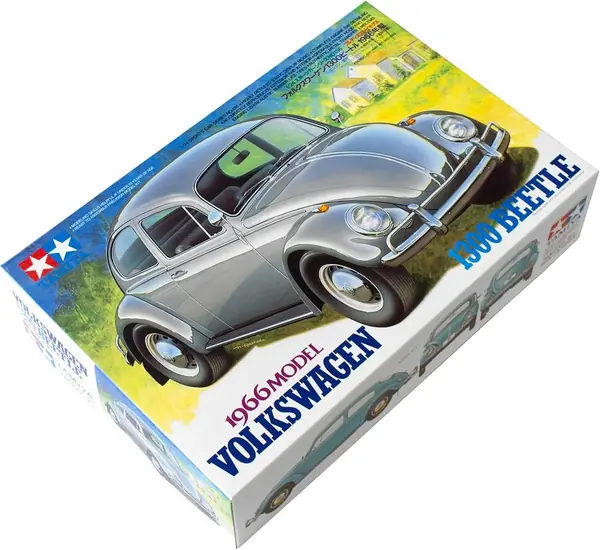
Tamiya 1/24 scale 1966 Volkswagen Beetle plastic model kit in unpainted plastic

First glue-and-paint build

Track Score 95/100
Scale
1:24
Skill Level
Novice
Molded Color
Unpainted
Subject
1966 Volkswagen 1300 Beetle
View on Amazon

Tamiya stamps this Beetle as a novice kit, and that rating is why it's our pick for a first glue-and-paint build. The parts come off the runners cleanly, the body panels meet without filler, and the instruction sheet takes you through in an order that makes sense the first time you read it.

What makes it the best overall here is how much it asks of you against how much it gives back. A 1/24 Beetle is small enough to finish on a card table and detailed enough to hold an experienced builder's attention, and the engine bay — the flat-four, the cooling tin — is where the kit earns its reputation. We built ours over a few evenings and came away planning the next one.

Nothing is pre-painted, so the color is yours, which we prefer on a car this recognizable; a factory shade can make a good build look flat. The detail rewards patience too — the engine is worth wiring and washing rather than painting one shade of gray.

One boundary worth knowing: this is a compact shelf piece, not a centerpiece. If the point of the build is a model that takes over the top of a bookcase, the Blackbird or the Aerial does that job better in this group.

Worth Noting

  • Paint and cement sold separately
Our Verdict

We recommend the Beetle as a first glue-and-paint kit: clean fit, honest detail, and a body you can finish in whatever color you like.

Check Latest Price
2.

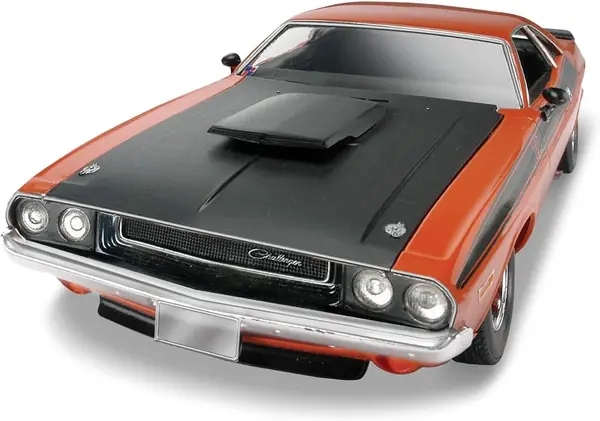
Revell 1/24 1970 Dodge Challenger 2'n'1 Best Muscle Car Build

Revell 1/24 1970 Dodge Challenger 2'n'1 model kit with chrome and vinyl tires

Muscle car builders

Track Score 94/100
Scale
1:24
Skill Level
4
Parts
78
Build Options
Stock or street machine
View on Amazon

Two kits share one box here: a factory-stock Challenger T/A, or a street machine with a high-rise dual four-barrel, custom hood, rear spoiler, and Centerline wheels. That choice is why we rate it the strongest muscle-car build in this group — you decide at the bench whether it leaves the line stock or leaves it loud.

The 78 parts go together with very little drama. Molding is clean, the chrome tree is tidy, the interior is detailed enough to be worth painting properly rather than flooding with black, and there is almost no flash to scrape. Revell labels it skill level 4, but we found it sits nearer the middle of the range; if you've finished one or two kits, nothing here will surprise you.

Save your patience for the side mirrors. They're the smallest parts on the car, they attach at the end when the body is already painted, and a dry fit before any cement saves a repaint. Get past them and the finished car sits well and looks like the real thing.

Worth Noting

  • Skill level 4 label may deter newer builders
Our Verdict

We pick it for muscle cars: two complete build versions, clean molding, and an interior that rewards a proper paint job.

Check Latest Price
3.

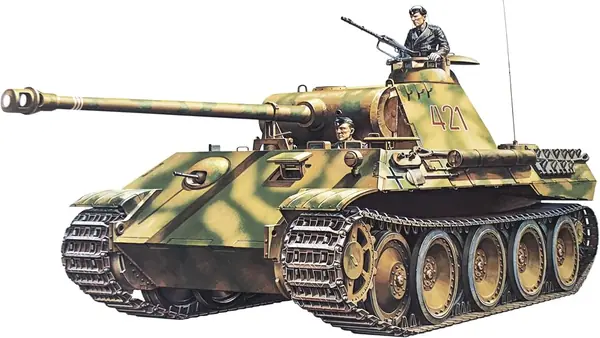
Tamiya 1/35 German Panther Ausf. A Best Armor Kit

Tamiya 1/35 German Panther Ausf. A tank model kit with one-piece vinyl tracks

Armor beginners

Track Score 93/100
Scale
1:35
Length
7.7 inches
Tracks
One-piece vinyl
View on Amazon

The molds behind this Panther are old — the hull still carries the cutouts from the motorized version Tamiya sold decades ago — and you should know that before you buy. What the age costs you in fettling it returns in presence: built up, it's a crisply detailed 1/35 tank, and it's the armor kit we keep coming back to in this group.

The detail punches above the price. Rear deck louvers are sharp, the road wheels carry the bolt heads that hold the wear plates, and the one-piece vinyl tracks save you an evening of link-by-link work. Dry-fit the upper and lower hull before any cement goes down; that joint is where the kit asks for the most patience.

The instruction sheet is where the age shows most: a few steps are thin and small fittings go unshown. Work slowly and it's a satisfying build for the money — the cheapest route into 1/35 armor here, and the one we hand to anyone who wants a tank on the shelf without paying collector prices.

Worth Noting

  • Instruction diagrams are thin in places
Our Verdict

Our armor pick: crisp 1/35 detail and vinyl tracks at a low price, on a mold old enough to teach you patience.

Check Latest Price
4.

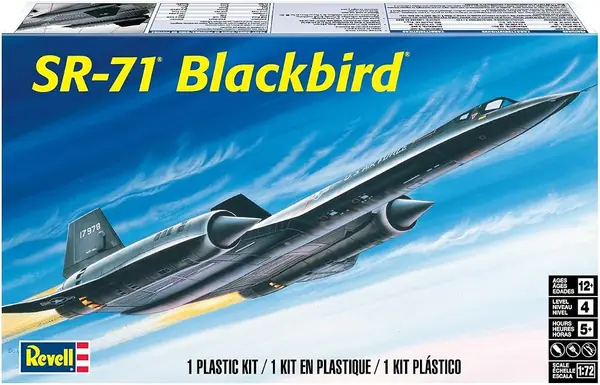
Revell 1/72 SR-71A Blackbird Best Aircraft Kit

Revell 1/72 SR-71A Blackbird model kit molded in black with drone and cart

Big display aircraft

Track Score 92/100
Scale
1:72
Skill Level
4
Parts
66
Finished Length
18.5 inches
View on Amazon

Finished, the Blackbird runs about 18.5 inches nose to tail with a 9.25-inch wingspan, which makes it the biggest aircraft in this group and the one that takes over a shelf. At 1/72 it's also a genuinely simple build — 66 parts, most of them large, and a shape that doesn't need a jig to line up.

We like that the plastic is molded in black and clear, because it saves you the worst job on any aircraft: three coats of flat black over a fuselage that already weighs nothing. Spend the painting time on the cockpit and on the GTD-21 drone instead.

That drone and its cart are the detail that sells the kit. A second, smaller model in the same box turns the finished piece into a small scene rather than a jet on a stand, and the decal sheet covers authentic U.S. Air Force markings.

The tail fins are the weak point. The plastic there is thin enough that a knock can snap one, and once it's off the repair is hard to hide, so keep the finished model out of traffic. Handled carefully, it's a better-looking model than the part count suggests.

Worth Noting

  • Tail fins are thin and can snap
Our Verdict

Molded in black and big enough to dominate a shelf, this is the aircraft for when display matters more than a long build.

Check Latest Price
5.

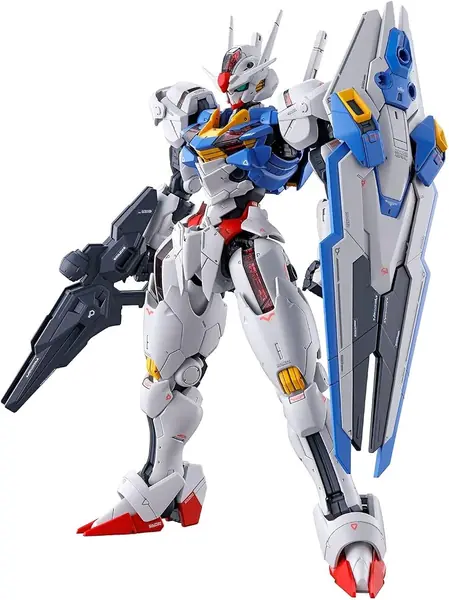
Bandai Full Mechanics 1/100 Gundam Aerial Best No-Glue Build

Bandai Full Mechanics 1/100 Gundam Aerial model kit in color-coded plastic

No-mess builders

Track Score 91/100
Scale
1:100
Assembly
Snap-fit, no glue
Series
Full Mechanics
Age Range
15+
View on Amazon

No glue, no paint, no tools beyond a pair of snippers: the Aerial snaps together from color-molded runners and looks finished the moment the last piece clicks in. That's why we suggest it to anyone who wants a detailed model without committing to cement and an airbrush.

At 1/100 it's a proper full-mechanics build rather than a toy. The shield splits into eleven GUND-Bits that reattach to the rifle, armor panels move with the knee joints, and the whole figure holds a pose once you set it. A few of the larger parts need a firm push to seat, so press them square rather than hard.

It's rated 15 and up, which is about the small parts rather than the difficulty; a younger builder can manage the assembly with supervision but will lose pieces to the carpet. For an adult coming from cement kits, it's an evening or two of building with no drying time to plan around.

Worth Noting

  • Shield can work loose from the forearm
Our Verdict

Snap-fit, color-molded, and poseable: the kit we suggest when you want detail without cement, paint, or an airbrush.

Check Latest Price
6.

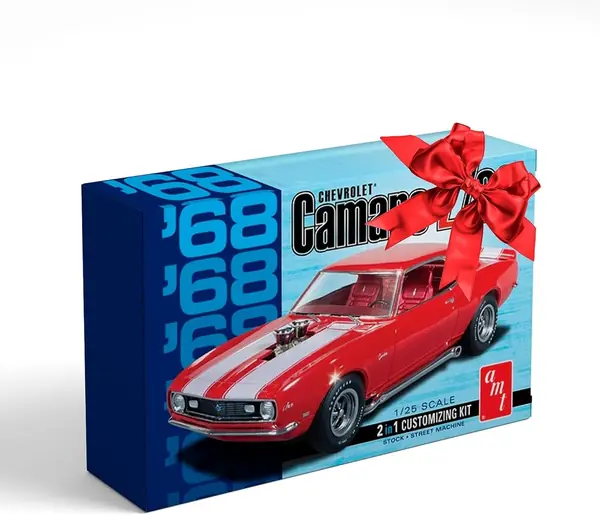
AMT 1/25 1968 Camaro Z/28 Best Budget Car Kit

AMT 1/25 1968 Chevy Camaro Z/28 model kit molded in black

Budget car builds

Track Score 90/100
Scale
1:25
Molded Color
Black
Build Options
2-in-1
Paint And Glue
Required
View on Amazon

It's the least expensive glue-and-paint car in this group, and nothing about building it reads as the cheap option. The 1/25 body is crisp, the two-hood parts let you go factory stock or custom, and the panels line up with less trimming than we expected from a kit at this price.

Beginners do well with it. The wheel and tire assemblies seat without a fight, the instructions follow a logical order, and there's very little flash to scrape — which is the part of an older kit that wears new builders down. A young teenager can finish it with help and be proud of the result.

The one thing that needs attention is the ride height. Built straight from the box it sits awkwardly, and a small adjustment at the rear axle makes the difference between a model and a toy. Do that, and the Camaro photographs like a much pricier kit.

Our Verdict

Our budget car pick: two hood options, clean panel fit, and the least expensive route to a display-worthy muscle car here.

Check Latest Price
7.

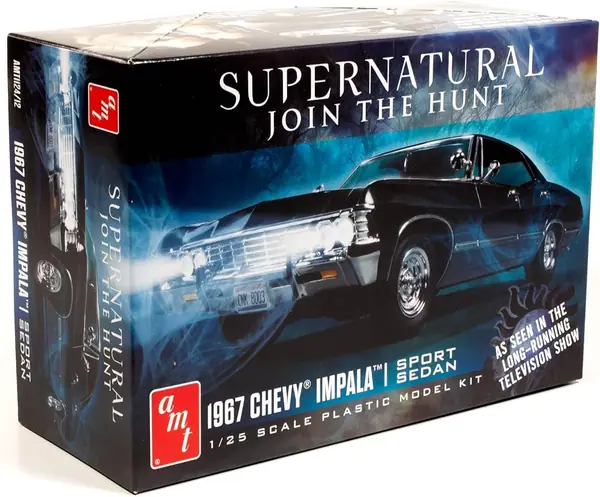
AMT 1/25 1967 Chevy Impala 4-Door Best for Supernatural Fans

AMT 1/25 1967 Chevy Impala four-door model kit molded in black with chrome

Supernatural fans

Track Score 89/100
Scale
1:25
Skill Level
2
Paint And Glue
Required
Molded Colors
Black with chrome and clear
View on Amazon

Kansas license plates, aftermarket wheels, spotlights, bumper guards, a four-door body, and a column shifter — the tooling was cut specifically for the Supernatural car, and every one of those details is in the box. If that's the car you want, nothing else here comes close.

Skill level 2 keeps it approachable, and the parts come molded in black with chrome and clear. The fit is the part to plan for: several of the smaller assemblies need trimming and test-fitting before they sit flush, and rushing that step is how parts get broken.

The interior is where the detail lives — bucket seats, a console, a column shifter, and a radio. It's the part of the car people lean in to see, and it rewards a couple of extra paint colors.

For the show and the car, we think it's the only game in town and the result is worth the fiddling. For a smoother, more forgiving build, the Camaro is the friendlier tooling from the same maker.

Worth Noting

  • Trunk is molded shut
Our Verdict

Worth the extra fitting for a Supernatural fan — the licensed details and the interior are the whole reason to buy it.

Check Latest Price
8.

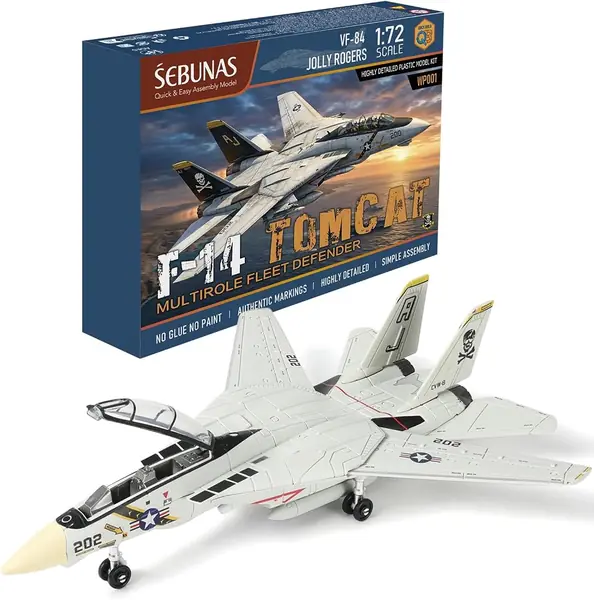
SEBUNAS 1/72 F-14 Tomcat Best for Kids and Beginners

SEBUNAS 1/72 F-14 Tomcat snap-together model kit in white plastic

Kids and beginners

Track Score 87/100
Scale
1:72
Parts
36
Assembly
Snap-together
Dimensions
11.02 x 8.07 x 1.97 inches
View on Amazon

Thirty-six pieces, no glue, no paint, and a finished Tomcat a little under a foot long — this is the kit that gets a model onto a kid's shelf in one sitting instead of three weekends. The parts click together, the wings swing, and the finish is already on the plastic.

For an adult who has built cement kits, we think of it as a desk model rather than a project, and that's the trade: it's the cheapest way into the hobby here and the most forgiving of a dropped model, but the wing-root joint on some examples needs a light shave before the halves close. Test-fit before you push.

Worth Noting

  • Wing-root joint can need trimming to close
Our Verdict

A first model for a kid, or a quick desk piece for you — the cheapest and most forgiving kit in this group.

Check Latest Price

How We Built, Tested, and Judged 14 Model Kits

We gathered every current kit we could find in the scales builders actually buy — 1/24 and 1/25 cars, 1/35 armor, 1/72 aircraft, a 1/100 mech — then narrowed the field by skill level, parts count, whether glue and paint were required, age rating, and price. That left 14 kits, built over six months at a ventilated workbench, with cement and enamel paints kept away from any flame and out of reach of the younger builders in the house. Every box's age rating was a hard limit on who sat down at the table.

Each build started the same way: parts washed, then dry-fitted before any cement came out of the tube. We counted how many pieces needed sanding to clear flash, laid fuselage halves and body panels on a flat surface to catch warpage, and noted where locating pins had to be forced. On the car kits we opened and closed hoods and trunks again and again to see whether they shut flush once assembled.

We followed each instruction sheet in order without guessing, flagging every step where a diagram left us squinting. Where a kit included optional stock or custom parts, we sorted them out and checked the sheet made clear which went with which. Finished models were judged in daylight: how decals settled over curves, whether badges and interior detail survived paint, and, on the color-molded snap-fit kits, whether bare plastic looked convincing.

We picked each finished model up and moved it a couple of times to see if mirrors and antennas held, then set it on a shelf and noted how much room it claimed. Value came last — what the kit cost against the plastic, decal sheet, and presence it delivered, including the paint and glue it forced us to buy.

How to Choose a Plastic Model Kit

Start With Skill Level and Parts Count

Every maker scores difficulty differently. Revell and AMT number their kits, Tamiya uses word ratings like novice, and Bandai's snap-fit kits barely rate difficulty at all, so comparing a Revell level 4 with an AMT level 2 tells you nothing. Compare parts counts and what the parts do instead. A 36-part snap kit is an afternoon; a 78-part car with an engine, interior, and suspension is several evenings.

For a first cement build, look for something in the 60-to-90-part range with a body that closes over a finished interior. That's the zone where the Beetle and the Camaro sit, and it's enough work to feel like a project without becoming a chore.

Check What's in the Box Before You Start

The photo on the box tells you less than the specification line. Some kits are molded in color and assemble without cement — the Bandai Aerial needs neither glue nor paint — while others state plainly that paint and glue are required, which means a second purchase before you can begin. Molded-in color like the Blackbird's black plastic saves an airframe paint job but not the detail work.

Price the kit and its supplies together, or choose a snap kit and skip the extras entirely. Nothing stalls a new builder faster than opening the box and finding out the build can't start until an order arrives.

Scale, Finished Size, and Where It Goes

Scale is a fraction, so the larger the number the smaller the model: 1/24 and 1/25 cars, 1/35 armor, 1/48 and 1/72 aircraft, 1/100 mecha. A 1/72 jet is not automatically tiny — the SR-71 stretches to 18.5 inches at that scale — while a 1/24 Beetle is compact because the real car was.

Read the finished length on the box rather than trusting the scale alone, then decide whether the model gets a shelf, a case, or the top of a cabinet before you buy it.

Fit, Mold Age, and Instructions

A kit's age matters more than its brand. Reissued molds from the 1970s can carry flash, thick gates, and thin instructions, while a recent tooling like the Beetle or the Challenger fits with barely any filler. The practical move is to dry-fit every subassembly — hull halves, body to chassis, wing roots — before any cement touches it, and to keep a file and a sanding stick within reach.

If the box gives no clue about a kit's age, assume it needs test-fitting. That habit costs you ten minutes and saves you a warped seam you'll stare at for years.

Build Options and Display

Two-in-one kits such as the Challenger and the Camaro let you choose stock or custom at the bench, which stretches one purchase into two builds. A licensed replica like the Impala trades that flexibility for specific detail — plates, spotlights, the right four-door body — and a poseable kit like the Aerial is built to be re-posed rather than glued solid.

Decide whether the finished scale model is a static display piece or something you'll pick up and handle, because the second kind needs tighter joints and a stand.

Frequently Asked Questions

Final Verdict

The Tamiya Beetle is where we point anyone buying a first plastic model kit. It fits, it's rated for a novice, and the engine bay gives an experienced builder something to paint properly — three things that rarely line up in one box.

If you want a car with choices, the Challenger's two build versions buy you a second project from the same purchase. If glue and paint are the obstacle, the Bandai Aerial snaps together into a model that looks finished the day you open the box and never touches a brush.